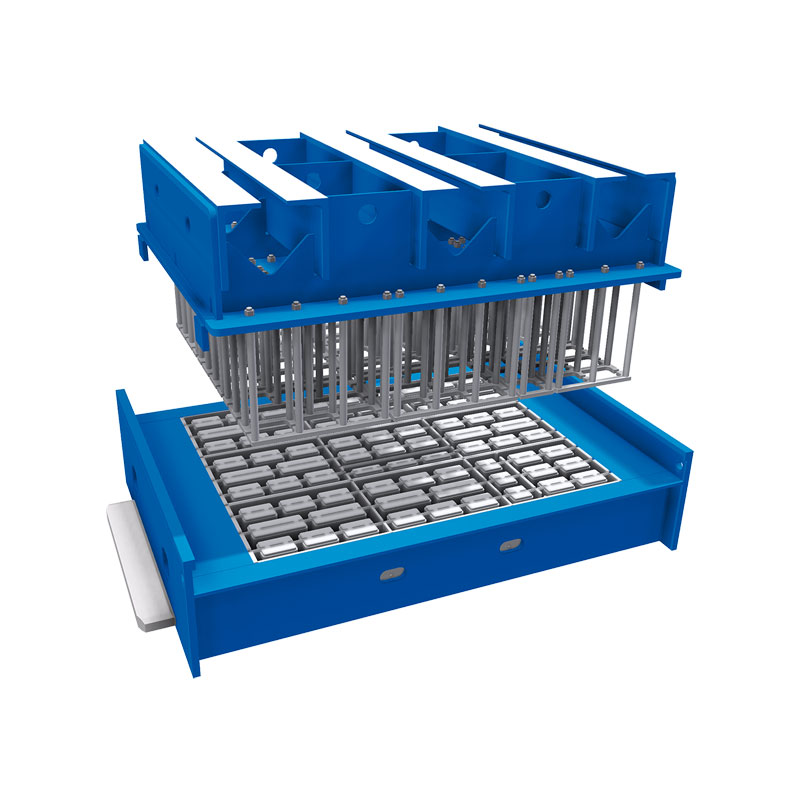
Concrete block molds are essential tools in modern construction, and maintaining them properly ensures consistent block quality, extended service life, and cost efficiency. At Quangong Machinery Co., Ltd., our Mould/Mold for Concrete Block products are crafted with precision, and understanding their care is critical for long-term performance.
Proper maintenance of our Mould/Mold for Concrete Block is fundamental to ensure long-term performance, reduce operational costs, and maintain high-quality production standards. At Quangong Machinery Co., Ltd., our factory produces molds with premium steel and precision finishing. However, even the best-quality molds require regular care to achieve consistent results. Implementing effective maintenance strategies directly influences mold lifespan, block uniformity, and production efficiency.
| Factor | Description | Impact on Mold Performance |
| Surface Integrity | Regular inspection for scratches, rust, or residual concrete | Maintains smooth release of blocks and prevents surface defects |
| Structural Stability | Check welds, joints, and steel thickness for deformation | Prevents cracking or breakage under heavy production loads |
| Cleaning Routine | Post-use removal of concrete residues and proper drying | Reduces corrosion risk and ensures uniform block shapes |
| Lubrication | Use appropriate mold-release agents or oils | Minimizes wear and friction, facilitating smooth block release |
| Storage Conditions | Keep molds in dry, stable environments with protective covers | Prevents rust, warping, and accidental damage |
By following these recommended maintenance strategies, our Mould/Mold for Concrete Block continues to perform at its highest level, ensuring uniform block quality and maximizing production efficiency. At Zenith, our factory not only provides high-quality molds but also offers guidance on comprehensive maintenance programs to help clients achieve sustainable operations. Proper maintenance is not just a preventive measure but a strategic investment in long-term productivity and cost savings.
Regular inspection is a critical component of maintaining our Mould/Mold for Concrete Block to ensure long-term performance and consistent production quality. At Quangong Machinery Co., Ltd., our factory emphasizes systematic evaluation of each mold before, during, and after production cycles. Inspections allow early detection of potential issues such as cracks, corrosion, or dimensional inaccuracies, preventing minor problems from developing into costly repairs or replacements.
| Inspection Item | Procedure | Frequency | Purpose |
| Surface Condition | Examine for scratches, rust, or residual concrete | Before and after each production cycle | Ensure smooth block release and prevent surface defects |
| Structural Integrity | Check welds, joints, and overall frame stability | Weekly or monthly depending on production volume | Prevent cracks, deformation, or structural failure |
| Dimensional Accuracy | Measure mold length, width, and depth with calipers | Monthly or after heavy use | Maintain consistent block size and quality |
| Lubrication Check | Verify lubricant coverage and reapply as needed | Each production cycle | Reduce friction and prevent wear on contact surfaces |
| Storage Conditions | Inspect storage area for moisture, dust, and alignment | Monthly | Prevent environmental damage and mold warping |
By following these inspection guidelines, our Mould/Mold for Concrete Block maintains its performance, reduces production errors, and extends its lifespan. At Quangong Machinery Co., Ltd., our factory not only manufactures high-quality molds but also provides clients with detailed inspection protocols, helping them optimize production efficiency and ensure long-term operational reliability. Regular inspections are an investment in both product quality and cost-effective maintenance strategies.
Proper cleaning is one of the most important maintenance practices for our Mould/Mold for Concrete Block. At Quangong Machinery Co., Ltd., our factory emphasizes that cleaning not only maintains mold performance but also extends its lifespan and ensures consistent block quality. Residual concrete, dust, or rust can accumulate over time, leading to uneven block shapes, sticking, and surface defects. Therefore, adopting systematic cleaning routines is essential for both operational efficiency and product reliability.
| Cleaning Task | Recommended Method | Frequency | Purpose |
| Surface Residue Removal | Soft brush or plastic scraper | After every production cycle | Prevent concrete build-up and maintain smooth block surfaces |
| Deep Grooves Cleaning | Use small brushes or compressed air | Weekly | Remove hardened residues in corners and edges |
| Mold Washing | Mild water-based cleaning solution | Monthly or as needed | Eliminate accumulated dust and prevent rust |
| Surface Drying | Clean cloth or air drying | After each cleaning session | Prevent moisture-related corrosion |
| Lubrication Check | Apply mold-release agent lightly | After cleaning | Ensure smooth block release and reduce friction |
By following these cleaning practices, our Mould/Mold for Concrete Block remains in optimal condition, producing high-quality blocks consistently. At Zenith, our factory not only provides premium molds but also guides clients on cleaning schedules and techniques that support long-term durability. Proper cleaning ensures operational efficiency, reduces maintenance costs, and protects your investment in high-quality molds.
Lubrication is a crucial maintenance practice that significantly affects the performance and lifespan of our Mould/Mold for Concrete Block. At Quangong Machinery Co., Ltd., our factory designs molds with precision, but even the highest-quality steel can suffer from friction, sticking, and wear during repeated production cycles. Applying the proper lubricant reduces contact friction, facilitates smooth block release, and prevents surface damage, ultimately extending mold life and maintaining production efficiency.
| Lubrication Task | Recommended Method | Frequency | Purpose |
| Surface Coating | Apply a thin layer of non-corrosive, water-based lubricant | Before each production cycle | Ensure smooth release and reduce wear |
| High-Friction Areas | Target corners, edges, and grooves with additional lubrication | Daily or as needed | Prevent sticking and surface abrasion in frequent contact zones |
| After Cleaning | Reapply lubricant after mold cleaning | Each cleaning session | Maintain protective layer on steel surface |
| Excess Removal | Wipe off excess lubricant to avoid contamination | After application | Prevent dust or concrete residues from sticking |
| Inspection | Check lubricant coverage visually before production | Before each cycle | Ensure even distribution for optimal performance |
At Quangong Machinery Co., Ltd., our factory not only produces high-quality Mould/Mold for Concrete Block but also provides clients with detailed lubrication guidance. Following these practices ensures reduced wear, smoother operation, and long-term cost savings. Proper lubrication is an essential investment in both production efficiency and mold durability, keeping your blocks uniform and your operation running smoothly.
Proper storage is a frequently underestimated yet highly influential factor in maintaining the durability of our Mould/Mold for Concrete Block. Even the most precisely engineered molds can suffer premature wear if exposed to moisture, temperature fluctuations, or improper stacking. At Quangong Machinery Co., Ltd., our factory emphasizes that controlled storage conditions are just as important as cleaning, inspection, and lubrication. A well-structured storage system protects mold integrity, preserves dimensional accuracy, and significantly reduces long-term maintenance costs.
| Storage Factor | Recommended Practice | Technical Purpose | Long-Term Benefit |
| Humidity Level | Maintain dry indoor storage below 60 percent humidity | Prevent rust formation | Extended mold surface lifespan |
| Positioning | Store vertically or on reinforced shelving | Reduce pressure distortion | Maintain dimensional accuracy |
| Surface Protection | Apply protective oil film before long-term storage | Create anti-corrosion barrier | Minimize oxidation risk |
| Covering | Use breathable protective covers | Prevent dust accumulation | Reduce cleaning workload |
| Handling Equipment | Use padded lifting tools or forklifts | Avoid impact damage | Preserve structural integrity |
At Quangong Machinery Co., Ltd., our factory integrates storage guidance into our overall maintenance support program. Our technical team understands that improper storage can undo the benefits of cleaning and lubrication. By implementing structured storage systems, our clients experience longer service cycles, reduced mold replacement frequency, and improved production reliability.
When storage practices are standardized and monitored, our Mould/Mold for Concrete Block maintains structural strength, surface precision, and operational efficiency over time. Strategic storage is not merely about keeping molds off the floor; it is a disciplined maintenance approach that protects your investment and ensures consistent block quality for years of production.
Maintaining Mould/Mold for Concrete Block through inspection, cleaning, lubrication, proper storage, and material selection ensures long-term performance, consistent block quality, and operational efficiency. Quangong Machinery Co., Ltd. provides high-quality molds and guidance to optimize your production. By following these best practices, our clients achieve extended mold life and reduced maintenance costs.
Contact us today to explore our range of Mould/Mold for Concrete Block and discover how our factory solutions can enhance your production efficiency.
Q1: What is the recommended frequency for inspecting concrete block molds?
Inspection should be conducted at least once per production cycle to detect wear, cracks, and dimensional deviations early.
Q2: How can I prevent rust on my molds?
Clean and dry molds immediately after use and store them in a low-humidity environment to prevent corrosion.
Q3: Which lubricants are safe for concrete block molds?
Non-corrosive, water-based lubricants compatible with steel molds are ideal for reducing friction without affecting concrete curing.
Q4: Can cleaning with harsh chemicals damage molds?
Yes, strong acids or abrasive cleaners can degrade steel surfaces. Use mild agents and soft brushes to maintain mold integrity.
Q5: What is the impact of material selection on maintenance?
High-grade alloy steel molds resist wear and corrosion, reducing the frequency of maintenance and extending mold lifespan significantly.