News

Why Does Mold for Concrete Block Quality Affect Overall Brick Production Costs?

2026-08-20 0 Leave me a message

Imagine two brick factories, side by side, producing identical concrete blocks for the same construction projects. Both use the same raw materials and the same block machine model. Yet at the end of the year, one factory's financial statements show healthy profits, while the other is struggling to break even. The difference is not in their concrete recipes or their sales strategies. The difference lies in a single, often overlooked component: the Mold for Concrete Block. The quality of this critical tool determines not only the dimensions and appearance of the finished product but also the efficiency, waste rate, and maintenance burden of the entire production line. A high-quality Mold for Concrete Block can be the difference between a profitable operation and one that is perpetually fighting rising costs.


So why does the quality of a Mold for Concrete Block have such a profound impact on overall brick production costs? The answer lies in several interconnected factors: dimensional accuracy, wear resistance, productivity, waste reduction, and maintenance requirements. A poorly made mold will produce blocks with inconsistent dimensions, leading to wasted material and customer rejections. A mold made from substandard steel will wear quickly, requiring frequent replacement and causing costly production interruptions. Conversely, a precision-engineered Mold for Concrete Block from a trusted manufacturer like Quangong Machinery Co., Ltd. will maintain its accuracy for millions of cycles, produce blocks that meet exact specifications, and operate with minimal downtime. This article will systematically break down each of these cost factors, providing a comprehensive analysis of why the initial investment in a quality mold pays for itself many times over.

Grass Stone Mould


Table of Contents


1. What Is a Mold for Concrete Block and Why Does It Matter?

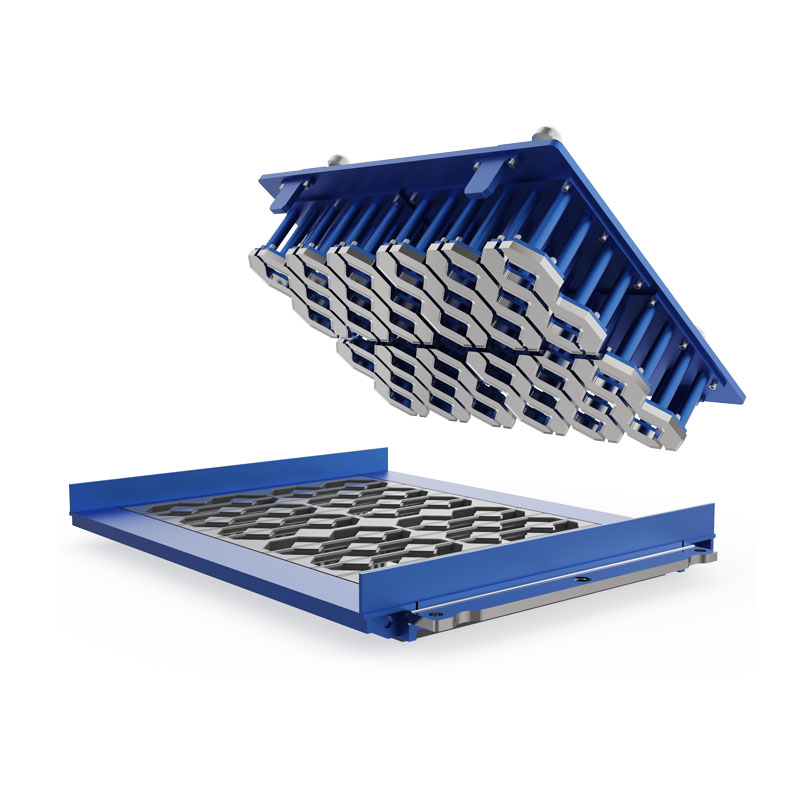
A Mold for Concrete Block is the precision-engineered tool that shapes concrete mix into finished blocks, pavers, or bricks. It is the interface between the raw material and the final product, determining not only the external dimensions but also the internal cavity structure, surface texture, and edge profile of the block. In a typical block-making machine, the mold consists of several key components: the mold frame that provides structural support, the cavity plates that define the block shape, the core rods that form the hollow cavities, and the wear plates that protect the mold from abrasive concrete. Each of these components must be manufactured to exacting tolerances to ensure consistent block production.

Why does the quality of the Mold for Concrete Block matter so much? Think of it like the dies used in a stamping press. A high-quality die produces thousands of identical parts with minimal wear; a poor-quality die produces inconsistent parts, requires frequent adjustments, and fails prematurely. The same principle applies to a Mold for Concrete Block. A precision mold from QGM is manufactured using high-grade tool steel, precision CNC machining, and advanced heat treatment processes to ensure dimensional stability and wear resistance. The surface finish of the mold cavities is critical: a smooth surface reduces the adhesion of the concrete mix, improving release and reducing cleaning time. The hardness of the steel is also vital: a mold that is too soft will wear rapidly, while a mold that is too hard may be brittle. Our factory has developed a proprietary hardening process that achieves the optimal balance of hardness and toughness, maximizing service life.

Over the years, our factory has observed that many brick producers underestimate the strategic importance of the Mold for Concrete Block. They view it as a consumable item, selecting suppliers based almost exclusively on price. This is a costly mistake. The mold is the most critical component in the block production process. A poor-quality mold will lead to dimensional inconsistencies, increased waste, higher rejection rates, and more frequent production stoppages. These hidden costs far exceed the initial savings of buying a cheaper mold. By understanding the fundamental role of the Mold for Concrete Block and making an informed investment, producers can significantly improve their bottom line.


2. How Does Mold Precision Impact Material Waste?

Material waste is one of the largest direct costs in concrete block production. Raw materials—cement, sand, aggregate, and water—represent a significant portion of the production cost. Any block that is outside the specified dimensional tolerance is effectively waste; it cannot be sold and must be discarded or recycled. A high-precision Mold for Concrete Block is the first line of defense against material waste. When the mold cavities are machined to tight tolerances, the block dimensions are consistent from block to block. This consistency means that every block meets the required specifications, and the rejection rate is minimal.

Let's examine the relationship between mold precision and material waste in practice. Consider a block producer manufacturing 2 million standard hollow blocks per year using a Mold for Concrete Block with average precision. The dimensional tolerance of the mold is +/- 0.5mm. Due to this variation, a certain percentage of blocks will be outside the acceptable tolerance range. In a typical production environment with a mold of this precision, the rejection rate might be 2-3%. That is 40,000 to 60,000 wasted blocks per year. Each wasted block represents wasted material: cement, sand, and aggregate that were mixed, formed, and then discarded. The cost of this waste can be significant.

Now consider the same production volume using a high-precision Mold for Concrete Block from QGM, manufactured to a tolerance of +/- 0.1mm. The rejection rate drops to 0.5-1%. This reduces the waste to 10,000 to 20,000 blocks per year—a reduction of 30,000 to 50,000 wasted blocks. At a typical material cost of $0.50 per block, this represents annual savings of $15,000 to $25,000. This is not a trivial amount; it is the difference between a profitable line and one that is struggling. The savings from reduced material waste alone can often pay for the higher cost of a premium mold within the first year of operation.

Beyond the direct material savings, there are additional benefits from improved precision. Consistent block dimensions improve the fit and finish of the final product, leading to better customer satisfaction and fewer returns. In paving applications, dimensional consistency is critical for achieving the desired interlocking effect. In structural applications, it ensures that the blocks meet engineering specifications. Our factory has developed a proprietary quality control system for our Mold for Concrete Block that includes 100% dimensional inspection using coordinate measuring machines (CMM). This ensures that every mold leaving our factory meets the specified tolerances, providing our customers with the precision they need to minimize waste and maximize profitability.


3. How Does Mold Wear Resistance Affect Replacement Frequency and Cost?

The concrete mix used in block production is highly abrasive. Cement is a fine powder that acts as a mild abrasive, but sand and aggregate—especially crushed stone—are coarse and aggressive. As the concrete mix is compressed into the Mold for Concrete Block, the abrasive particles constantly scrape against the cavity walls and the core rods. Over time, this abrasion causes wear: the cavity surfaces become rougher, the dimensions of the cavities gradually increase, and the core rods become thinner. A Mold for Concrete Block made from low-quality steel will wear rapidly, requiring frequent replacement.

The rate of mold wear depends primarily on two factors: the material hardness and the surface treatment. The base material of the mold should be a high-quality tool steel with high wear resistance. Common choices include 42CrMo4, a chromium-molybdenum alloy steel, and more specialized steels like 5CrNiMo or 5CrMnMo. However, even the best base material will wear over time. The key to extending mold life is surface treatment. A Mold for Concrete Block can be surface-treated with nitriding, hard chrome plating, or a proprietary thermochemical treatment. Nitriding creates a hard, wear-resistant layer on the surface of the steel, significantly increasing its abrasion resistance. Hard chrome plating provides a smooth, hard surface that resists wear and also helps reduce concrete adhesion. The most advanced treatment is a proprietary thermochemical process that creates a surface layer with a hardness approaching that of ceramic materials.

The practical impact of wear resistance is significant. Consider two molds: Mold A is made from standard steel with no surface treatment, and Mold B is made from high-quality tool steel with a premium surface treatment. Mold A might last for 200,000-300,000 cycles before the cavity dimensions have changed so much that the blocks are outside the acceptable tolerance range. Mold B might last for 800,000-1,000,000 cycles—three to four times longer. The replacement frequency is reduced by 70-80%, and the cost of the mold is amortized over a much larger number of blocks. The savings are twofold: the direct cost of replacing the mold is reduced, and the indirect cost of production interruptions during mold changeovers is also minimized.

At Quangong Machinery Co., Ltd., our factory has invested heavily in advanced metallurgy and surface treatment technologies. Our Mold for Concrete Block is manufactured from premium alloy steel and undergoes a proprietary surface treatment process that significantly enhances wear resistance. We conduct wear tests on our molds under simulated production conditions to verify their performance. The result is a Mold for Concrete Block that provides exceptional service life, reducing the frequency of costly replacements and production interruptions. We have documented cases where our molds have exceeded 1,000,000 cycles with minimal dimensional change, demonstrating that the investment in a quality mold is one of the most effective ways to reduce overall production costs.


4. How Does Mold Quality Influence Production Efficiency and Labor Costs?

Production efficiency is the product of two factors: the speed at which blocks can be produced and the uptime of the production line. The Mold for Concrete Block directly influences both of these factors. A well-designed, precision-manufactured mold contributes to efficient production, while a poorly designed mold can be the source of constant interruptions and delays. The impact on labor costs is often underestimated. If a production line is stopped for mold cleaning, adjustments, or replacement, the workers are still being paid, but they are not producing blocks. The cost of idle labor, like idle equipment, must be absorbed by the remaining production.

One of the most significant contributors to production inefficiency is concrete build-up on the mold surfaces. During the pressing process, a thin layer of concrete can adhere to the cavity walls and the core rods. This build-up accumulates over time, altering the dimensions of the cavities and increasing the force required to eject the blocks. If the build-up is not removed, the blocks will become deformed or difficult to remove, leading to production stoppages. A high-quality Mold for Concrete Block is designed to minimize concrete build-up. The surface finish of the cavity is critical: a smoother surface provides fewer anchor points for the concrete. The draft angle—the slight taper on the cavity walls—also helps the blocks release more easily. A mold with a smooth surface finish and an optimized draft angle will require less frequent cleaning and will release blocks more quickly.

Efficient cleaning is another factor. When cleaning is required, a mold with a non-stick coating or a specially designed surface pattern may be easier to clean. This reduces the time required for cleaning, allowing production to resume more quickly. Furthermore, a high-quality Mold for Concrete Block is designed for easy maintenance. Wear plates, in particular, are often designed to be replaceable. When the wear plate is worn, it can be replaced in a short time, rather than requiring the replacement of the entire mold. This reduces downtime and extends the service life of the mold.

Our factory has designed our Mold for Concrete Block with a focus on production efficiency. We use advanced surface finishing techniques to achieve a mirror-like surface finish on the cavity walls. We optimize the draft angle for each specific block design, ensuring efficient release. We incorporate replaceable wear plates in our mold design, allowing for quick and easy maintenance. As a result, our customers report reduced cleaning time, fewer production interruptions, and higher overall productivity. These efficiency gains translate directly into lower labor costs per block and higher throughput, further enhancing the return on investment of a high-quality Mold for Concrete Block.


5. What Technical Specifications Define a High-Quality Concrete Block Mold?

To make an informed purchasing decision, it is essential to understand the technical specifications that define a high-quality Mold for Concrete Block. These specifications are not just numbers; they represent the engineering choices that determine the mold's performance, durability, and cost-effectiveness. The following table provides a detailed breakdown of the key specifications for a premium Mold for Concrete Block, such as those produced by Quangong Machinery Co., Ltd.

Specification Category Parameter Premium Mold Specification Cost Impact
Material Base Steel Type 42CrMo4 or equivalent tool steel Higher initial cost but significantly longer service life
Hardness Surface Hardness (HRC) 58-62 HRC (after treatment) Higher hardness reduces wear and extends mold life
Surface Treatment Type Gas nitriding or specialized hard coating Reduces concrete adhesion and wear
Precision Dimensional Tolerance (mm) +/- 0.1mm Minimizes waste and ensures consistent block quality
Surface Finish Roughness (Ra) 0.3-0.5µm Smooth surface reduces concrete build-up and improves release
Design Draft Angle 1-2 degrees Optimizes block ejection and reduces cycle time
Design Life Expected Cycles 800,000-1,000,000 cycles Lower replacement frequency, reduced downtime
Maintenance Wear Plate Design Replaceable wear plates Simplifies maintenance and extends core mold life

Each of these specifications is carefully chosen to optimize the performance of the Mold for Concrete Block. The selection of 42CrMo4 steel, for example, provides an excellent balance of strength, toughness, and wear resistance. The surface hardness of 58-62 HRC, achieved through heat treatment, is necessary to resist the abrasive action of concrete. The dimensional tolerance of +/- 0.1mm ensures that every block is identical, minimizing waste. The surface finish of 0.3-0.5µm reduces concrete adhesion and improves the release of the block. The draft angle of 1-2 degrees facilitates efficient ejection. And the replaceable wear plates extend the service life of the mold.

Our factory has developed a comprehensive quality control system that ensures every Mold for Concrete Block meets these specifications. We use coordinate measuring machines (CMM) for dimensional inspection, Rockwell hardness testers for hardness verification, and optical profilometers for surface finish measurement. We also conduct a final assembly inspection to ensure that all components fit together correctly and that the mold operates smoothly. By adhering to these rigorous quality standards, we ensure that our customers receive a Mold for Concrete Block that delivers consistent performance and long service life.


6. How Does the Total Cost of Ownership of a Quality Mold Compare to a Low-Quality Mold?

The Total Cost of Ownership (TCO) is the most comprehensive way to evaluate the economic impact of a Mold for Concrete Block. The TCO includes the initial purchase price, but it also includes all the costs that accumulate over the lifetime of the mold: the cost of replacement, the cost of lost production due to downtime, the cost of waste from rejected blocks, and the cost of maintenance and repairs. When the TCO of a high-quality Mold for Concrete Block is compared to that of a low-quality alternative, the superiority of the premium product becomes clear. The initial price difference is often small compared to the long-term cost savings.

Let's analyze a hypothetical comparison between a low-quality mold and a premium mold from Quangong Machinery Co., Ltd. over a ten-year period.

Cost Factor Low-Quality Mold Premium Mold (Quangong) Ten-Year Savings
Initial Purchase Price $8,000 $12,000 -$4,000
Number of Replacements (10 years) 5 (every 2 years) 1 (every 8-10 years) $40,000
Material Waste (Rejected Blocks) $60,000 $20,000 $40,000
Production Downtime (Cleaning/Repair) $25,000 $5,000 $20,000
Maintenance Costs $8,000 $2,000 $6,000
Total Cost of Ownership (10 years) $101,000 $39,000 $62,000

This analysis reveals that the higher initial purchase price of the premium Mold for Concrete Block is more than offset by the substantial savings in replacements, waste reduction, downtime, and maintenance. The TCO of the premium mold is less than 40% of the low-quality alternative over a ten-year period. The savings of $62,000 can be reinvested in the business, or they can directly improve the profit margin of the block production line. This analysis is not theoretical; it is based on real-world data from customers who have switched to our premium molds.

The key takeaway is that the lowest-priced mold is not the most cost-effective mold. The cost of a Mold for Concrete Block should be evaluated as a strategic investment, not a consumable expense. By investing in a high-quality mold from a reputable manufacturer like Quangong Machinery Co., Ltd., brick producers can significantly reduce their overall production costs and improve their competitiveness. Our factory's commitment to quality, precision, and innovation ensures that our molds provide exceptional value over their entire service life.


7. Frequently Asked Questions (FAQ)

Question 1: How often should a Mold for Concrete Block be replaced?

Answer: The replacement interval for a Mold for Concrete Block depends on the material, the surface treatment, the production volume, and the abrasiveness of the concrete mix. A high-quality mold from Quangong Machinery Co., Ltd., manufactured from premium tool steel with a specialized surface treatment, can last for 800,000 to 1,000,000 cycles. This translates to several years of production in most brick plants. Lower-quality molds may need replacement after 200,000 to 300,000 cycles. We recommend regular inspection of the mold for wear and dimensional change to determine the optimal replacement schedule. Our factory provides inspection services and can advise on the best replacement strategy for your specific production conditions.

Question 2: What are the signs that a concrete block mold is wearing out?

Answer: The signs of mold wear include: an increase in the number of rejected blocks (blocks outside the specified tolerance), visible wear or scoring on the cavity walls or core rods, difficulty in ejecting the blocks from the mold, and an increase in the force required to operate the press. If the blocks are showing dimensional variations, rough surface finishes, or edge defects, this is a clear indication that the mold is wearing out. Regular inspection of the mold surfaces and measurement of key dimensions are the most reliable ways to track mold wear. Our factory provides a mold inspection and refurbishment service to help customers extend the life of their molds.

Question 3: Can a worn Mold for Concrete Block be refurbished, or must it be replaced?

Answer: In many cases, a worn Mold for Concrete Block can be refurbished. The process involves measuring the wear, grinding or re-machining the cavity surfaces to restore the required dimensions, and reapplying surface treatments. This is often much more cost-effective than purchasing a new mold. However, there is a limit: if the wear is too extensive, or if the core rods or other critical components are damaged, replacement may be the only option. Our factory provides a mold refurbishment service, including dimensional restoration and surface treatment, allowing our customers to extend the life of their molds at a fraction of the cost of a new one.

Question 4: How does the design of a Mold for Concrete Block affect the quality of the finished blocks?

Answer: The design of the Mold for Concrete Block directly influences the quality of the finished blocks. The dimensions of the cavity determine the dimensions of the block. The surface finish of the cavity determines the surface texture of the block. The draft angle of the cavity affects the ease of ejection and the consistency of the block dimensions. The design of the core rods determines the shape and size of the hollow cavities. A well-designed mold, manufactured to tight tolerances, produces blocks that are consistent, accurate, and free from defects. Our factory's engineering team has extensive experience in mold design, ensuring that our molds produce blocks of the highest quality. We also offer custom mold design services to meet specific product requirements.

Question 5: Why is a quality Mold for Concrete Block from Quangong Machinery Co., Ltd. a better investment than a cheaper alternative?

Answer: A quality Mold for Concrete Block from Quangong Machinery Co., Ltd. is a superior investment because of the significant long-term cost savings it delivers. The higher initial purchase price is more than offset by reduced material waste, lower replacement frequency, reduced production downtime, and lower maintenance costs. Our molds are manufactured from premium materials, with advanced surface treatments and tight dimensional tolerances, ensuring exceptional performance and a long service life. When the Total Cost of Ownership is calculated over the lifetime of the mold, the premium mold is the most cost-effective choice. Our factory's commitment to quality, precision, and customer support ensures that you receive a product that delivers outstanding value.


8. Conclusion

The quality of a Mold for Concrete Block is not a minor detail; it is a critical determinant of overall brick production costs. A high-quality mold reduces material waste, minimizes replacement frequency, improves production efficiency, and lowers the total cost of ownership. The initial investment in a premium Mold for Concrete Block from a trusted manufacturer like Quangong Machinery Co., Ltd. is one of the most effective ways to reduce production costs and improve profitability. Our factory's commitment to quality, precision, and innovation ensures that our molds deliver exceptional value over their entire service life.

From dimensional accuracy and wear resistance to surface finish and maintenance design, every detail of a Mold for Concrete Block contributes to the final cost per block. By understanding the technical specifications that define a high-quality mold and by evaluating the total cost of ownership, brick producers can make informed decisions that benefit their bottom line. We have seen how a premium mold can save tens of thousands of dollars over its service life, turning a production line from a cost center into a profit generator. The choice is clear: invest in quality, and you will reap the rewards in lower production costs and higher profitability.

If you are looking to reduce your production costs and improve the quality of your concrete blocks, we invite you to explore our comprehensive range of Mold for Concrete Block solutions. Our team of experienced engineers can help you select the optimal mold for your specific production requirements. Contact Quangong Machinery Co., Ltd. today for a free consultation and discover how our high-quality molds can transform your brick production economics.

Related News
Leave me a message
X
We use cookies to offer you a better browsing experience, analyze site traffic and personalize content. By using this site, you agree to our use of cookies.Privacy Policy