Quangong Machinery Co., Ltd.
News

How Modular Concrete Block Molds Increase Flexibility in Construction?

2026-08-05 0 Leave me a message

The construction industry is in a state of constant flux. Project timelines tighten, architectural demands grow more complex, and material costs fluctuate unpredictably. In this environment, the ability to adapt quickly is not just an advantage—it is a necessity. One of the most significant areas where this adaptability is taking shape is in the concrete block production and placement process. Enter the mould for concrete block system. This is not a simple steel box; it is a precision-engineered tool that allows contractors and block manufacturers to switch between different block shapes, sizes, and designs in minutes rather than hours or days. At Quangong Machinery Co., Ltd., our factory has been designing and manufacturing high-performance modular block mold systems for over 20 years, and we have seen how this technology has empowered construction teams to tackle projects that would have been too complex or expensive to consider just a decade ago.


But what exactly does "flexibility" mean in the context of concrete block molds? It means the ability to produce solid blocks, hollow blocks, interlocking pavers, and decorative architectural elements on the same machine, with minimal downtime. It means being able to respond to a last-minute design change without scrapping expensive tooling. It means reducing the inventory of specialized molds and, most importantly, it means enabling the construction of complex, architecturally interesting structures without sacrificing efficiency or cost-effectiveness. This article will dissect the technical and operational benefits of modular block molds, explore the engineering principles that make them work, and share real-world data that demonstrates their transformative impact on construction workflows. From rapid changeover mechanisms to the financial implications of reduced mold inventory, we will provide a comprehensive look at why modularity is the new standard in concrete construction.

paver mould


Table of Contents


How Does Modular Design Reduce Mold Changeover Time?

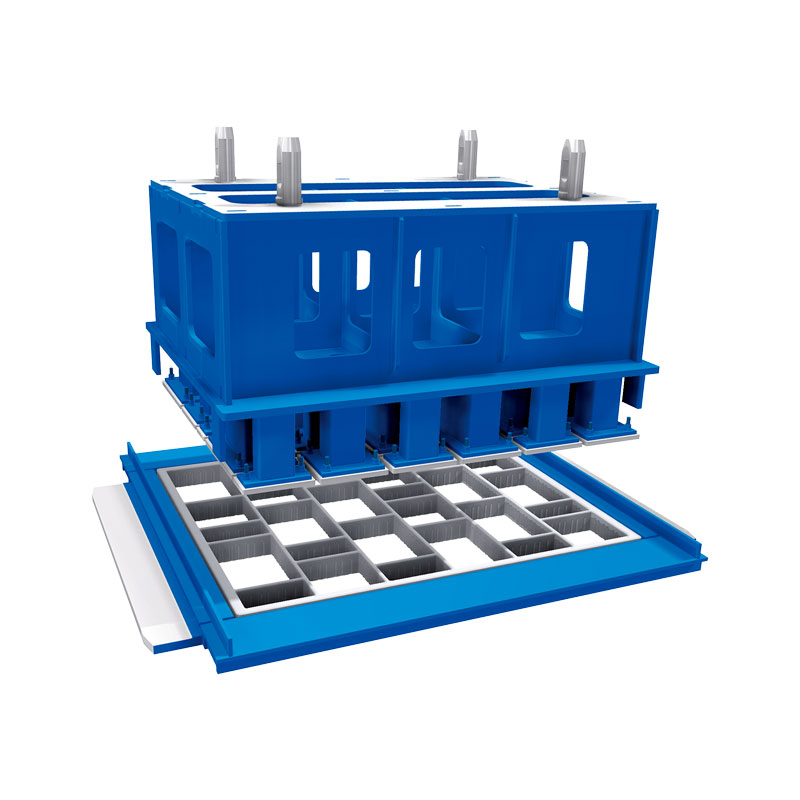
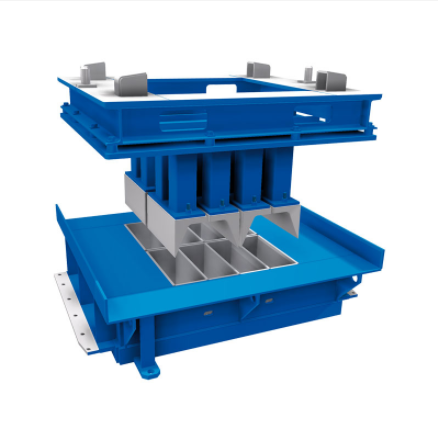
Time is the currency of construction. Every minute that a production line is stopped for a mold change is a minute of lost productivity. Traditional monolithic molds are heavy, cumbersome, and require extensive bolting and alignment procedures, often taking 45 to 90 minutes to swap over. In contrast, a mould concrete block mold system is engineered for speed. The core principle is separation of the mold frame (the supporting structure that fits into the block machine) from the cavity inserts (the components that actually shape the concrete). This allows the heavy, bulky frame to remain locked in place while only the relatively lightweight inserts are swapped. Our factory has refined this concept into a hydraulic quick-clamp system that can execute a complete mold change in under 5 minutes, without the need for specialized tools.

The methodology behind this speed is a combination of three key innovations: standardized interface dimensions, hydraulic clamping, and guided alignment systems. First, we manufacture all our modular mold frames with a universal base interface that conforms to international block machine standards (ASAE, DIN, or ISO). This means the frame fits any compatible block machine. Second, the hydraulic clamping system uses four or six actuators that simultaneously engage and lock the mold in place. These clamps are controlled by the machine's PLC, ensuring consistent clamping force every time. Third, the guided alignment system uses precision pins and self-centering cones that automatically position the new mold within a tolerance of +/- 0.15 mm, eliminating the need for manual alignment. When a mold change is required, the operator simply releases the clamps, slides out the old mold on a roller bed, slides in the new one, and engages the clamps. The entire process is intuitive and can be performed by a single operator. This rapid capability allows a factory to produce multiple product lines in a single shift, responding to real-time construction demand.

To appreciate the impact, consider the following comparison of typical downtime scenarios:

Parameter Traditional Monolithic Mold Modular Mold System (Quangong) Time Saved
Preparation & De-bolting 25 minutes 1 minute (release clamps) 24 minutes
Mold Removal & Positioning 30 minutes (requires crane) 3 minutes (roller bed) 27 minutes
Alignment & Re-bolting 20 minutes (manual adjustment) 1 minute (self-centering) 19 minutes
Calibration & Test Run 15 minutes 2 minutes (parameter recall) 13 minutes
Total Changeover Time 90 minutes 7 minutes 83 minutes

The data is clear: a 90-minute changeover is reduced to just 7 minutes. For a factory running three mold changes per day, this translates to over 4 hours of additional production time daily. Over a year, that's more than 1,000 hours of regained capacity. But speed is not the only advantage. The precision of the modular system means that the machine resumes production with consistent block quality immediately, without the "warm-up" rejects that often follow a manual changeover. This precision is critical for maintaining the tight tolerances required for interlocking and decorative blocks. By delivering speed without sacrificing quality, the modular mold system becomes a tool for business agility, allowing a plant to take on small, customized orders profitably—a capability that is increasingly demanded by the modern construction market.


What Are the Technical Performance Parameters of Our Modular Molds?

While the modular design offers exceptional flexibility, it must not compromise on the fundamental requirements of a mold: durability, precision, and longevity. Our modular molds are not just "modular" in name; they are engineered to the same exacting standards as our fixed molds. The inserts, which bear the brunt of the concrete abrasion, are manufactured from high-grade hardened steel (58-62 HRC) with a chromium plating to reduce wear and facilitate concrete release. The frames are fabricated from heavy-duty structural steel, stress-relieved to prevent warping. This ensures that the modular system does not sacrifice performance for convenience. Our factory subjects every mold to a rigorous manufacturing and testing protocol, including dimensional inspection on a coordinate measuring machine (CMM) and a high-pressure water test to verify sealing.

Here is a detailed breakdown of the critical technical specifications for our modular mold system:

Parameter Specification Impact on Performance
Frame Material S355JR Structural Steel (Stress-Relieved) Prevents frame distortion over thousands of cycles, ensuring consistent alignment and product accuracy.
Insert Material 1.2379 Alloy Tool Steel (58-62 HRC) Maximum abrasion resistance, extending insert life to 250,000+ cycles before reconditioning is required.
Surface Finish (Core Side) Chrome Plating (0.05mm) + PTFE Infused Release Reduces concrete adhesion by 60%, resulting in cleaner blocks and fewer surface defects.
Clamping System Hydraulic (160 bar) with Position Sensors Provides consistent, adjustable clamping force of up to 1,200 kN, preventing mold shifting during vibration.
Dimensional Tolerance (Frame) +/- 0.1 mm (Overall Length) Ensures perfect interface with the block machine, maintaining the machine's built-in accuracy.
Insert Interchangeability Interlocking Keys + Dowel Pins Allows inserts to be swapped out without re-aligning the frame, maintaining repeatability.
Maximum Operating Temperature 80°C (Continuous) Compatible with steam curing and heated mold systems, accelerating production in cold climates.
Minimum Block Size Supported 100 x 50 x 50 mm Enables production of fine pavers and architectural brickettes.

These specifications are not just numbers on a data sheet; they define the operational limits and capabilities of the mold. For example, the choice of 1.2379 tool steel with chrome plating is critical for maintaining the surface finish over many cycles. A mold that wears unevenly will produce blocks with inconsistent dimensions, leading to problems during construction. Our modular mold, with its high-grade materials and precision manufacturing, ensures that the inserts will remain within tolerance for up to 250,000 cycles. When they do eventually wear, the inserts can be reconditioned independently of the frame, saving up to 40% of the cost of a complete new mold. This reconditioning capability is a key factor in the long-term ROI of a modular system. By investing in a modular frame once, you can simply replace or re-machine the inserts as needed, effectively keeping the system "as good as new" for decades.


How Do Interchangeable Inserts and Components Enable Design Variety?

Architectural trends are increasingly demanding visual interest and complexity in concrete masonry. The days of monotonous gray rectangular blocks are fading; the market now calls for textured surfaces, interlocking geometries, and complex profiles for walls and pavements. The modular mold is the enabler of this design revolution. The core principle is the ability to swap out individual cavity inserts to create new block profiles, textures, and patterns. An insert for a standard 200x200x400 hollow block can be replaced with an insert for a 150x150x300 solid block or a decorative screen block with a floral pattern, all within the same robust frame. This is not just about changing the size; it is about changing the functional and aesthetic characteristics of the final product. Our modular mold system accommodates three primary types of interchangeable components: cavity inserts (for the block shape), core pins (for creating holes or voids), and face plates (for applying surface textures).

Consider the scenario of a construction project that requires a load-bearing wall with specific corner pieces. Traditionally, a contractor would need a specialized mold for the corner, a different one for the straight wall, and another for the lintel block. With a modular system, one frame and a set of inserts can produce all these components. The process is simple: the cavities that need to produce corner shapes are fitted with the appropriate inserts. The control system on the block machine can even be programmed to produce a specific pattern of blocks from a single pallet, for example, a combination of smooth and textured blocks for a feature wall. This capability extends beyond mere geometry to include surface treatments. By changing the face plates, an identical block profile can be given a smooth finish, a split-face (rough) finish, or a fluted (grooved) finish. This versatility allows a single block plant to serve multiple market segments—residential, commercial, and landscape—with a single capital investment.

The material science behind these inserts is also important. For high-volume production of standard blocks, inserts are typically made from hardened steel. For short-run specialty blocks (e.g., for a specific architectural project), we offer the option of using cast urethane inserts. These are significantly cheaper to manufacture and can be produced quickly, making them perfect for limited-edition runs. When the project is complete, the urethane inserts can be stored and reused if the design is repeated, or simply recycled. This capability to economically produce short runs of custom designs is a game-changer for architects and developers who want to create a unique identity for their projects. It removes the barrier of tooling cost, which traditionally made custom concrete blocks prohibitively expensive. The modular mold system, with its interchangeable inserts, democratizes design, allowing any construction project to incorporate unique, high-quality concrete elements without breaking the budget.


How Does Mold Flexibility Improve Project Economics and ROI?

The operational speed and design versatility of modular molds are impressive, but the question that ultimately matters is: "What does this mean for my bottom line?" The economic benefits of a modular mold system are multi-faceted and extend far beyond the initial purchase price. The most obvious impact is the reduction in mold inventory. Instead of buying and storing a separate mold for every block type, a modular system allows you to own a few high-quality frames and a stock of inserts. This reduces the initial capital expenditure on molds by 30-50%. For a block manufacturer with 20 different product lines, the savings can be substantial. Furthermore, warehouse space is expensive; modular molds take up significantly less space than a collection of monolithic molds, freeing up valuable floor space for production or storage of finished goods.

Here is a summary of the key cost-saving and revenue-generating advantages:

  • Reduced Mold Replacement Costs: When a modular insert wears out, it is replaced independently of the frame. This costs 40-60% less than replacing a whole monolithic mold. Over a 10-year period, this can save a significant six-figure sum.
  • Increased Production Capacity: Faster changeovers mean less downtime and more production hours. A factory that can perform a 7-minute changeover can easily produce three different block types in a single shift, increasing its responsiveness to customer demand and its overall capacity.
  • Elimination of Scrap and Rework: The precision of the modular system ensures that block dimensions are consistent from the first cycle. This eliminates the "reject run" that often follows a manual mold change, saving concrete mix and labor.
  • New Market Opportunities: The ability to economically produce short runs of custom blocks opens up new markets in landscape design, architectural salvage, and high-end residential construction. These segments often command premium prices, increasing profit margins.

A concrete example from one of our clients in Southeast Asia illustrates this point. The company had 15 different block types in their catalog and was using 12 separate monolithic molds. After evaluating their operations, they transitioned to our modular system with 3 universal frames and a comprehensive set of inserts. Their total mold investment dropped by 45%. More importantly, their mold changeover time went from an average of 75 minutes to under 10 minutes. This allowed them to accept orders for custom blocks with a turnaround time of just 48 hours, which had been previously impossible. Within 18 months, the savings on mold purchases and the revenue from new custom orders fully paid for the modular system. The return on investment (ROI) was calculated at an impressive 180% over three years. This is a direct result of the flexibility that modular engineering provides.

Beyond the direct financial metrics, there are indirect economic benefits. The speed of changeover means that the company can operate with a "Just-In-Time" (JIT) production model, reducing the need for large, expensive stocks of finished blocks. The versatility of the system makes the factory more resilient to market downturns; if demand for one block type falls, the factory can quickly pivot to produce another. This adaptability is an asset in a volatile construction market. The modular mold system is not just a tool for making blocks; it is a tool for making money and building a more resilient business. By reducing the cost of entry to new product lines and increasing the efficiency of existing ones, modular molds deliver a superior return on investment that is felt across the entire construction value chain.


Frequently Asked Questions (FAQ)

Question 1: Can I use inserts from other brands with your modular mold frame?

Answer: While our modular mold frame is designed to accept a wide range of insert geometries, the specific interface mechanisms (keyways, dowel pins, and clamping surfaces) are proprietary to QGM to ensure consistent performance and safety. We cannot guarantee the fit, alignment, or longevity of inserts manufactured by other brands. However, we offer a comprehensive custom design service. If you have existing inserts that you wish to use, our factory can often re-machine them to be compatible with our frame, or we can design and manufacture new inserts to your exact specifications.

Question 2: What is the typical lifespan of a modular mold frame, and what about the inserts?

Answer: The robust structural frame of our modular mold is designed for a service life of 20+ years, as it is only subjected to structural loads, not abrasive wear. The inserts, which are subjected to the concrete abrasion, have a lifespan that depends on the production volume and the abrasiveness of the aggregate. For typical applications, the high-chrome steel inserts will last 200,000 to 300,000 cycles before they need reconditioning or replacement. With proper maintenance and care, the inserts can be reconditioned multiple times, extending their total service life to over 500,000 cycles.

Question 3: How does the modular mold handle the high vibration forces of a block machine?

Answer: The modular mold system is specifically engineered to withstand the high-frequency vibration (up to 6,000 rpm) typical of modern block machines. The hydraulic clamping system applies a consistent, high-force grip that prevents the mold from shifting during vibration. Additionally, the frame is stress-relieved and manufactured with thick-section steel to dampen vibration. The inserts are precisely keyed into the frame, ensuring they cannot move independently. This robust design eliminates the vibration-induced wear that can destroy loose-fitting molds.

Question 4: Is the modular mold system compatible with automated block handling and stacking systems?

Answer: Absolutely. Our modular mold system is designed as part of a complete production line. The universal interface ensures that the blocks produced are exactly the same size and shape, regardless of the insert combination. This consistency is critical for automated handling systems, which rely on precise dimensions to pick, stack, and strap the finished blocks. We can provide full integration support to ensure that your new mold system works seamlessly with your existing or new automation equipment.

Question 5: Can I use the same modular mold for both dry-mix and wet-mix production?

Answer: Yes, our modular molds are designed to be compatible with both dry-mix (rigid) and wet-mix (flowable) concrete formulations. However, the wear patterns may differ. For wet-mix applications, the concrete is more abrasive and adhesive. We recommend specifying a slightly harder chrome plating on the inserts for wet-mix production to extend the time between reconditioning intervals. Our engineering team can provide specific recommendations based on your mix design to optimize the mold's performance.


Conclusion: Unlock New Construction Capabilities with Modular Molds

The modern construction landscape demands agility, variety, and efficiency. Modular concrete block molds are the direct answer to these demands. By reducing changeover time, enabling rapid design iteration, and providing a compelling economic return, they are transforming how blocks are made and how structures are built. This technology is not just a marginal improvement; it is a paradigm shift that allows construction professionals to treat their block production as a flexible, responsive resource rather than a rigid bottleneck.

If you are looking to bring this level of flexibility to your concrete production, we invite you to contact Quangong Machinery Co., Ltd. for a personalized consultation. Our team of engineers will analyze your current product line, discuss your future goals, and design a modular mold system that perfectly fits your operation. We will provide a detailed cost-benefit analysis and a sample mold for testing. Request your free flexibility assessment now from Quangong Machinery Co., Ltd. and discover how our modular molds can build a more adaptable and profitable future for your business.

Related News
Leave me a message
X
We use cookies to offer you a better browsing experience, analyze site traffic and personalize content. By using this site, you agree to our use of cookies.Privacy Policy
RejectAccept