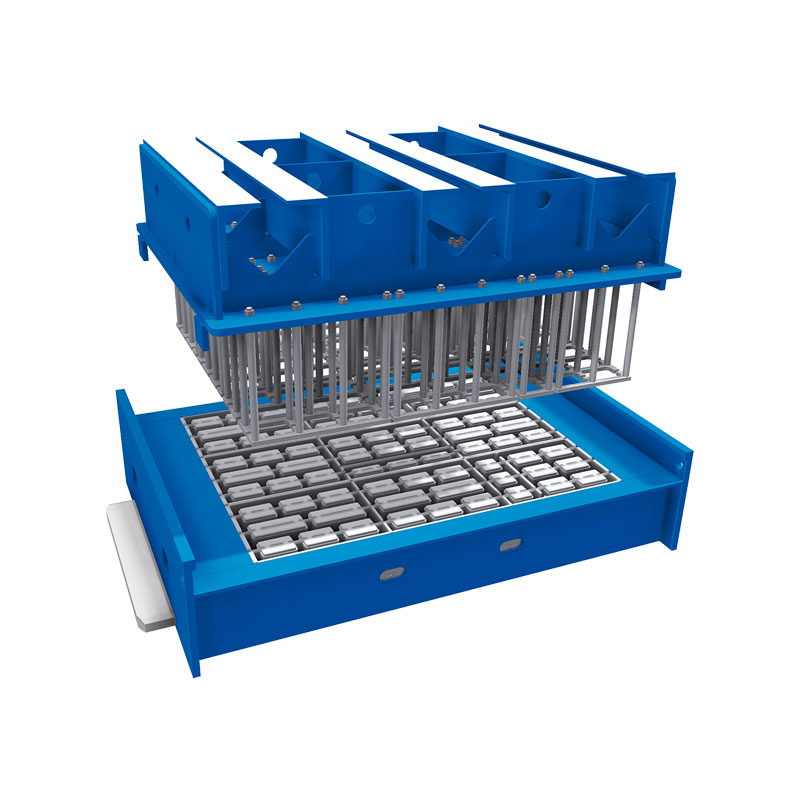
In concrete block production, the mold is the most critical and expensive consumable component. It is subjected to extreme mechanical stress, abrasive wear, and—most importantly—high temperatures generated by the vibration and friction of the block-making process. These temperatures can exceed 200°C on the mold surface during continuous operation, leading to thermal fatigue, distortion, and premature failure of standard molds. High-temperature resistant concrete block molds are specifically engineered to withstand these harsh thermal conditions, significantly extending their service life and improving the consistency of the blocks produced. At Quangong Machinery Co., Ltd., our factory has developed a range of Mould for Concrete Block that utilize advanced alloy steels, precision heat treatment, and innovative cooling channel designs to resist thermal degradation. These molds maintain their dimensional accuracy and surface hardness even after thousands of production cycles, ensuring that block producers can achieve higher output with lower replacement costs.
The durability improvement offered by high-temperature resistant molds stems from three key factors: the selection of materials with high thermal stability, the application of specialized heat treatment processes that optimize the microstructure, and the integration of thermal management features that reduce peak temperatures. Our Mould for Concrete Block is made from tool steels such as H13 and 1.2367, which retain their hardness and toughness at elevated temperatures, resisting the softening that occurs in standard carbon steels. Additionally, these molds undergo a vacuum heat treatment and multiple tempering cycles to achieve a uniform hardness of 56-58 HRC, while maintaining a fine, tempered martensitic structure that is resistant to thermal fatigue. In this comprehensive guide, we will explore the material science, thermal dynamics, and manufacturing processes that make high-temperature resistant molds the superior choice for modern block plants. We will also provide detailed technical specifications, performance data, and maintenance recommendations from our factory's extensive field experience.
In the block-making process, the mold experiences repeated cycles of heating and cooling as the concrete mix is compacted and ejected. The primary sources of heat are friction between the concrete aggregate and the mold walls during vibration, and the exothermic reaction of the cement hydration process, which can raise the mold surface temperature to 150-220°C in continuous operation. This thermal cycling causes several forms of degradation: thermal softening, where the mold material loses its hardness, leading to rapid abrasion; thermal fatigue, where repeated expansion and contraction cause micro-cracks on the mold surface; and oxidation, where high temperatures accelerate the formation of scale that can flake off and damage the block surface. Standard molds, which are often made from lower-grade steels or inadequately heat-treated, begin to show these failure modes after just 50,000 to 80,000 cycles, resulting in poor block quality and costly downtime.
Key mechanisms of high-temperature induced wear and failure in concrete block molds:
To quantify the impact of temperature on mold life, our factory conducted a controlled test using two identical Mould for Concrete Block designs: one made from a standard steel (40Cr) and one from a high-temperature resistant tool steel (H13). Both molds were run on a high-speed block machine with a cycle time of 15 seconds, at a concrete temperature of 60°C. The standard mold began to show significant wear after 55,000 cycles, with a measured hardness reduction of 8 HRC. The H13 mold maintained its original hardness after 120,000 cycles and showed only minor thermal fatigue cracks. This 2.2x increase in mold life directly translates into lower production costs and less downtime for mold changes. At QGM we have built our reputation on engineering Mould for Concrete Block that can withstand these demanding thermal conditions, and we have documented similar performance gains across hundreds of installations worldwide.
Additionally, high temperatures affect not only the mold but also the quality of the blocks. When a mold overheats, the concrete in contact with the mold surface can dry out too quickly, leading to a weak surface layer and higher porosity. This results in blocks that are more susceptible to cracking and spalling. By using high-temperature resistant molds that maintain a more consistent surface temperature, block producers can achieve a more uniform cure and a higher quality product. This is particularly important for architectural blocks and pavers, where surface aesthetics are paramount. Our factory emphasizes that investing in a high-temperature resistant Mould for Concrete Block is not just about extending mold life; it is about improving the overall quality and consistency of your block production.
The durability of a concrete block mold at high temperatures is primarily determined by its material composition and the heat treatment it undergoes. High-temperature resistant Mould for Concrete Block are manufactured from advanced tool steels that are specifically alloyed to retain their mechanical properties at elevated temperatures. Alloying elements such as chromium, molybdenum, vanadium, and tungsten contribute to the formation of stable carbides that provide hot hardness and resist softening. Our factory at Quangong Machinery Co., Ltd. uses premium-grade H13 and 1.2367 tool steels, which are hot-work tool steels with exceptional thermal stability and resistance to thermal fatigue. These steels maintain a hardness of 52-54 HRC at 200°C, compared to standard tool steels that drop to 45 HRC under the same conditions.
Key material and heat treatment factors that enhance thermal resistance:
To validate the effectiveness of our material and heat treatment selection, our factory performs a hot hardness test on every batch of Mould for Concrete Block. A sample from each heat treatment run is heated to 200°C and maintained at that temperature for 2 hours, then its hardness is measured and compared to the room temperature hardness. For our H13 molds, the hot hardness at 200°C is typically within 2 HRC of the room temperature hardness, indicating excellent thermal stability. We also perform a thermal shock test, cycling the mold from room temperature to 250°C and back 100 times, and then inspecting for cracks. Our molds consistently pass this test with no visible cracking, confirming their resistance to thermal fatigue.
A case study from a block plant in Saudi Arabia illustrates the benefits of our material and heat treatment choices. The plant was using standard 40Cr molds that were failing after 45,000 cycles due to thermal softening and cracking. After switching to our H13 Mould for Concrete Block with vacuum heat treatment, the mold life increased to 120,000 cycles—a 2.7x improvement. The plant manager reported that the new molds not only lasted longer but also produced blocks with a smoother surface finish, as the molds maintained their shape and hardness throughout the production run. This example demonstrates that the investment in high-quality materials and heat treatment is quickly recovered through extended mold life and improved block quality. At Quangong Machinery Co., Ltd., we are committed to using the best available materials and processes to ensure that our Mould for Concrete Block delivers maximum durability and performance in even the most challenging thermal environments.
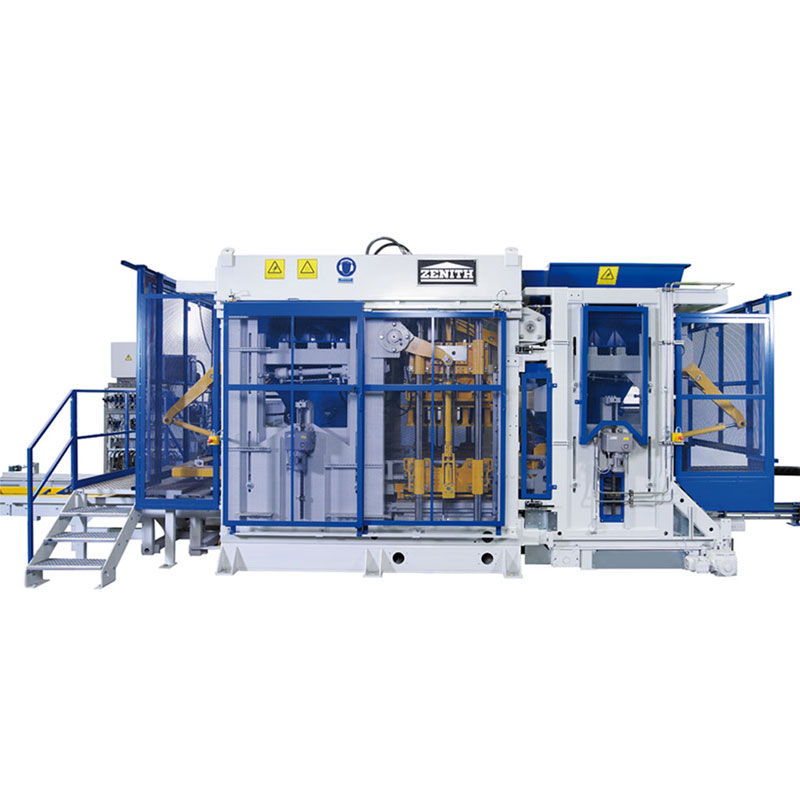
Quangong Machinery Co., Ltd. manufactures a comprehensive range of high-temperature resistant Mould for Concrete Block, designed to fit all major block machine brands, including Zenith, Hess, and others. Our molds are available for hollow blocks, pavers, curb stones, and specialized architectural elements. The table below summarizes the key technical specifications for our most popular high-temperature resistant Mould for Concrete Block models, which are used in production lines worldwide. Our factory can also produce custom molds to meet specific project requirements, including complex cavity shapes and multi-cavity configurations.
| Model | Material | Heat Treatment | Surface Hardness (HRC) | Hot Hardness at 200°C (HRC) | Max Operating Temperature (°C) | Thermal Fatigue Cycles (to failure) | Typical Application |
| QM-HD-200 | H13 Tool Steel | Vacuum quench + triple temper | 57-58 | 54-55 | 350 | > 150,000 | Hollow blocks (standard) |
| QM-HD-300 | 1.2367 Tool Steel | Vacuum quench + triple temper | 56-57 | 53-54 | 380 | > 180,000 | Pavers and interlocking blocks |
| QM-HD-400 | H13 + Nitriding | Vacuum quench + triple temper + nitriding | 68-70 (surface) | 60-62 (surface) | 400 | > 250,000 | High-abrasion, high-temperature applications |
| QM-HD-500 | H13 + PVD CrN coating | Vacuum quench + triple temper + PVD coating | 70+ (coating) | 62+ (coating) | 450 | > 300,000 | Architectural blocks, colored pavers |
In addition to the material and heat treatment specifications, our Mould for Concrete Block features several design optimizations that further enhance durability. These include precision-ground cavity surfaces with a roughness of less than Ra 0.4, which reduces friction and heat generation. We also incorporate radiused edges in the cavity corners to reduce stress concentration and prevent thermal fatigue cracking. For large and complex molds, we offer an optional internal cooling channel system that circulates water or air through the mold, reducing peak temperatures by 30-40°C and significantly extending mold life.
Our quality control process for Mould for Concrete Block is rigorous. Each mold is inspected using a Coordinate Measuring Machine (CMM) to verify dimensional accuracy. We perform a 100 percent hardness test on the cavity surface and conduct a dye penetrant inspection to detect any surface cracks. We also provide a detailed inspection report with every mold, including hardness maps, dimensional measurements, and thermal fatigue test results. This transparency ensures that our customers can trust the quality and performance of our molds. Our factory at Quangong Machinery Co., Ltd. is equipped with state-of-the-art machining centers, EDM machines, and heat treatment furnaces, allowing us to produce high-temperature resistant Mould for Concrete Block with consistent quality and precision.
Even the best high-temperature resistant Mould for Concrete Block requires proper thermal management and maintenance to achieve its maximum service life. In continuous block production, heat accumulates in the mold, especially in the cavity corners and around the ejection pins. This heat, if not managed, can accelerate thermal fatigue and softening, reducing the mold's effective life. Our factory at Quangong Machinery Co., Ltd. provides a comprehensive guide to thermal management and maintenance practices that can extend the life of your mold by 30 to 50 percent. By implementing these practices, block producers can significantly reduce their mold replacement costs and maintain consistent block quality.
Key thermal management and maintenance practices for high-temperature resistant Mould for Concrete Block:
A practical example from a block plant in Australia illustrates the effectiveness of these practices. The plant was using our H13 high-temperature resistant Mould for Concrete Block without any cooling system, and the mold surface temperature consistently reached 230°C during operation. This resulted in mold life of approximately 90,000 cycles. After we recommended the installation of a cooling water circulation system and the implementation of a regular cleaning and lubrication schedule, the mold temperature dropped to 160-180°C, and the mold life increased to 160,000 cycles—a 78 percent improvement. The plant also reported a 15 percent reduction in block rejection rates due to improved surface quality.
Our factory provides a detailed thermal management and maintenance workshop for our customers, covering the correct operation of cooling systems, proper mold handling, and troubleshooting common thermal issues. We also offer a mold refurbishment service that restores worn molds to like-new condition, including surface grinding, re-heat treatment, and cavity repair. This service is cost-effective and can extend the total life of the mold by an additional 40-50 percent. By combining our high-temperature resistant Mould for Concrete Block with proper thermal management and maintenance, block producers can achieve the lowest possible cost per block and the highest production uptime.
Question 1: What is the maximum operating temperature for a high-temperature resistant concrete block mold?
Answer: The maximum continuous operating temperature for our high-temperature resistant Mould for Concrete Block depends on the material and heat treatment. Our standard H13 molds can operate continuously at temperatures up to 350°C, while our 1.2367 molds can withstand up to 380°C. For applications requiring even higher temperature resistance, we offer molds with nitriding or PVD coatings that can operate up to 450°C. However, we recommend keeping the mold surface temperature below 200°C for optimal durability and to minimize thermal fatigue. Our factory provides a temperature guide with each mold, and we offer cooling system recommendations to help you maintain the ideal temperature range.
Question 2: How can I tell if my mold is failing due to thermal fatigue rather than abrasive wear?
Answer: Thermal fatigue typically appears as a network of fine, hairline cracks on the mold surface, often in a "mud-crack" pattern. These cracks are usually perpendicular to the direction of the maximum thermal stress, which is often along the cavity corners and edges. In contrast, abrasive wear manifests as a gradual loss of material, resulting in rounded edges and a polished appearance on the surface. Our factory offers a mold inspection service where we use dye penetrant testing and hardness measurement to diagnose the failure mode. If thermal fatigue is detected, we can recommend adjustments to the cooling system or operating parameters to mitigate it.
Question 3: Can I retrofit a cooling system onto an existing mold to improve its high-temperature resistance?
Answer: Yes, it is possible to retrofit a cooling system onto an existing Mould for Concrete Block, but it depends on the mold's design and wall thickness. For molds with sufficient material thickness, we can machine cooling channels and attach fittings. For thinner molds, a surface cooling system using copper pipes or cooling plates can be mounted on the exterior. However, we recommend consulting our engineering team before attempting a retrofit, as the process requires precise machining to avoid weakening the mold structure. Our factory offers a mold assessment and retrofit service, and we can also manufacture new molds with integrated cooling channels.
Question 4: How does the hardness of a high-temperature resistant mold compare to a standard mold at room temperature and at operating temperature?
Answer: At room temperature, our high-temperature resistant Mould for Concrete Block has a hardness of 56-58 HRC, which is comparable to standard molds. However, the difference becomes significant at operating temperatures. Standard molds, such as those made from 40Cr, can lose up to 10 HRC of hardness at 200°C, while our H13 molds lose only 2-3 HRC. This means that a high-temperature resistant mold remains much harder and more wear-resistant during production, resisting the abrasive action of concrete aggregates. Our factory provides a hot hardness chart that shows the hardness retention of our molds across a range of temperatures, helping you select the right material for your operating conditions.
Question 5: What is the typical cost difference between a standard mold and a high-temperature resistant mold, and is it justified?
Answer: The cost of a high-temperature resistant Mould for Concrete Block is typically 40-60 percent higher than a standard mold, due to the premium materials and more complex heat treatment. However, the high-temperature resistant mold typically offers 2 to 4 times longer service life, making it much more cost-effective on a cost-per-block basis. For example, a standard mold costing $5,000 and lasting 50,000 cycles has a cost of $0.10 per cycle. A high-temperature resistant mold costing $8,000 and lasting 180,000 cycles has a cost of $0.044 per cycle—a 56 percent reduction. Additionally, the high-temperature resistant mold produces better quality blocks with fewer rejects, further enhancing its value. Our factory provides a comprehensive cost-benefit analysis to help you make the right investment decision.
High-temperature resistant concrete block molds are not just a premium product; they are a strategic investment that delivers measurable returns through extended mold life, reduced downtime, and improved block quality. By utilizing advanced tool steels such as H13 and 1.2367, combined with precise vacuum heat treatment and optional nitriding or PVD coatings, our Mould for Concrete Block maintains its hardness and dimensional accuracy even under the most demanding thermal conditions. The technical specifications and performance data presented in this article demonstrate that high-temperature resistant molds can offer 2 to 4 times the service life of standard molds, significantly lowering the cost per block and enhancing production efficiency.
Are you ready to upgrade to high-temperature resistant Mould for Concrete Block for your block production line? Contact Quangong Machinery Co., Ltd. today for a comprehensive mold consultation. Our team will analyze your production conditions and recommend the optimal mold material, heat treatment, and cooling system for your application. We offer free mold design assistance, sample production, and a performance guarantee that ensures your mold exceeds its expected service life. Request your free mold consultation and quote now from Quangong Machinery Co., Ltd. and experience the long-term durability of our high-temperature resistant Mould for Concrete Block.
-