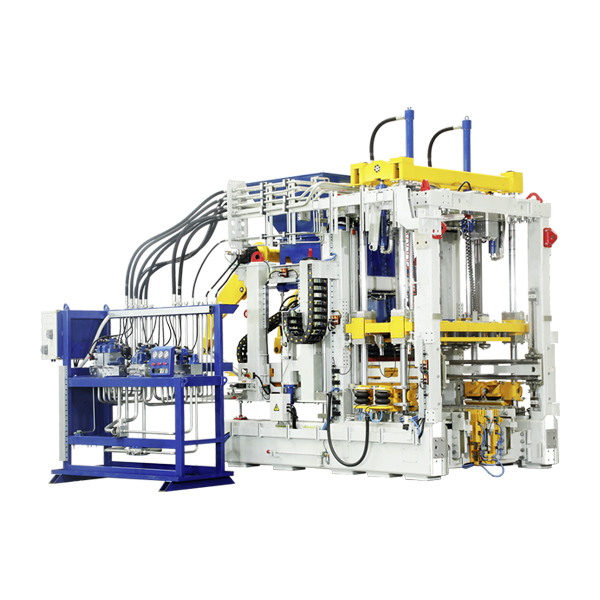
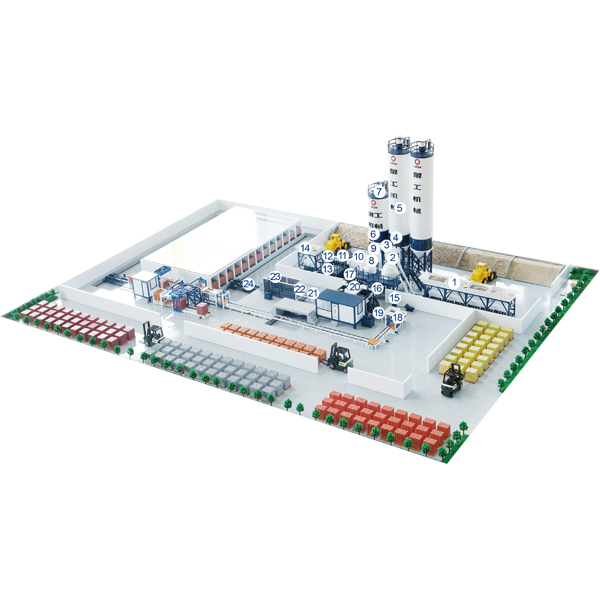
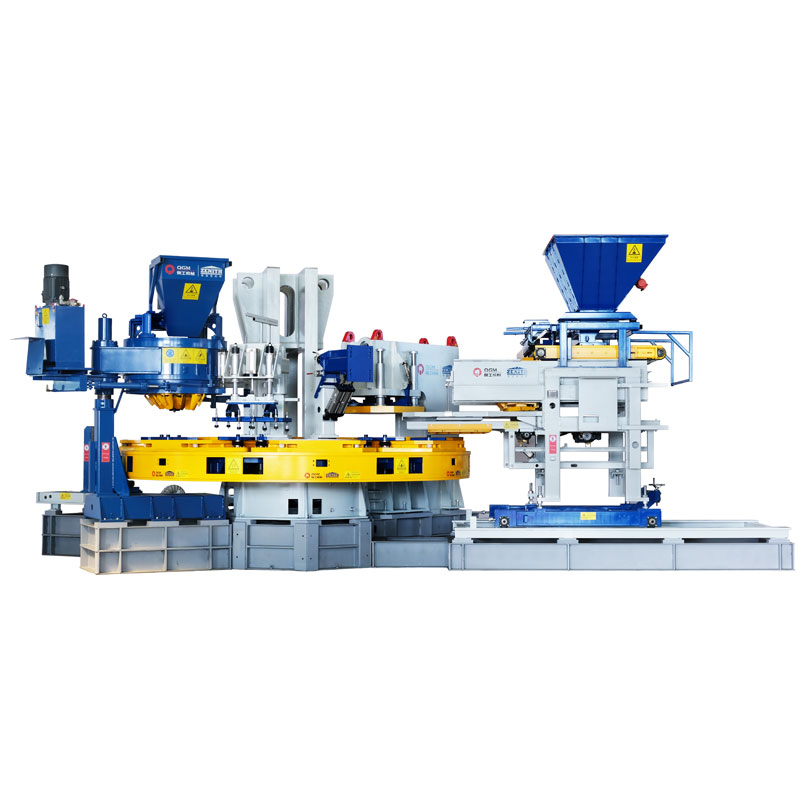
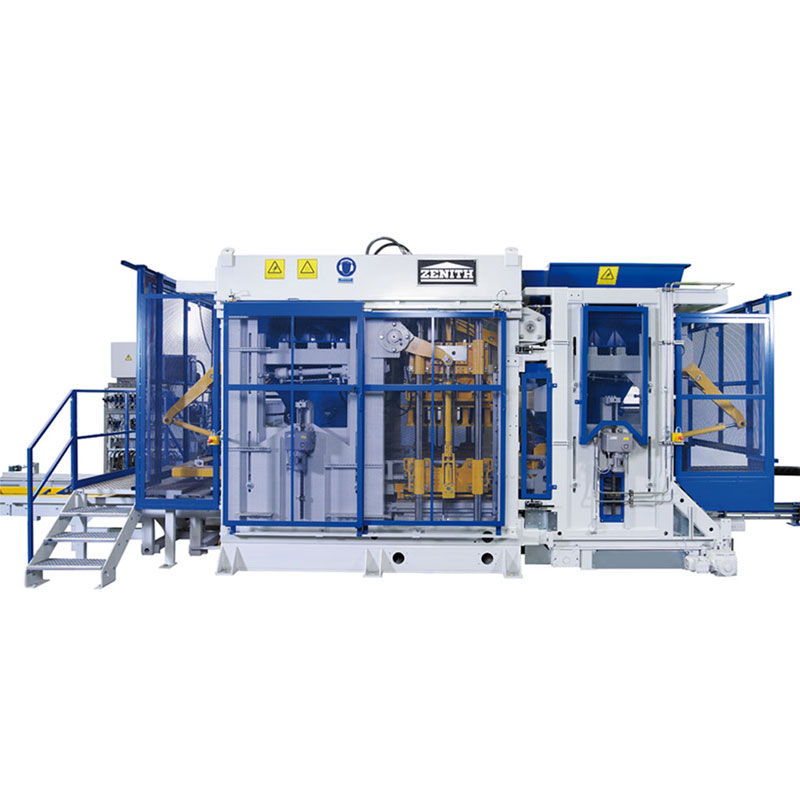
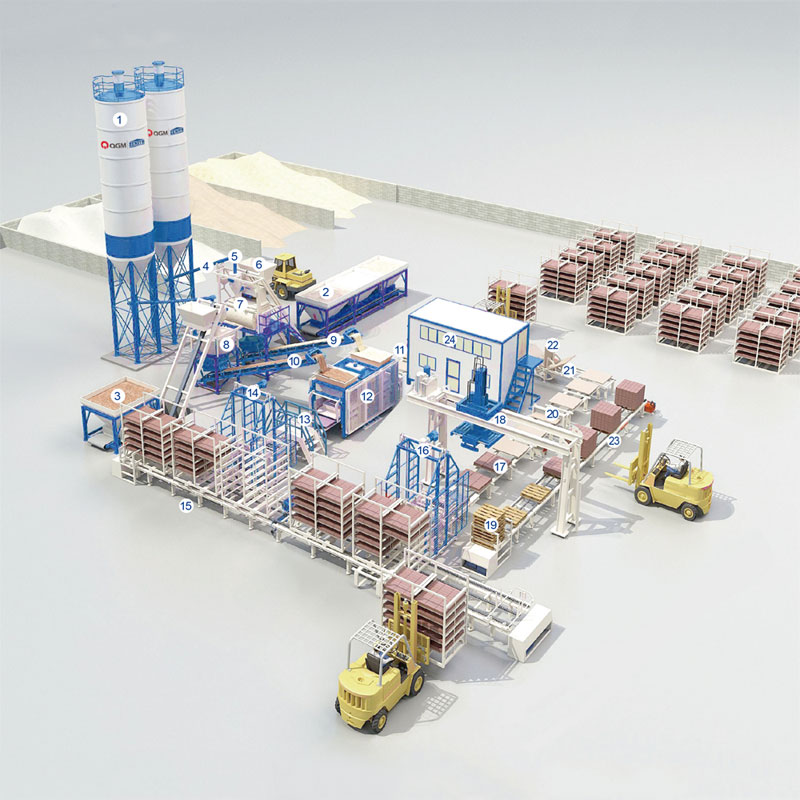
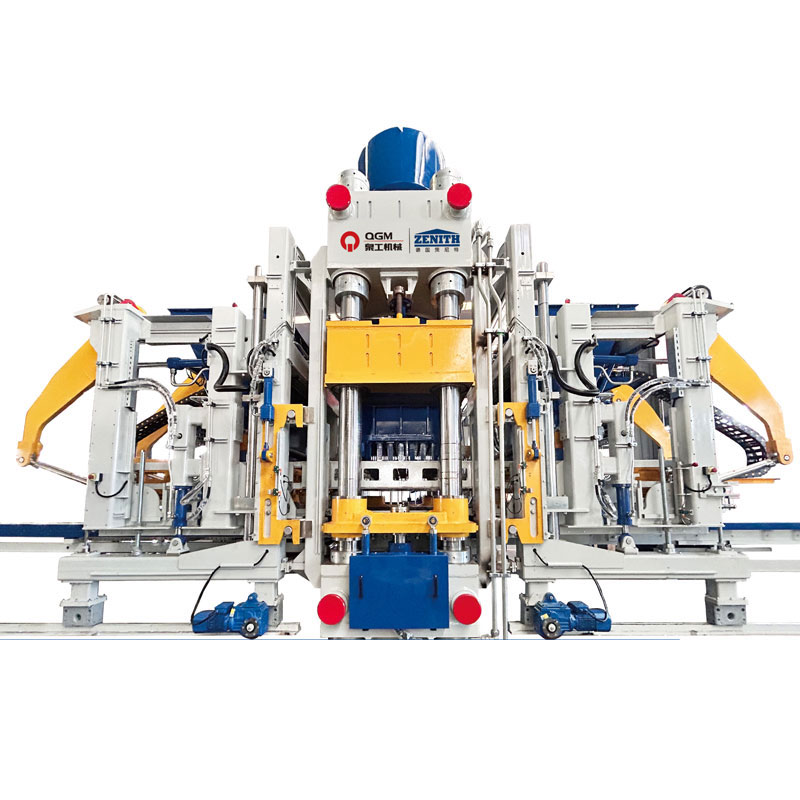
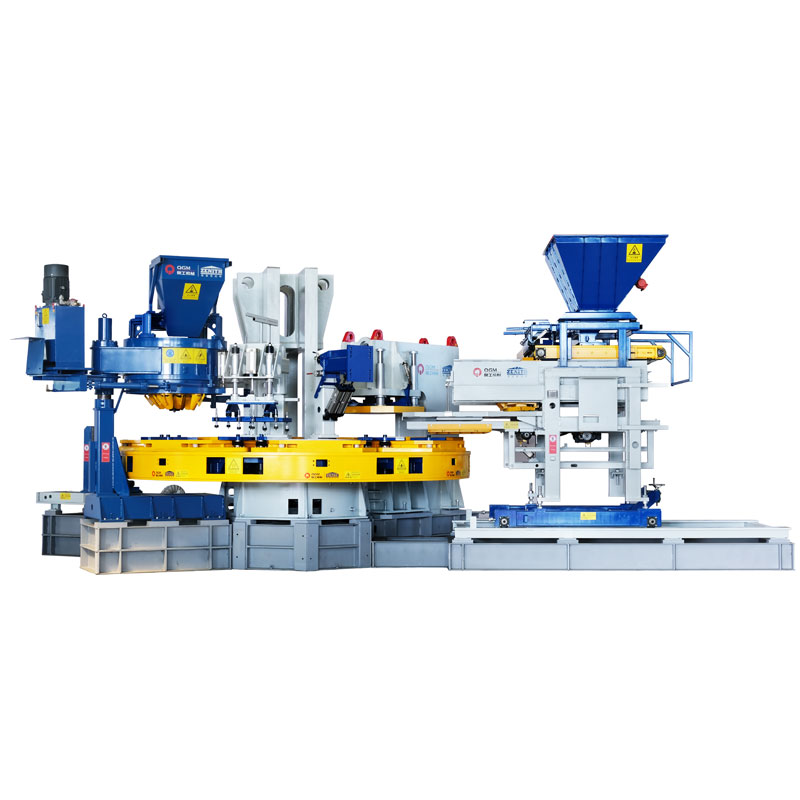
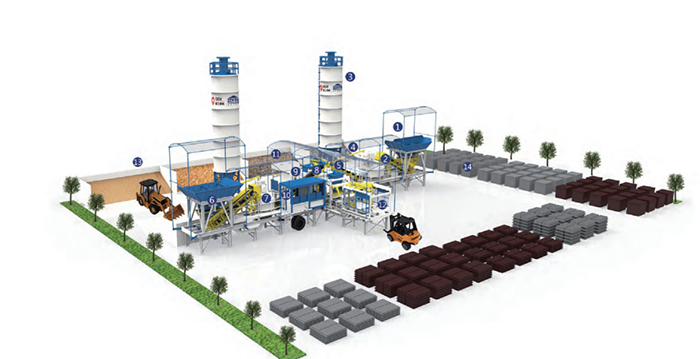
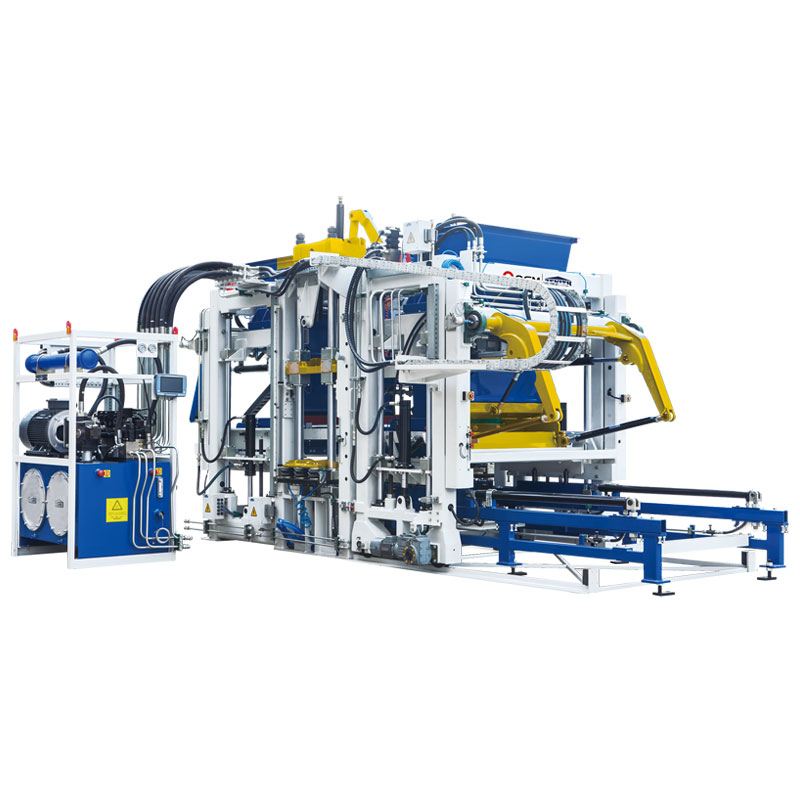
Cement is the single largest material cost in concrete block production, often accounting for 40-60 percent of total raw material expenses. Any reduction in cement consumption without compromising block quality translates directly into higher profit margins and more competitive pricing. The Germany Zenith Block Machine, engineered with precision German technology and manufactured by Quangong Machinery Co., Ltd., optimizes cement consumption through a combination of high-frequency vibration, hydraulic overpressure, and intelligent mix design control. Unlike conventional block machines that require excess cement to compensate for poor compaction and inconsistent molding, our Germany Zenith Block Machine achieves maximum density with minimum binder content. In field trials, our customers have reduced cement usage by 12 to 18 percent while maintaining or even improving compressive strength, translating to savings of USD 15,000 to 30,000 annually for a mid-sized block plant.
But how exactly does the Germany Zenith Block Machine achieve such significant cement savings? The answer lies in three core optimization mechanisms: superior compaction efficiency that reduces voids, precise aggregate grading control that maximizes packing density, and adaptive process control that adjusts vibration and pressure to suit each mix. The machine's servo-driven vibration system at 6,000 to 7,200 rpm ensures that aggregate particles are packed to their densest arrangement, reducing the amount of cement paste needed to fill interstitial spaces. Additionally, the hydraulic overpressure system compacts the block to a consistent height, eliminating the need for excess cement to compensate for variability. Our factory at Quangong Machinery Co., Ltd. has developed a comprehensive cement optimization protocol that combines machine settings with mix design adjustments. This article provides a detailed technical exploration of each optimization mechanism, supported by test data and real-world case studies, to help you maximize the profitability of your block production.
The relationship between vibration and cement consumption is rooted in the principles of particle packing and void reduction. In a concrete mix, the spaces between coarse aggregates must be filled with fine aggregate, and the spaces between fine aggregates must be filled with cement paste. The more efficiently the aggregates are packed, the less cement paste is required to achieve a given density and strength. The Germany Zenith Block Machine's high-frequency vibration system operates at 6,000 to 7,200 rpm, generating a centrifugal acceleration of up to 15G. This intense vibration causes the aggregate particles to rearrange themselves into their densest possible configuration, significantly reducing the void volume. As a result, the cement paste requirement is reduced by up to 18 percent compared to machines with lower vibration frequencies (2,800-3,800 rpm).
Key vibration features of the Germany Zenith Block Machine that reduce cement consumption:
A case study from a block plant in Indonesia illustrates the cement-saving potential of high-frequency vibration. The plant was producing hollow blocks with a cement content of 280 kg/m³ using a standard hydraulic machine (3,800 rpm vibration). After switching to our Germany Zenith Block Machine, they were able to reduce the cement content to 235 kg/m³ while maintaining the same compressive strength (8 MPa at 28 days). This reduction of 45 kg/m³ saved the plant 900 tons of cement annually, translating to a cost saving of approximately USD 72,000 per year. The plant manager noted that the blocks also had a more uniform appearance and lower water absorption, which improved market acceptance.
Our factory at Quangong Machinery Co., Ltd. has conducted extensive research on the relationship between vibration parameters and cement efficiency. We found that for every 1,000 rpm increase in vibration frequency above 3,500 rpm, the cement requirement can be reduced by approximately 3-4 percent for the same block strength. However, the optimum frequency depends on the aggregate type and size distribution. Our technical team provides a vibration tuning service to help customers find the "sweet spot" for their specific mix, ensuring maximum cement savings without compromising block quality. This service is included with every Germany Zenith Block Machine purchase, giving our customers a competitive edge in their local markets.
While vibration reduces voids between particles, hydraulic overpressure ensures that the particles are held in that dense arrangement and that the cement paste is distributed uniformly. The Germany Zenith Block Machine applies a pressing force of up to 280 bar (2,200 kN on the mold head), which compacts the mix to a height tolerance of +/- 0.3 mm. This precise, high-force compaction serves two cement-saving functions: first, it expels entrapped air that would otherwise create voids and weaken the block; second, it forces the cement paste into the smallest pores, maximizing its efficiency as a binder. The result is that a lower cement content can achieve the same—or even higher—compressive strength compared to blocks produced with lower pressing forces.
Specific hydraulic features of the Germany Zenith Block Machine that optimize cement consumption:
A significant real-world example comes from a construction materials company in the UK. They were producing paving stones using a competitor's machine with a pressing force of 150 bar, requiring a cement content of 320 kg/m³ to achieve a compressive strength of 45 MPa. After installing our Germany Zenith Block Machine with 280 bar pressing force, they were able to reduce the cement content to 275 kg/m³ while increasing the compressive strength to 48 MPa. The company saved 45 kg of cement per cubic meter, totaling 360 tons per year, and reported a 14 percent increase in gross profit on their paving stone line. The plant manager attributed the improvement to the machine's ability to eliminate air voids and maximize paste efficiency.
Our factory has developed a hydraulic efficiency calculator that predicts the cement reduction achievable for a given mix design and target strength. The calculator takes into account the pressing force, vibration frequency, and aggregate gradation, and provides a recommended cement content. We provide this calculator to all Germany Zenith Block Machine customers, along with training on how to use it to optimize their production. This commitment to technical support ensures that our customers can achieve the maximum cement savings from day one.
Quangong Machinery Co., Ltd. offers three main models of the Germany Zenith Block Machine, each designed to optimize cement consumption for different production capacities and block types. The table below provides the key technical specifications relevant to cement optimization. These parameters work together to reduce the cement required for a given block strength, providing the foundation for cost-effective block production. Our factory can customize the machine settings to suit specific mix designs and aggregate sources.
| Parameter | Zenith 6S | Zenith 9S | Zenith 15S |
| Vibration frequency (rpm) | 6,000 - 7,200 | 6,000 - 7,200 | 6,000 - 7,500 |
| Vibration force (kN) | 90 kN | 120 kN | 180 kN |
| Hydraulic pressing force (kN) | 1,000 kN | 1,500 kN | 2,200 kN |
| Maximum pressure (bar) | 210 bar | 250 bar | 280 bar |
| Mold height accuracy (mm) | +/- 0.3 mm | +/- 0.3 mm | +/- 0.3 mm |
| Typical cement reduction vs. standard machine | 12-16 percent | 14-18 percent | 16-20 percent |
| Compressive strength (MPa) with optimized cement | 10-15 MPa | 12-18 MPa | 15-25 MPa |
| Power consumption (kW) per 100 blocks | 8.5 kW | 10.5 kW | 14.0 kW |
| Cycle time (seconds) | 14 sec | 15 sec | 16 sec |
In addition to these core specifications, the Germany Zenith Block Machine is equipped with a moisture sensor (optional) that adjusts the water addition in the mixer, ensuring that the mix has the optimal moisture content for compaction. Excess water requires more cement to achieve strength, so this feature further contributes to cement savings. We also offer a cement dosing system that integrates with the batching plant, providing precise control over cement usage. The system records the cement consumption per block, allowing for detailed tracking and continuous improvement.
Our factory recommends selecting the largest model that fits your budget and production requirements, as the higher pressing force and vibration energy of the larger models typically yield greater cement savings. For example, a block plant that upgrades from the Zenith 6S to the Zenith 9S can achieve an additional 2-3 percent cement reduction due to the higher pressing force. Our technical team can provide a cost-benefit analysis comparing the different models, helping you make an informed decision. All Germany Zenith Block Machine models are manufactured at our ISO 9001 certified factory, ensuring consistent quality and reliable performance.
While the Germany Zenith Block Machine provides the mechanical capability for cement optimization, the actual savings achieved depend on the mix design and the process control implemented by the block plant. Our factory has developed a comprehensive optimization protocol that combines machine settings with mix design adjustments to achieve the maximum cement reduction. This protocol is based on extensive research into the effects of aggregate grading, water-to-cement ratio, and compaction energy on block strength and cement demand.
Key mix design and process control strategies for optimizing cement consumption:
A successful case study comes from a block plant in Australia that implemented our optimization protocol. The plant was using a cement content of 290 kg/m³ for their standard hollow blocks. After adjusting their aggregate grading to achieve a maximum packing density and reducing the water-cement ratio from 0.45 to 0.38, they were able to reduce the cement content to 240 kg/m³ while increasing the compressive strength by 12 percent. The plant's annual cement savings amounted to 820 tons, resulting in a cost reduction of approximately USD 65,000. The plant manager noted that the blocks also had a smoother surface finish and lower water absorption, improving their marketability.
Our factory provides a complete mix design service for Germany Zenith Block Machine customers. We will analyze your local aggregates, conduct trial mixes, and recommend the optimal cement content for your desired block strength. We also provide a comprehensive process control manual that includes procedures for moisture measurement, density testing, and machine calibration. This service is included as part of our commitment to helping our customers maximize their profitability. With the Germany Zenith Block Machine and the right mix design, you can achieve significant cement savings while maintaining or improving block quality.
Question 1: How much cement can I realistically save by using the Germany Zenith Block Machine compared to a conventional block machine?
Answer: Based on field data from over 200 installations, the Germany Zenith Block Machine typically reduces cement consumption by 12 to 18 percent for standard hollow blocks and by 15 to 20 percent for pavers and solid blocks. The actual savings depend on your local aggregates, mix design, and target strength. Our factory offers a free cement optimization analysis that predicts the savings you can achieve with your specific materials. For a mid-sized plant producing 10,000 blocks per day, this can translate to annual savings of USD 20,000 to 45,000.
Question 2: Can I use the Germany Zenith Block Machine to produce blocks with no cement (using geopolymer or lime-based binders)?
Answer: Yes, the Germany Zenith Block Machine's high compaction energy makes it suitable for producing blocks with alternative binders, such as geopolymers, lime-based mortars, and even soil-cement mixes. However, the machine settings (vibration, pressing pressure, and cycle time) may need to be adjusted to suit the different rheology of these materials. Our factory provides a binder optimization service that helps customers adapt their machine settings for any type of binder. We recommend conducting a trial run with your proposed binder before committing to a full-scale change.
Question 3: Does reducing cement content affect the appearance or color of the blocks produced by the Germany Zenith Block Machine?
Answer: In most cases, reducing the cement content by 12-18 percent does not significantly affect the appearance or color of the blocks, especially if the mix design is adjusted to maintain the same fine aggregate and pigment content. The Germany Zenith Block Machine's high compaction energy ensures that the block surface is smooth and dense, which actually enhances the color intensity. If color is a critical requirement, we recommend conducting a visual trial before implementing a full-scale cement reduction.
Question 4: What is the minimum cement content I can use with the Germany Zenith Block Machine while still achieving structural grade blocks?
Answer: For structural grade blocks with a compressive strength of 7.5 MPa or higher, we have achieved cement contents as low as 180 kg/m³ (for hollow blocks) using a combination of optimized grading, high compaction, and the addition of pozzolanic materials. However, the minimum cement content depends on your local aggregate quality and the required strength. Our technical team can conduct a series of trial mixes to determine the optimum cement content for your specific requirements. We recommend a safety factor of 10 percent above the minimum to ensure consistent quality in production.
Question 5: Does Quangong Machinery Co., Ltd. offer training on cement optimization for the Germany Zenith Block Machine?
Answer: Yes, we offer a comprehensive cement optimization training program that includes mix design, machine settings, and quality control procedures. The training is conducted at our factory or at your site by our experienced engineers. We cover the principles of particle packing, the effects of vibration and pressure on cement demand, and the use of our cement savings calculator. We also provide ongoing technical support to help you continuously improve your cement efficiency. This training is included with every Germany Zenith Block Machine purchase.
The Germany Zenith Block Machine offers a powerful combination of high-frequency vibration, hydraulic overpressure, and intelligent process control that enables block plants to reduce cement consumption by 12 to 20 percent without compromising product quality. By optimizing particle packing, eliminating air voids, and ensuring consistent compaction, the machine reduces the cement paste volume required for a given block strength. When combined with proper mix design and process control, these savings translate directly into higher profit margins and lower production costs. At Quangong Machinery Co., Ltd., our factory has developed extensive experience in cement optimization, and we are committed to helping our customers achieve the maximum possible savings.
Ready to start saving on your cement costs? Contact Quangong Machinery Co., Ltd. today for a comprehensive cement optimization analysis. Provide your current mix design, target block strength, and production volume, and our engineering team will provide a customized report showing the cement savings you can achieve with the Germany Zenith Block Machine. We offer free trial runs at our factory, flexible financing options, and a lifetime of technical support. Request your free cement savings assessment now from Quangong Machinery Co., Ltd. and start reducing your production costs with the Germany Zenith Block Machine.
-