Quangong Machinery Co., Ltd.
News

What Advantages Do Custom Mould for Concrete Block Solutions Provide to Brick Producers?

2026-08-13 0 Leave me a message

Imagine a brick producer who has been manufacturing standard concrete blocks for years, supplying the same rectangular grey units to local builders. One day, a major landscaping company approaches him with a substantial order for a new residential development. The catch? They need interlocking pavers with a specific antique texture and a chamfered edge that matches the project's heritage aesthetic. The producer's standard mould cannot produce these pavers. He faces a stark choice: invest in an expensive new block machine with proprietary moulds—a capital outlay that could take years to recoup—or watch a lucrative contract go to a competitor. This scenario is all too common in the concrete block industry, where market demands are shifting rapidly toward specialized, aesthetically diverse products. The solution, however, is simpler and more accessible than most producers realize: the Custom Mould for Concrete Block.


A Custom Mould for Concrete Block is not just a replacement part; it is a strategic tool that unlocks new revenue streams, enhances production efficiency, and reduces long-term costs. Unlike standard moulds, which are mass-produced to generic specifications, a custom mould is engineered to the exact dimensions, texture, and design requirements of a specific product. This article will explore the four core advantages that custom moulds offer to brick producers: the ability to differentiate products and expand markets, the improvement of production efficiency and reduction of waste, the technical specifications that define a high-quality mould, and the long-term economic benefits that make custom moulds a sound investment. By the end, you will understand why a Custom Mould for Concrete Block is not an expense—it is an investment in your business's future competitiveness.

curbstone mould


Table of Contents


What Is a Custom Mould for Concrete Block, and Why Does It Matter?

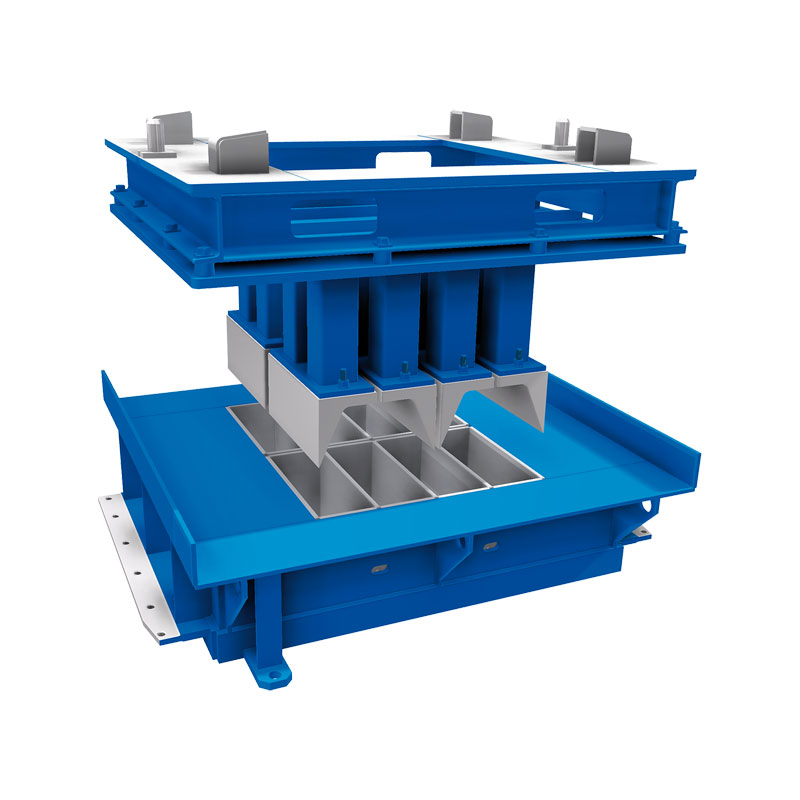
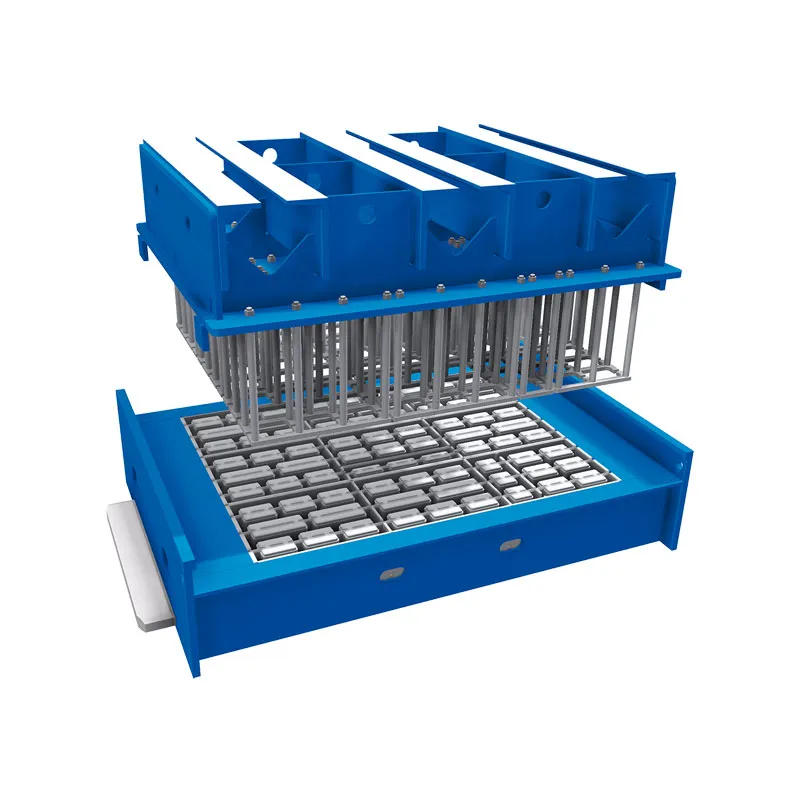
A Custom Mould for Concrete Block is a precision-engineered tool designed specifically to produce a concrete product with defined dimensions, surface texture, and structural features. It is the interface between the raw concrete mix and the final block, paver, or brick. Standard moulds are produced to common dimensions (e.g., 400x200x200mm hollow blocks) and are suitable for mass production of generic products. However, the construction industry is increasingly demanding variety—special shapes for retaining walls, textured pavers for pedestrian areas, permeable blocks for sustainable drainage, and decorative elements for architectural features. A Custom Mould for Concrete Block is the answer to these demands.

To understand the significance, consider the analogy of tailored clothing versus off-the-rack suits. A standard mould is like a ready-made suit: it fits the general population adequately, but it does not fit anyone perfectly. A Custom Mould for Concrete Block is like a bespoke suit: it is designed specifically for your customer's requirements, ensuring a perfect fit and a superior outcome. The value proposition extends beyond the immediate product. A custom mould allows a brick producer to respond to market opportunities with agility, to build a portfolio of unique products that differentiate them from competitors, and to command premium pricing for specialized items.

Our factory has observed that the most successful brick producers are those who treat their moulds not as mere consumables, but as strategic assets. They understand that a Custom Mould for Concrete Block can be tailored along several dimensions: overall dimensions (length, width, height), cavity design (number of holes, shape, and arrangement), surface finish (smooth, textured, exposed aggregate), edge profile (square, chamfered, radiused), and specialized features (interlocking mechanisms, drainage channels). By investing in custom moulds, producers can build a product portfolio that meets the evolving needs of architects, landscapers, and contractors, ensuring long-term business growth and resilience.


How Does a Custom Mould Enable Product Differentiation and Market Expansion?

The construction industry has undergone a quiet revolution in aesthetics over the past two decades. The era of uniformly grey, rectangular concrete blocks is fading. Architects and landscape designers are increasingly specifying materials that add texture, color, and character to their projects. From the warm, earthy tones of reclaimed-style pavers in urban plazas to the sleek, contemporary finishes of polished concrete tiles in commercial showrooms, the demand for variety is insatiable. For brick producers, this shift represents both a challenge and an immense opportunity. The challenge is that standard moulds cannot produce the breadth of designs required to compete in this new landscape. The opportunity is that a Custom Mould for Concrete Block can unlock entirely new product categories and market segments.

Consider the story of a medium-sized brick producer in Southeast Asia. The company had been producing standard hollow blocks for two decades, serving a stable but low-margin residential construction market. Their growth had plateaued. However, when their local government announced a major infrastructure project involving permeable pavements, the producer saw an opportunity. They invested in a Custom Mould for Concrete Block designed to produce interlocking permeable pavers with a specific open-cell structure. Within six months, they had secured a significant portion of the project's supply contract. The revenue from this single project exceeded their standard block sales for the entire previous year. This producer did not need to purchase a new block machine or build a new factory; they simply needed a different mould.

The market expansion enabled by Custom Mould for Concrete Block solutions is not limited to niche applications. The table below illustrates the diverse product opportunities that a producer can pursue with the right moulds.

Product Category Custom Mould Feature Target Market
Permeable Pavers Open-cell structure with 1-2mm gaps Sustainable drainage projects, municipal sidewalks
Exposed Aggregate Pavers Surface texturing with embedded aggregate High-end residential driveways, commercial plazas
Heritage-Style Bricks Rustic texture, worn-edge profile, antique finish Historic restoration, premium residential developments
Retaining Wall Blocks Interlocking profiles with decorative face Landscaping, garden walls, slope stabilization
Functional Blocks Integrated channels for pipes or cables Utilities infrastructure, underground systems

What these examples demonstrate is that a Custom Mould for Concrete Block is not about producing a single unique product; it is about building a portfolio of differentiated products that can capture value across multiple market segments. Our factory has worked with producers who, over a period of five years, expanded from 3 standard block types to over 25 specialized products, all using the same block machine but with different custom moulds. This diversification not only increased their revenue but also made their business more resilient to market fluctuations in any single segment.


How Do Precision-Engineered Molds Improve Production Efficiency and Reduce Waste?

The pursuit of product differentiation must not come at the expense of production efficiency. A poorly designed Custom Mould for Concrete Block can actually increase waste, reduce throughput, and raise production costs. However, a precision-engineered mould—designed with careful attention to material flow, vibration transmission, and ejection dynamics—can dramatically improve all these metrics. The relationship between mould design and production performance is often underestimated by producers who focus primarily on the final product's appearance. Yet, it is the performance of the mould during each cycle that determines the profitability of the entire operation.

Consider the critical parameter of wall thickness consistency. In a standard mould with poor dimensional control, the concrete mix may not fill the cavities evenly, leading to blocks with varying density and wall thickness. These blocks often fail strength tests, resulting in rejection and waste. A precision-engineered Custom Mould for Concrete Block, manufactured with tight tolerances (typically +/- 0.1mm), ensures that each block receives a consistent volume of concrete, resulting in uniform density and strength across every unit. The impact on waste is dramatic: a producer who switched from a low-precision standard mould to our custom mould reported that their rejection rate fell from 4.8% to 0.6%. On an annual production of 2 million blocks, this represented a saving of over 80,000 blocks—a direct contribution to the bottom line.

Another often overlooked efficiency factor is demolding performance. A mould with an optimal draft angle (typically 1-2 degrees) and a highly polished surface finish allows blocks to release cleanly and quickly, reducing cycle time. Conversely, a mould with poor surface finish or incorrect draft angle can cause blocks to stick, leading to delays, increased scrap, and even damage to the mould or the block machine. Our factory has optimized every aspect of our Custom Mould for Concrete Block design to ensure smooth demolding: we use a unique polishing process that achieves a surface roughness of Ra 0.4µm, we incorporate a micro-textured surface pattern that reduces adhesion, and we design our cavities with the optimal taper for the specific concrete mix being used.

The table below compares the key performance metrics of a standard mould versus a precision-engineered Custom Mould for Concrete Block, based on data from several of our customers.

Performance Metric Standard Mould Precision Custom Mould
Dimensional tolerance (mm) +/- 0.5mm +/- 0.1mm
Surface roughness (Ra) 1.2-1.8µm 0.3-0.5µm
Rejection rate 3-5% 0.5-1%
Cleaning frequency (per shift) 4-6 times 1-2 times
Estimated mould life 150,000-250,000 cycles 500,000-1,000,000 cycles

What Technical Specifications Define a High-Quality Custom Mould?

The performance of a Custom Mould for Concrete Block is determined by the interplay of several critical technical specifications. Understanding these specifications is essential for brick producers to make informed procurement decisions and to ensure that their moulds deliver the desired performance in terms of product quality, production efficiency, and service life. At QGM, we believe in providing our customers with full transparency about the technical characteristics of our moulds, enabling them to evaluate the product not just on price but on true engineering merit.

The foundation of any high-quality mould is the material from which it is constructed. Our Custom Mould for Concrete Block is manufactured from 42CrMo4 alloy steel, a chromium-molybdenum steel that offers an exceptional combination of strength, toughness, and wear resistance. This material is specifically chosen for its ability to withstand the cyclic high stresses of the block-making process, including the vibration forces and the abrasive action of the concrete mix. After machining, the mould undergoes a heat treatment process that includes carburizing, quenching, and tempering, achieving a core hardness of 28-32 HRC and a surface hardness of 58-62 HRC. This gradient hardness profile provides a tough, impact-resistant core with a hard, wear-resistant surface that extends mould life significantly.

Beyond the base material, the surface treatment applied to the mould cavity is a critical determinant of performance. Our Custom Mould for Concrete Block is offered with a range of surface treatment options, each suited to specific production conditions and block types. The standard option is gas nitriding, which creates a hard, corrosion-resistant layer that improves wear resistance and reduces concrete adhesion. For high-volume production of abrasive materials, we offer a hard chrome plating option, which provides a smoother surface and even greater wear resistance. Our premium option is a proprietary TD (Thermo Reactive Deposition) treatment, which creates an ultra-hard vanadium carbide layer with a hardness of over 3000 HV, delivering exceptional wear resistance for the most demanding applications.

The table below provides a comprehensive overview of the technical specifications for our standard Custom Mould for Concrete Block.

Specification Value/Description
Base Material 42CrMo4 Alloy Steel (equivalent to 1.7225)
Core Hardness 28-32 HRC (Rockwell C scale)
Surface Hardness 58-62 HRC (after heat treatment)
Surface Treatment (Standard) Gas Nitriding (depth 0.2-0.3mm)
Surface Treatment (Optional) Hard Chrome Plating (0.05-0.1mm) or TD Treatment
Dimensional Tolerance +/- 0.1mm
Surface Roughness (Ra) 0.3-0.5µm
Draft Angle 1-2 degrees (customizable)
Design Life (cycles) 500,000 - 1,000,000 cycles (with maintenance)

Each of these specifications is carefully calibrated to balance performance, durability, and cost. For instance, the choice of nitriding over chrome plating depends on the specific application: nitriding offers excellent resistance to adhesive wear and is well-suited for most concrete block applications, while hard chrome provides superior corrosion resistance and is preferred for aggressive environments or highly abrasive mixes. Our factory's engineering team works closely with each customer to recommend the optimal treatment for their specific production conditions, ensuring that the Custom Mould for Concrete Block delivers the best possible performance for their investment.


How Does the Total Cost of Ownership of a Custom Mould Compare to Standard Moulds?

One of the most persistent misconceptions in the concrete block industry is that a Custom Mould for Concrete Block is prohibitively expensive compared to standard moulds. While it is true that the initial purchase price of a custom mould is higher, this narrow view ignores the full picture of costs over the mould's entire service life. When evaluated on a Total Cost of Ownership (TCO) basis, custom moulds frequently prove to be the more cost-effective option. The TCO of a mould encompasses the initial purchase price, the costs of installation and setup, the ongoing costs of operation (including maintenance and the cost of downtime), the cost of scrap and waste, and the cost of replacement over the mould's life.

Our factory has analyzed the TCO of our Custom Mould for Concrete Block against standard moulds across multiple customer installations. The results consistently demonstrate that while the initial investment in a custom mould is 30-60% higher, the total cost over a five-year period is significantly lower. This is driven by several factors. First, the extended service life of a precision-engineered custom mould—often two to three times longer than a standard mould—means that producers purchase replacement moulds less frequently, reducing capital expenditure over time. Second, the lower rejection rate and higher production efficiency described in the previous section directly reduce the operating cost per block. Third, the ability to command higher prices for differentiated products (enabled by the custom mould) contributes to increased revenue, which more than offsets the higher initial cost.

Consider the experience of a brick producer in Australia. This producer was using standard moulds that cost $5,000 each and lasted approximately 18 months. They produced 1,200 blocks per hour with a rejection rate of 3.5%. The producer invested in our Custom Mould for Concrete Block at a cost of $7,500. The mould lasted 6 years—four times longer than the standard mould. The rejection rate fell to 0.7%, and the improved demolding efficiency increased production to 1,350 blocks per hour. The producer calculated that the total savings over the six-year period, including reduced downtime, lower scrap, and improved output, amounted to over $120,000. The return on investment was achieved within 14 months of installation. This story is not exceptional; it is typical of the outcomes we see when producers make the strategic decision to invest in quality custom moulds.

The following table provides a high-level comparison of the TCO components for a typical producer over a five-year period.

Cost Component Standard Mould Custom Mould Five-Year Savings
Initial purchase (1 mould) $5,000 $7,500 -$2,500
Replacement moulds (5 years) $20,000 (4 replacements) $7,500 (1 replacement) $12,500
Waste cost (rejected blocks) $18,000 $4,000 $14,000
Downtime cost (cleaning/maintenance) $8,000 $2,000 $6,000
Total Cost of Ownership (5 years) $51,000 $21,000 $30,000

As this analysis demonstrates, the Custom Mould for Concrete Block is not a luxury; it is a strategic economic decision that yields substantial long-term savings. The key to unlocking these savings lies in selecting a supplier who can provide not just a mould, but a comprehensive engineering solution—one that understands your production conditions, optimizes the mould design for your specific machine and mix, and supports you with ongoing technical service.


Frequently Asked Questions (FAQ)

Question 1: How long does it take to manufacture a Custom Mould for Concrete Block?

Answer: The manufacturing lead time for a typical Custom Mould for Concrete Block is 3 to 5 weeks from the date of final design approval. This includes the time for material procurement, machining, heat treatment, surface finishing, and quality inspection. For urgent orders, we can expedite certain stages to reduce the lead time to 2-3 weeks, subject to production capacity. The design phase itself takes 1-2 weeks, during which our engineering team works closely with you to refine the product specifications and ensure that the mould will meet your exact requirements.

Question 2: Can a Custom Mould for Concrete Block be used on any block machine?

Answer: A Custom Mould for Concrete Block is designed to be compatible with specific block machine models, based on the mounting interface, dimensions, and press characteristics. We manufacture our moulds to the precise specifications of your existing block machine. However, not all moulds are interchangeable between different machine brands or even between different models from the same manufacturer. Before ordering, we require the make and model of your block machine, and we may request technical drawings or physical measurements of the existing mould to ensure a perfect fit. Our factory will work with you to verify compatibility before production begins, eliminating any risk of mismatch.

Question 3: What information do I need to provide to design a Custom Mould for Concrete Block?

Answer: To design a Custom Mould for Concrete Block, we require the following information: the final product dimensions (length, width, height), the desired texture or surface finish (smooth, exposed aggregate, cobblestone, etc.), the edge profile (square, chamfered, radiused), the number and arrangement of cavities (holes, cores), any special features (interlocking profiles, drainage channels), and the material specifications of your concrete mix. We also need the technical details of your block machine (brand, model, press force, vibration frequency). Our engineering team will then develop a detailed design, including 3D models and technical drawings, for your approval before manufacturing begins.

Question 4: What is the typical service life of a Custom Mould for Concrete Block, and how can I maximize it?

Answer: A high-quality Custom Mould for Concrete Block can achieve a service life of 500,000 to 1,000,000 production cycles, depending on the material composition, the surface treatment, and the operating conditions. To maximize the life of your mould, we recommend: regular cleaning to remove concrete residue (after every production shift), periodic inspection of the cavity surfaces for wear or damage, proper lubrication of moving parts (if applicable), ensuring the machine's vibration and press settings are within recommended parameters, and avoiding excessive use of harsh chemicals during cleaning. When properly maintained, our moulds have been known to exceed 1.2 million cycles in customer operations.

Question 5: Can the design of a Custom Mould for Concrete Block be modified after it has been manufactured?

Answer: Minor modifications to a Custom Mould for Concrete Block are sometimes possible, depending on the nature of the change. Surface texture changes can often be accommodated by re-texturing the cavity surface. Modifications to dimensions are more challenging, as they typically require removal of material, which may affect the mould's structural integrity. Major design changes, such as completely altering the cavity shape or adding new features, generally require the manufacture of a new mould. Our factory can assess the feasibility of any requested modification on a case-by-case basis. However, to avoid the cost and delay of post-manufacturing modifications, we encourage customers to thoroughly review and approve the design drawings before production begins.


Conclusion

The Custom Mould for Concrete Block is a powerful strategic tool that enables brick producers to differentiate their products, expand into new markets, improve production efficiency, reduce waste, and achieve a lower total cost of ownership. It is a solution that addresses the fundamental challenge of modern concrete product manufacturing: how to compete in a market where clients demand more variety, higher quality, and faster delivery than ever before. At Quangong Machinery Co., Ltd., we have been designing and manufacturing Custom Mould for Concrete Block solutions for over 25 years, and we have seen how the right mould can transform a producer's business. Our moulds are engineered with precision, manufactured from the highest quality materials, and backed by comprehensive technical support.

If you are ready to explore how a Custom Mould for Concrete Block can help your business grow, we invite you to contact us. Our team of experienced engineers will work with you to analyze your current production capabilities, identify market opportunities, and design a mould that delivers exceptional results. We provide comprehensive support from initial design through to installation and ongoing maintenance. Contact Quangong Machinery Co., Ltd. today for a free consultation and discover how our custom mould solutions can transform your brick production.

Related News
Leave me a message
X
We use cookies to offer you a better browsing experience, analyze site traffic and personalize content. By using this site, you agree to our use of cookies.Privacy Policy
RejectAccept