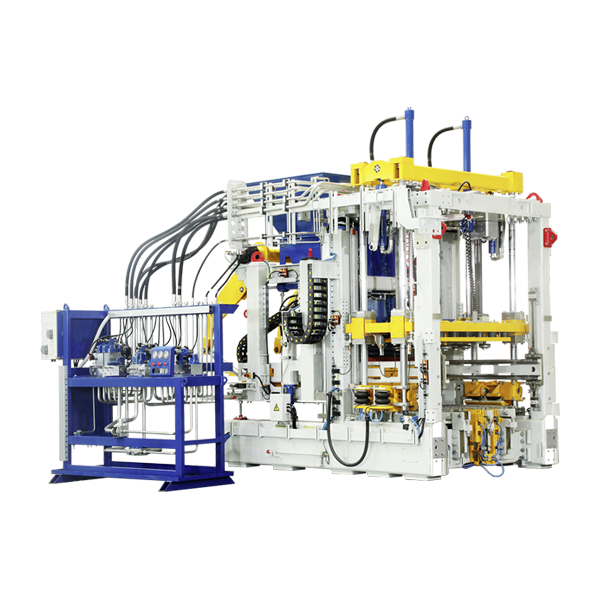
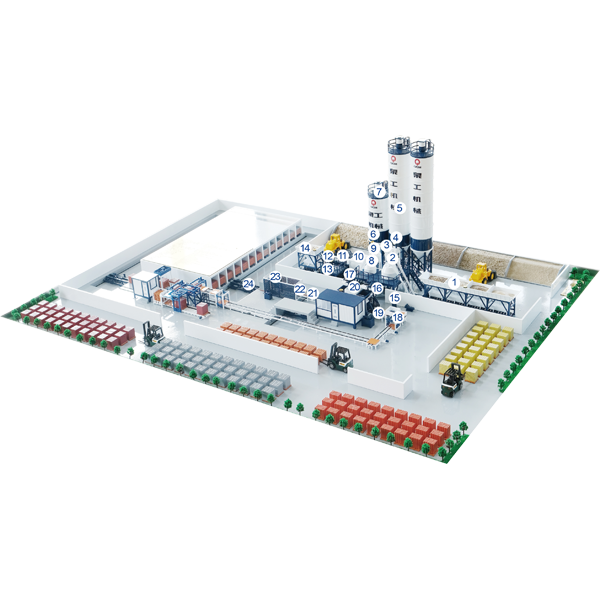
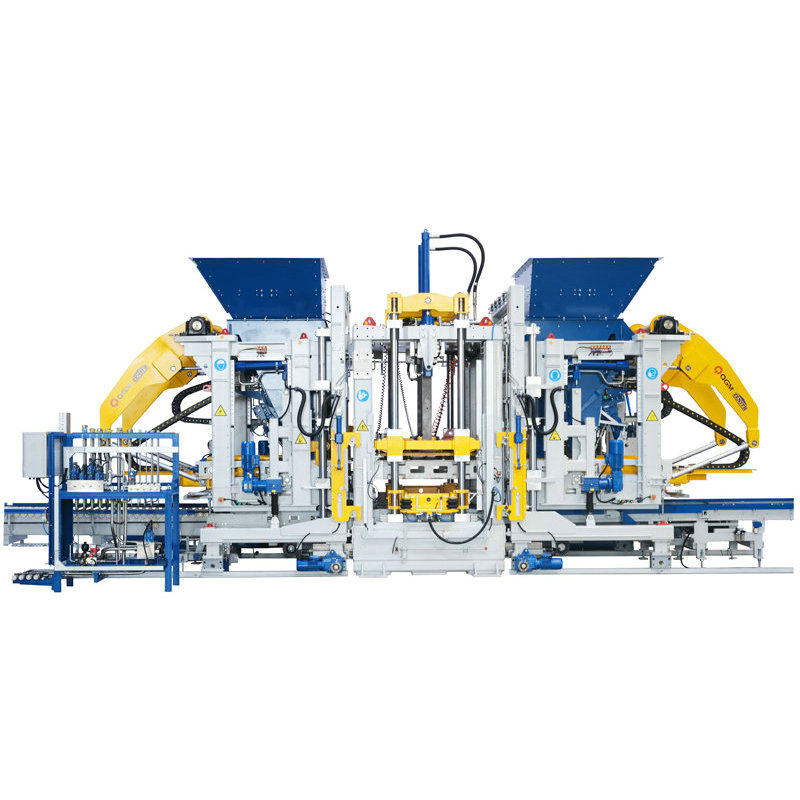
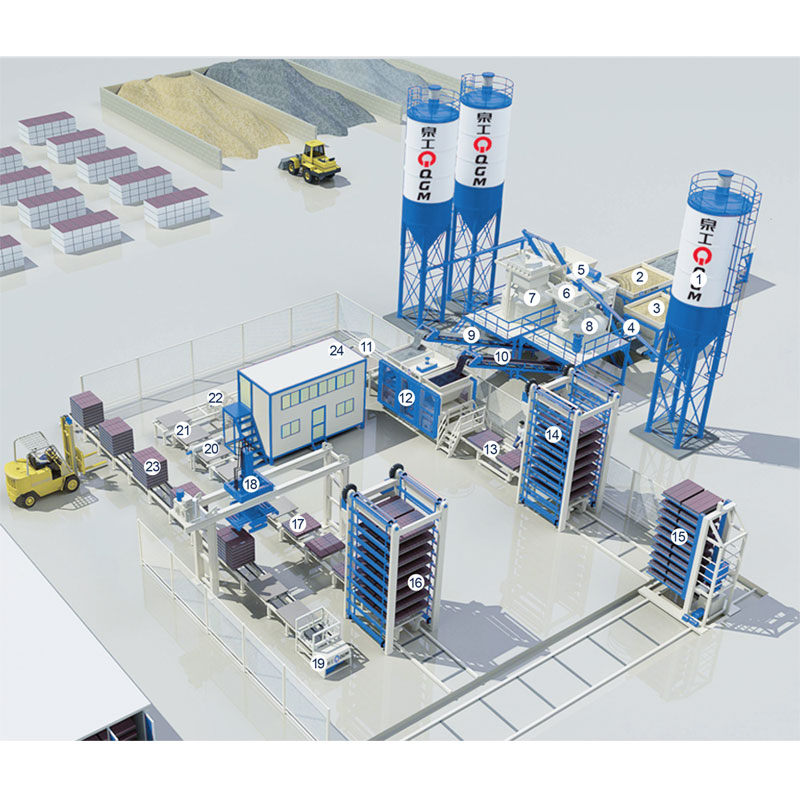
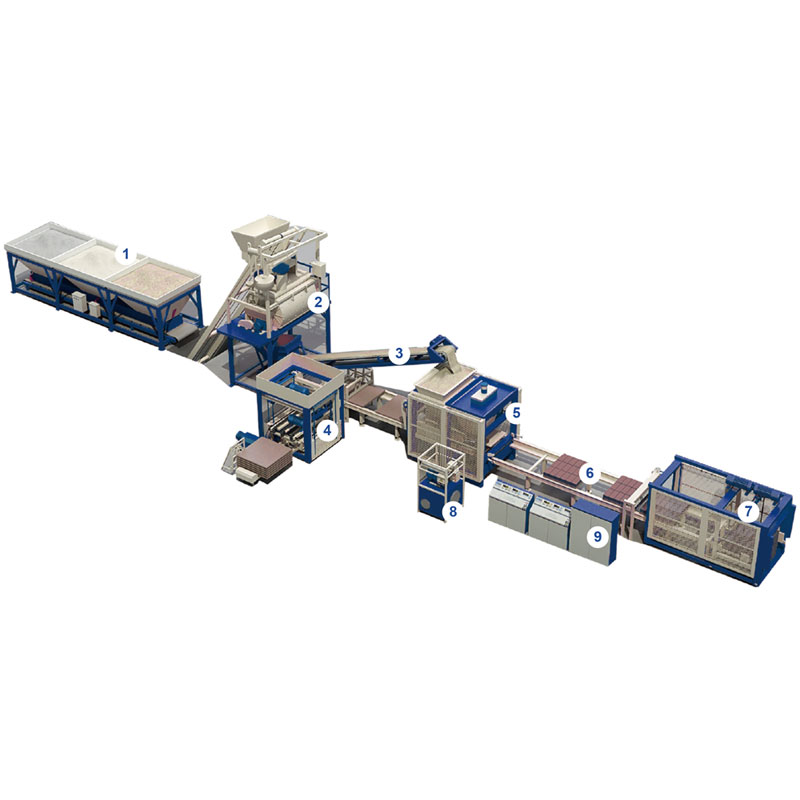
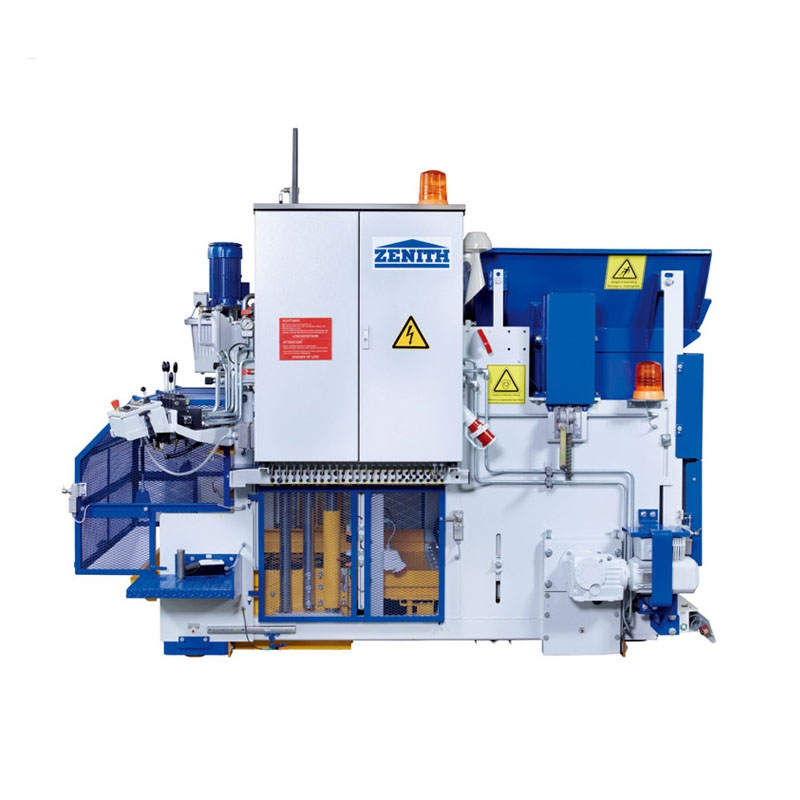
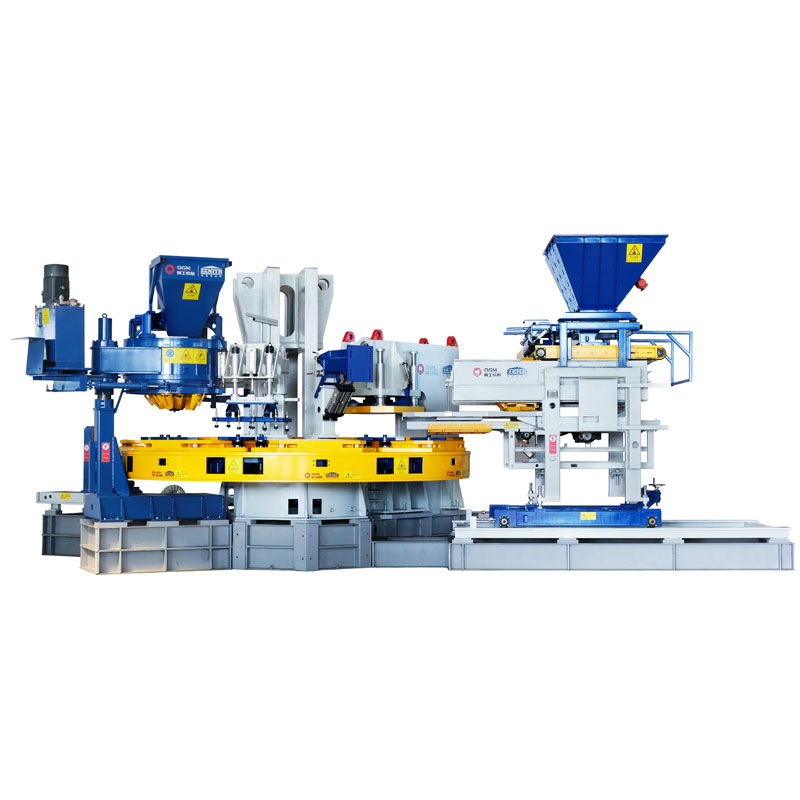
Block manufacturers face a cost structure that is deceptively simple. Cement, aggregate, water, energy, labor, molds, and maintenance are the main inputs. The selling price is set by the local market. The margin is determined by how efficiently those inputs are converted into saleable blocks. A QGM Block Making Machine addresses this margin problem at the point where the inputs are converted: the forming cycle. It reduces the amount of material lost to rejected blocks, shortens the time required to produce each pallet, reduces the labor needed to run the line, and lowers the maintenance burden over the machine's service life. These are not marketing claims. They are measurable effects that a buyer can verify through a cost study before the purchase.
This guide is written for procurement teams who are evaluating a block making machine and who need to understand where the cost reduction comes from. It breaks the production cost into five cost drivers: raw material waste, cycle time and energy, labor and rework, maintenance and spare parts, and specification fit. Each section explains the driver, the mechanism by which a QGM Block Making Machine reduces it, and the data a buyer should request to confirm the effect. At Quangong Machinery Co., Ltd., our factory supports buyers with cycle-time data, rejection-rate data, and specification documentation, and our engineering team can review the cost model for a specific plant.
Raw material waste is the largest controllable cost in a block plant because every rejected block consumes cement, aggregate, water, and the energy used to mix and cure it. A plant producing 10,000 blocks per day at a 5% rejection rate is wasting 500 blocks worth of material every day. Over a year, that is 150,000 blocks of material that generated no revenue. The cost is not only the material. It is also the labor to handle the reject, the space to store it, and the energy embedded in it. The first cost-reduction mechanism of a QGM Block Making Machine is its ability to reduce this rejection rate by improving the consistency of the forming cycle.
The consistency comes from three design features. The first is the vibration system. A controlled high-frequency vibration with adjustable amplitude allows the mix to fill the mold uniformly and reach a consistent density. The second is the hydraulic pressing system. The pressing force is applied with a controlled profile, so the block height and density are repeatable from cycle to cycle. The third is the closed-loop control. The machine monitors the cycle and adjusts the parameters in real time, so a change in the mix moisture or the aggregate grading does not automatically produce a reject. The table below shows the cost impact of a rejection-rate reduction in a typical plant.
| Cost Item | 5% Rejection Rate | 1% Rejection Rate | Annual Saving |
| Daily production | 10,000 blocks | 10,000 blocks | No change |
| Daily rejects | 500 blocks | 100 blocks | 400 blocks |
| Raw material per block | 0.02 t | 0.02 t | 8 t per day |
| Annual raw material waste | 3,000 t | 600 t | 2,400 t |
| Cement cost at 100/t | 300,000 | 60,000 | 240,000 |
| Handling and disposal cost | High | Low | Additional saving |
For a buyer, the rejection-rate claim should be supported by data from a comparable plant, not by a brochure statement. The data should include the block type, the mix design, the mold type, and the operating conditions. A QGM Block Making Machine that reduces the rejection rate from 5% to 1% in a comparable plant is a machine that can deliver the saving in the buyer's plant, provided the mix and the mold are matched. Quangong Machinery Co., Ltd. provides this data for the machine models under consideration, and our factory can arrange a trial production run for a critical project.
Cycle time affects labor and energy cost because the plant's output is the product of the cycle time and the number of operating hours. A machine that produces a pallet every 15 seconds produces 240 pallets per hour. A machine that produces a pallet every 20 seconds produces 180 pallets per hour. The difference is 60 pallets per hour, or 480 pallets over an 8-hour shift. If each pallet carries 8 blocks, the difference is 3,840 blocks per shift. The labor cost per block falls because the same crew produces more blocks. The energy cost per block also falls because the fixed energy demand of the plant is spread over more output. A QGM Block Making Machine reduces the cycle time through faster vibration, faster pressing, and faster pallet handling, and it reduces the energy per block through more efficient hydraulic and vibration systems.
The worked example below shows how a cycle-time reduction translates into a cost reduction for a plant running two shifts.
The table below presents the cycle-time comparison and the resulting cost effect.
| Parameter | Baseline Machine | QGM Block Making Machine | Effect |
| Cycle time | 20 s | 15 s | 25% shorter |
| Blocks per pallet | 8 | 8 | Same |
| Daily output | 20,736 | 27,648 | 33% higher |
| Labor cost per block | Baseline | 25% lower | Same crew, more output |
| Energy cost per block | Baseline | Lower | Fixed demand spread over more output |
For a buyer, the cycle-time claim should be verified with a time study under the buyer's mix and mold conditions. The time study should record the vibration time, the pressing time, the pallet transfer time, and the idle time. A QGM Block Making Machine that achieves a 15-second cycle in a demonstration may achieve a different cycle in the buyer's plant if the mix is different or the pallet handling is slower. Quangong Machinery Co., Ltd. provides the cycle-time data for each model, and our cycle-time data can be used to build the cost model before the purchase.
Automation reduces labor and rework by removing the manual tasks that create variability. In a block plant, the manual tasks include mold changeover, pallet handling, mix moisture adjustment, and block inspection. Each manual task introduces a source of variation. A mold that is not seated correctly produces a dimensional error. A pallet that is not aligned produces a block that is damaged during transfer. A mix that is not adjusted for moisture produces a block that is too wet or too dry. A QGM Block Making Machine reduces these variations through automated mold clamping, automated pallet transfer, and closed-loop mix control. The result is less labor per block and fewer rejects from manual error.
The task map below compares the manual and automated approaches for the main production tasks.
| Production Task | Manual Approach | QGM Block Making Machine Approach | Cost Effect |
| Mold changeover | Manual bolts, 20-30 min | Hydraulic clamping, 5-10 min | Less downtime, less labor |
| Pallet handling | Manual or semi-automatic | Automated transfer and stacking | Fewer operators, less damage |
| Mix moisture adjustment | Operator judgment | Sensor feedback and recipe control | Fewer wet or dry rejects |
| Block inspection | Manual sampling | In-process monitoring and alarms | Earlier detection, less rework |
The labor saving is not only the number of operators. It is also the skill level required to run the line. A manual line depends on an experienced operator who can judge the mix and the mold seating. An automated line depends on a technician who can monitor the control screen and respond to alarms. The second role is easier to train and easier to replace. For a plant in a labor market where experienced operators are scarce, this is a significant cost advantage. A QGM Block Making Machine with automated mold clamping and pallet handling reduces the dependence on operator skill and stabilizes the production cost.
At QGM, our factory supports buyers with a task map and a labor estimate for the proposed line. The estimate should state the number of operators per shift, the skill level, and the expected rework rate. The goal is to give the buyer a realistic labor cost per block, not a theoretical number. Our factory can also provide references from plants with similar automation levels so that the buyer can validate the estimate.
Maintenance and spare parts affect total cost because a block machine is a high-cycle asset. The vibration system, the hydraulic system, the mold, and the pallet transfer system all wear over time. A machine with a low purchase price but a high maintenance cost can be more expensive over its service life than a machine with a higher purchase price and a lower maintenance cost. A QGM Block Making Machine reduces the maintenance cost through three design choices: replaceable wear parts, accessible service points, and a control system that records the operating data needed for predictive maintenance. The result is less unplanned downtime and a lower cost per block over the asset life.
The cost matrix below compares the maintenance cost drivers of a low-cost machine and a QGM Block Making Machine over a five-year period.
| Cost Driver | Low-Cost Machine | QGM Block Making Machine | Effect |
| Wear part replacement | Frequent, non-standard parts | Standardized, replaceable parts | Lower parts cost, shorter downtime |
| Hydraulic service | Seal failures, oil contamination | Filtered system, accessible service points | Fewer failures, lower oil cost |
| Vibration system | Bearing failures, unbalanced shafts | Heavy-duty bearings, balanced shafts | Longer service interval |
| Unplanned downtime | High, due to part unavailability | Low, due to standard parts and data | Lower lost production cost |
| Mold life | Short, due to poor alignment | Longer, due to precise clamping | Lower mold cost per block |
The most important maintenance cost is often the unplanned downtime, not the parts. A machine that fails on a Friday afternoon and waits until Monday for a part loses three days of production. A machine with standard parts and a local service network can be repaired in hours. The QGM Block Making Machine is designed with standard parts and a documented service procedure, so the downtime is predictable and the repair is fast. Our maintenance data can be used to estimate the downtime cost for a specific plant.
For a buyer, the maintenance cost should be included in the total cost of ownership, not treated as a separate budget. The purchase decision should compare the five-year cost of parts, labor, downtime, and lost production, not just the purchase price. Our factory can provide the maintenance schedule, the parts list, and the reference data for the machines under consideration. The goal is to make the total cost visible before the order is placed.
The specifications should be compared against the plant's production plan, not against a generic brochure. A machine that is oversized for the plan will carry unnecessary capital cost. A machine that is undersized will require overtime and will wear faster. The comparison should cover the pallet size, the blocks per pallet, the cycle time, the vibration parameters, the hydraulic pressure, the installed power, the automation level, and the mold change system. The table below provides a specification scorecard for a procurement comparison.
| Specification | Typical Range | Cost Relevance | Buyer Check |
| Pallet size | 800 × 600 to 1400 × 1200 mm | Determines blocks per cycle | Match to the product mix |
| Blocks per pallet | 6 to 15 | Direct output multiplier | Confirm with the mold |
| Cycle time | 12 to 20 s | Direct labor and energy driver | Request a time study |
| Vibration frequency | 5,500 to 7,200 rpm | Affects density and rejection rate | Confirm adjustability |
| Hydraulic pressure | 200 to 280 bar | Affects density and mold life | Confirm pressure control |
| Installed power | 55 to 110 kW | Energy cost per block | Request power data |
| Automation level | Manual to fully automatic | Labor and rework cost | Match to labor market |
| Mold change system | Manual to hydraulic quick-clamp | Downtime during product changes | Confirm changeover time |
The scorecard should be completed for at least two machine options and for the buyer's own production plan. The comparison should include the capital cost, the installation cost, the expected output, the rejection rate, the labor cost, the energy cost, and the maintenance cost. The option with the lowest total cost per block is the correct choice, not necessarily the option with the lowest purchase price. Our factory can support this comparison with the specification data and the reference cost data for the models under consideration.
The specification review should also include the serviceability and the spare parts availability. A machine with a high specification but no local parts support is a machine that will create downtime. Our factory provides the parts list, the service schedule, and the local support information for the QGM Block Making Machine models. The goal is to make the comparison complete, not just technical.
The QGM Block Making Machine reduces production costs through five mechanisms: lower raw material waste, shorter cycle time, reduced labor and rework, lower maintenance and downtime cost, and a specification that matches the plant's production plan. Each mechanism can be quantified, and each should be verified before the purchase. The buyer who builds a cost model around these mechanisms will see that the purchase price is only one part of the decision. The total cost per block over the asset life is the correct measure. Our factory supports buyers with the cycle-time data, the rejection-rate data, the maintenance schedule, and the specification scorecard needed to build that model, and our technical team can review the cost study for a specific plant.
If you are evaluating a block making machine for a new plant or a capacity expansion, contact the team to request the cost model inputs and the specification data for the models under consideration. The review can be completed before the order is placed, so that the decision is based on the total cost of ownership rather than the purchase price alone.
Question 1: How does the QGM Block Making Machine reduce raw material waste?
Answer: The machine reduces waste by improving the consistency of the forming cycle. Controlled high-frequency vibration fills the mold uniformly, the hydraulic pressing system applies a repeatable force profile, and the closed-loop control adjusts the parameters in real time. The result is a lower rejection rate, which means less cement, aggregate, and water are lost to rejected blocks.
Question 2: What cycle time improvement can a buyer expect?
Answer: The cycle time depends on the block type, the mold, the mix, and the pallet handling. In comparable plants, a QGM Block Making Machine often achieves a 15-second cycle where a baseline machine achieves 20 seconds. The buyer should request a time study under the actual mix and mold conditions before relying on the improvement in the cost model.
Question 3: How does automation reduce labor cost per block?
Answer: Automation reduces labor cost by replacing manual tasks such as mold changeover, pallet handling, and mix adjustment with controlled systems. The same crew can produce more blocks per shift, and the skill level required to run the line is lower. The result is a lower labor cost per block and a more stable production process.
Question 4: Why is maintenance cost part of the total cost of ownership?
Answer: Maintenance cost includes parts, labor, and unplanned downtime. A machine with a low purchase price but frequent failures can lose more production time than the parts cost. The total cost of ownership should include the expected parts consumption, the service interval, and the downtime cost over the asset life.
Question 5: What specifications should be compared before buying a block making machine?
Answer: Compare the pallet size, the blocks per pallet, the cycle time, the vibration frequency, the hydraulic pressure, the installed power, the automation level, and the mold change system. Complete the comparison against the plant's production plan and calculate the total cost per block for each option. Request the specification data and reference cost data from the supplier.
Contact Quangong Machinery Co., Ltd. today to request the cost model inputs and specification data for the QGM Block Making Machine models under consideration, and to discuss the total cost of ownership for your block production plan.
-