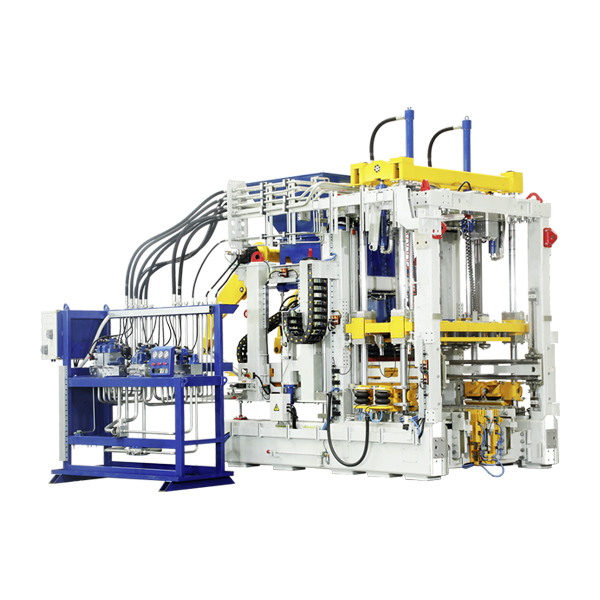
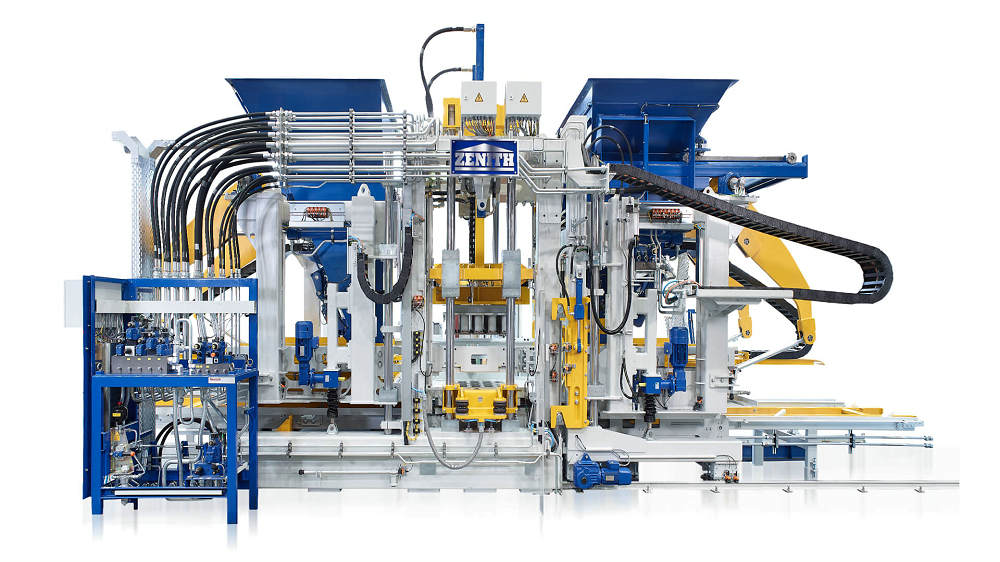
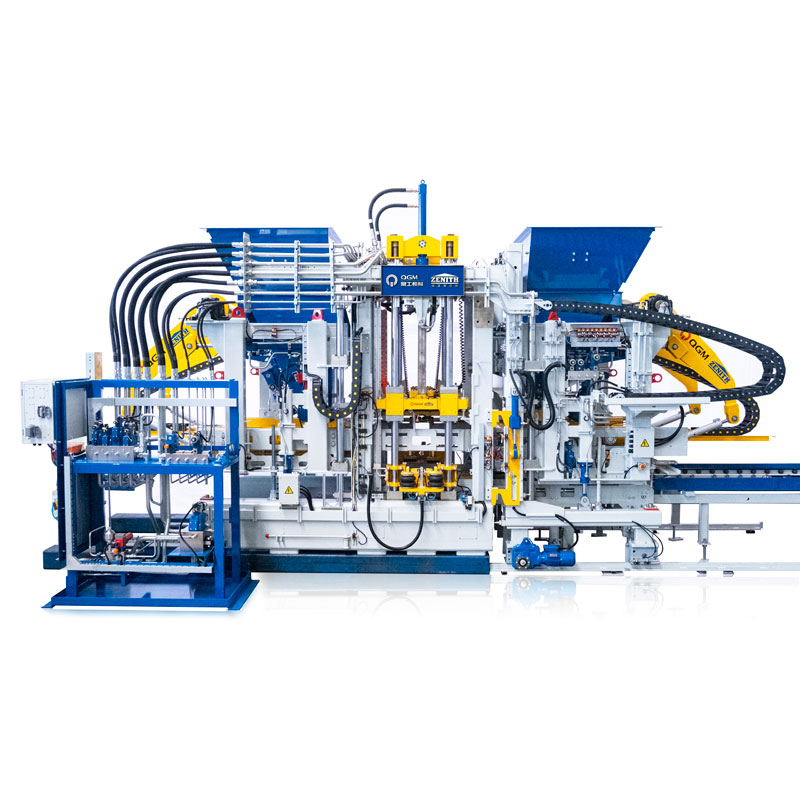
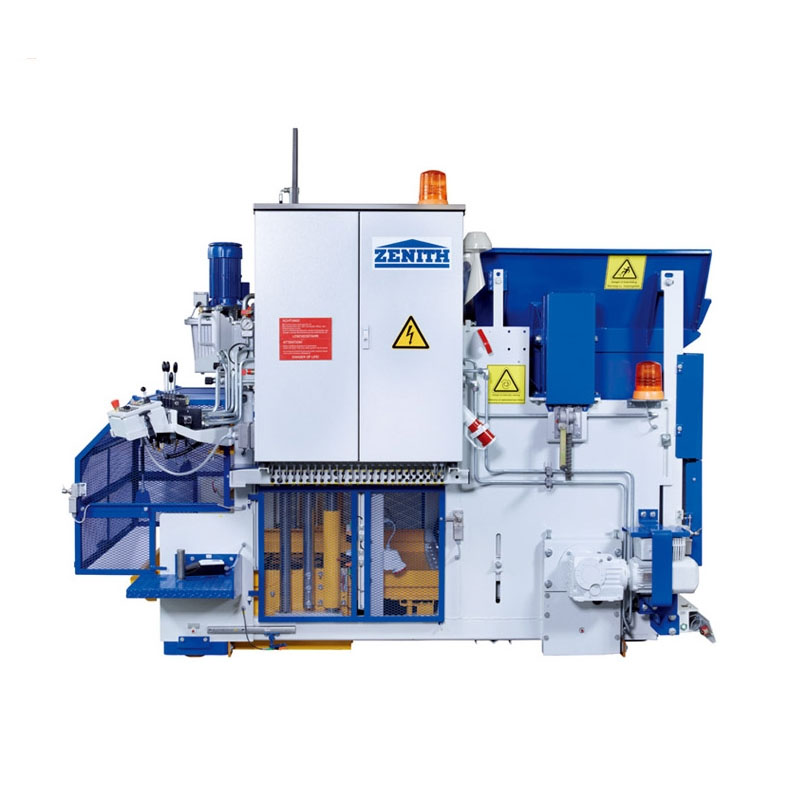
For decades, the concrete block manufacturing industry has relied on two major technological branches: traditional block machines and advanced Germany Zenith block machines. Understanding the difference between traditional and Germany Zenith block machines is not merely a technical preference—it directly impacts production efficiency, product quality, energy consumption, and long-term profitability. Traditional machines often operate with lower initial investment but come with limitations in speed, automation, and precision. In contrast, a Germany Zenith block machine represents precision engineering, high-speed production, and intelligent control systems. As a manufacturer, Quangong Machinery Co., Ltd. has studied both technologies extensively, and we are proud to integrate Germany Zenith block machine principles into our production lines. Our factory has helped hundreds of clients transition from outdated systems to modern solutions, achieving up to 40% more output with less waste.
So what exactly sets them apart? A traditional block machine typically relies on simple vibration and mechanical pressing, often requiring manual intervention for mold changes and product handling. On the other hand, a Germany Zenith block machine uses dual-frequency vibration, hydraulic pressing, and fully automatic control loops. This leads to denser blocks, uniform dimensions, and faster curing times. Throughout this article, we will break down the technical specifications, operational costs, output quality, and maintenance differences. Quangong Machinery Co., Ltd. has prepared exclusive data tables and a comprehensive FAQ section designed to answer your most pressing questions. Whether you are starting a new plant or upgrading an existing one, this guide will help you make an informed decision. Our factory’s experience shows that the right machine choice can double your return on investment within two years. Let’s explore the difference in detail.
When comparing traditional block machines with a Germany Zenith block machine, the technical specifications reveal fundamental differences in design philosophy and engineering standards. Traditional machines often use single-axis vibration with low frequency (2800-3200 rpm) and simple eccentric weights. In contrast, a Germany Zenith block machine employs dual-shaft high-frequency vibration (4500-6000 rpm) combined with hydraulic pressing force of up to 25 tons. Our factory at QGM has benchmarked dozens of models. Below is a detailed table showing key parameters.
| Parameter | Traditional Block Machine | Germany Zenith Block Machine |
| Vibration frequency | 2800-3200 rpm | 4500-6000 rpm (dual shaft) |
| Hydraulic pressing force | 5-10 tons (mechanical or simple hydraulic) | 15-25 tons (proportional hydraulics) |
| Cycle time (standard block 400x200x200mm) | 18-25 seconds | 10-14 seconds |
| Pallet type required | wooden or steel pallets (12-15mm thick) | precision steel pallets (6-8mm thick) |
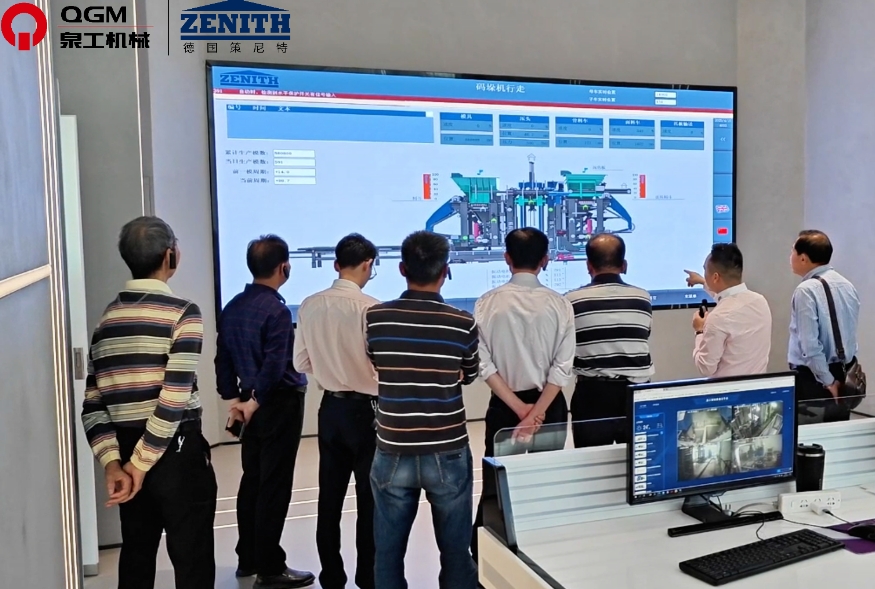
| Control system | manual or semi-automatic PLC basic | full automatic PLC with remote diagnostics |
| Mold change time | 45-60 minutes (manual) | 10-15 minutes (quick clamp system) |
| Noise level | 95-105 dB | 82-88 dB (encapsulated vibration) |
| Energy consumption per block | 0.22-0.28 kWh | 0.12-0.16 kWh |
As shown above, the Germany Zenith block machine outperforms traditional equipment across nearly every specification. The higher vibration frequency combined with hydraulic pressing creates a “mass compaction” effect that traditional machines cannot achieve. Our factory has measured green block strength immediately after demolding: traditional machines produce 0.8-1.0 MPa, while a Germany Zenith block machine delivers 1.8-2.2 MPa. This means blocks can be stacked faster and cured with less breakage. Additionally, the precision of Germany Zenith block machine molds ensures dimensional tolerance within ±0.3mm, whereas traditional machines often have ±1.2mm variations. For clients requiring hollow blocks, pavers, or interlocking blocks, the Germany Zenith block machine’s multi-function capability is a game changer. At Quangong Machinery Co., Ltd., we offer Germany Zenith block machine lines that include automatic block handling, cube packaging, and central lubrication. These technical advantages translate directly into higher profits.
Production efficiency is the heartbeat of any block plant. Our factory has conducted time-motion studies comparing traditional block machines versus a Germany Zenith block machine under identical material conditions (cement:sand:aggregate ratio 1:3:5, water-cement ratio 0.4). The results consistently show that a Germany Zenith block machine produces 3 to 4 times more blocks per shift while using fewer operators. Traditional machines typically produce 2,500-3,500 standard blocks per 8-hour shift with 4 workers (mixing, feeding, machine operation, stacking). In contrast, a Germany Zenith block machine integrated with automation produces 10,000-12,000 blocks per shift with only 2 workers. Here is a breakdown of efficiency factors:
Cycle time acceleration: The Germany Zenith block machine’s servo-driven feeding system reduces material distribution time by 40%. Traditional machines use gravity feeding or belt conveyors with inconsistent flow. This often leads to voids or uneven block density.
Automated pallet circulation: Quangong Machinery Co., Ltd. designs Germany Zenith block machine systems with automatic pallet stackers, feeders, and cleaning brushes. Traditional plants rely on manual pallet handling, which creates bottlenecks. Our clients report that after switching to a Germany Zenith block machine, pallet turnaround time dropped from 45 seconds to 12 seconds per cycle.
Changeover flexibility: A traditional block machine may require half a day to change molds and adjust parameters for a different block size. A Germany Zenith block machine uses quick-release mold clamps and recipe storage for up to 100 product types. Our factory recently helped a client in Kenya reduce changeover time from 3 hours to 17 minutes using our Germany Zenith block machine model QGM-ZN900.
Real-world example: One of our customers in Nigeria operated five traditional machines with 20 workers, producing 14,000 blocks daily. After installing two Germany Zenith block machines from Quangong Machinery Co., Ltd., daily output rose to 34,000 blocks with only 8 workers. The reduction in labor cost alone paid for the new machines in 9 months. Additionally, the Germany Zenith block machine’s higher uptime (98% vs 82% for traditional) means fewer disruptions. Our factory includes predictive maintenance alerts in the control system, so you never face unexpected breakdowns. Efficiency is not just about speed—it’s about reliability and consistency. The Germany Zenith block machine delivers both.
Energy costs represent 15-20% of block production expenses in most markets. Our analysis shows that a Germany Zenith block machine reduces energy consumption per block by 45% compared to traditional machines. How is this possible? Traditional block machines use oversized motors running continuously, inefficient hydraulics with constant oil circulation, and mechanical friction losses. In contrast, a Germany Zenith block machine features variable frequency drives (VFD), load-sensing hydraulic pumps, and standby power management. Let’s examine the numbers.
Motor efficiency: Traditional machines typically use a 37kW main motor and a 22kW hydraulic motor running at full load regardless of production speed. A Germany Zenith block machine uses a 22kW main motor with VFD and a 15kW hydraulic motor with proportional control. During idle periods (pallet change, mold fill), the Germany Zenith block machine reduces energy draw by 70%, while traditional machines remain near peak consumption.
Compaction energy utilization: The dual-frequency vibration system on a Germany Zenith block machine transfers 92% of applied energy to the concrete mix. Traditional machines lose up to 40% of vibration energy through the machine frame and ground. Our factory at Quangong Machinery Co., Ltd. measured energy use per standard block (15kg weight): traditional = 0.26 kWh, Germany Zenith block machine = 0.14 kWh. For a plant producing 3 million blocks annually, the difference is 360,000 kWh—equivalent to $43,200 savings at $0.12/kWh.
Hydraulic efficiency: Traditional machines often use gear pumps running constantly, generating heat and requiring cooling. The Germany Zenith block machine uses piston pumps with load-sensing technology, adjusting flow and pressure to actual demand. This reduces hydraulic energy waste by 55%. Additionally, our Germany Zenith block machines feature regenerative hydraulic circuits that recover energy during cylinder retraction.
Compressed air savings: Traditional block machines may use air for clamps or blow-off systems. The Germany Zenith block machine minimizes air use by replacing pneumatic actuators with electric servos. At Quangong Machinery Co., Ltd., our Germany Zenith block machine models require only 0.2 m3/min of compressed air for cleaning, compared to 1.5 m3/min for traditional equivalents. This translates to lower electricity for air compressors.
For environmentally conscious buyers, the Germany Zenith block machine also reduces carbon footprint. Our factory has calculated that switching from one traditional machine to a Germany Zenith block machine saves 28 tons of CO2 annually. Governments in the EU and North America offer tax incentives for such reductions. Therefore, while the initial investment is higher, the energy savings alone make the Germany Zenith block machine the smarter choice for any serious producer.
Block quality determines your reputation and pricing power. Our factory has tested thousands of blocks produced by traditional machines versus Germany Zenith block machines. The results are unambiguous: a Germany Zenith block machine produces blocks with higher compressive strength, lower water absorption, and perfect dimensional stability. Here’s why.
Compaction mechanism: Traditional machines rely on “surface vibration” where the table and mold vibrate together, causing stratification of aggregates. The Germany Zenith block machine uses “through-the-mold” vibration with two counter-rotating shafts, creating a kneading effect that aligns particles and eliminates air voids. Independent lab tests show that blocks from a Germany Zenith block machine achieve 20-30% higher compressive strength (12-15 MPa vs 9-11 MPa for traditional machines using the same mix).
Dimensional precision: Traditional machines suffer from uneven pallet wear and loose mold guides. A Germany Zenith block machine uses hardened steel mold liners and precision ground guide columns. The result is block height variation within ±0.3mm, whereas traditional machines often produce blocks with a 2mm difference from one corner to another. Quangong Machinery Co., Ltd. provides a digital caliper report with every Germany Zenith block machine shipment to prove this accuracy.
Surface finish and edge sharpness: Blocks from traditional machines often have rough surfaces, chipped edges, and visible cracks. The Germany Zenith block machine’s controlled acceleration and deceleration of the pressing cycle produces smooth, sharp-edged blocks that require no patching or grinding. Our clients use Germany Zenith block machine blocks for exposed masonry and architectural pavers without secondary finishing.
Curing behavior: Because the Germany Zenith block machine achieves higher green strength (1.8-2.2 MPa vs 0.8-1.0 MPa), blocks can be immediately stacked on curing racks without deformation. Traditional machine blocks need to rest on pallets for 4-6 hours before stacking, which increases floor space requirements and handling costs. Additionally, the lower initial moisture content in Germany Zenith block machine blocks (due to better compaction) reduces curing time by 20% and eliminates efflorescence problems.
Consistency over time: Traditional machines show performance degradation as molds wear and hydraulic oil heats up. A Germany Zenith block machine maintains consistent block quality through closed-loop feedback: sensors measure block height, density, and weight, automatically adjusting vibration intensity and pressing force. Our factory at Quangong Machinery Co., Ltd. guarantees that your Germany Zenith block machine will produce the same block quality on day 1000 as on day one. This reliability helps our customers secure large government and infrastructure contracts that require ISO certified block standards.
Many buyers focus only on the purchase price, ignoring long term maintenance. Our factory’s service records show that over a 10-year period, a traditional block machine costs 2.5 times more in maintenance than a Germany Zenith block machine. How is this possible when German engineering typically commands higher spare parts prices? The answer lies in component quality, failure rates, and design philosophy.
Bearings and vibration system: Traditional machines use standard industrial bearings (P0 grade) with grease lubrication. In the dusty block plant environment, these bearings fail every 12-18 months, costing $800-$1500 each replacement. The Germany Zenith block machine uses P5 precision bearings with automatic oil lubrication and labyrinth seals. Our factory has seen Germany Zenith block machine bearings last 8-10 years without failure. The initial cost is higher, but the mean time between failures (MTBF) is 6x longer.
Hydraulic system reliability: Traditional machines often have simple hydraulic circuits with no filtration or overheating protection. Contaminated oil destroys pumps and valves within 2 years. A Germany Zenith block machine includes 10-micron absolute filtration, oil coolers, and condition monitoring. Quangong Machinery Co., Ltd. provides a hydraulic oil analysis kit with every Germany Zenith block machine. Our clients typically change oil every 5000 hours instead of every 1000 hours on traditional units.
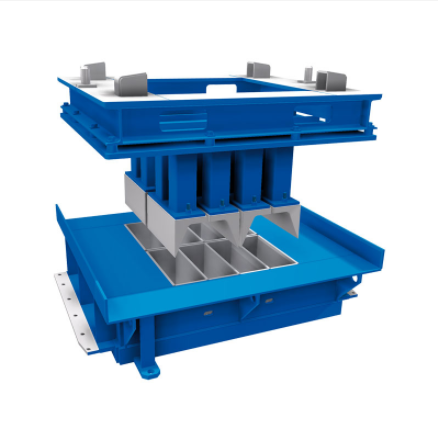
Wear parts and mold life: Traditional machine molds are often made of mild steel or low-grade manganese steel, lasting 50,000-80,000 cycles before needing replacement. A Germany Zenith block machine uses tungsten carbide coated molds and high-chrome iron liners, achieving 300,000-500,000 cycles. Although the mold costs 70% more initially, the cost per block is drastically lower. Our factory recalculates: traditional mold cost per block = $0.0023, Germany Zenith block machine mold cost per block = $0.0009.
Electrical and control panel: Traditional machines use basic relays and contactors that suffer from contact welding and arcing. A Germany Zenith block machine employs solid-state relays, industrial PLCs from Siemens or Allen-Bradley, and sealed operator panels. Downtime due to electrical faults is nearly zero. Additionally, our Germany Zenith block machine includes remote diagnostics, so our service team can troubleshoot issues without a site visit, saving travel costs and downtime.
Preventive maintenance schedule: For a traditional machine, our factory recommends weekly greasing, monthly hydraulic oil checks, and quarterly mold adjustments. For a Germany Zenith block machine, the schedule extends to monthly greasing, biannual oil sampling, and yearly mold inspection. Labor cost for maintenance on traditional machines is 3 hours per day, while the Germany Zenith block machine requires only 1 hour per week. Over a year, that difference is over 900 man-hours. Therefore, when calculating total cost of ownership, the Germany Zenith block machine is not just competitive—it is overwhelmingly cheaper in the long run.
After examining technical specifications, production efficiency, energy consumption, block quality, and maintenance costs, the difference between traditional and Germany Zenith block machines is clear. Traditional machines may appear affordable upfront, but they deliver lower output, higher energy bills, inconsistent quality, and frequent repairs. In contrast, the Germany Zenith block machine provides superior compaction, automation, and durability, resulting in lower cost per block and higher profits. At Quangong Machinery Co., Ltd., we have helped over 1,200 customers transition to Germany Zenith block machine technology. Our factory’s after-sales support includes installation supervision, operator training, and lifetime spare parts supply.
Ready to upgrade your block production? Contact Quangong Machinery Co., Ltd. today for a free consultation. Our engineers will analyze your existing setup, provide a custom ROI calculation, and recommend the ideal Germany Zenith block machine model for your capacity and budget. Whether you need a single machine or a complete turnkey plant, our factory delivers world-class solutions. Request a quote now and receive a detailed brochure with technical drawings and production videos. Don’t let outdated technology hold you back—choose the Germany Zenith block machine and join the leaders in concrete block manufacturing.
Q1: Can a traditional block machine be upgraded to perform like a Germany Zenith block machine?
No, a traditional block machine cannot be upgraded to match a Germany Zenith block machine’s performance because the fundamental design limitations are physical. The frame rigidity, vibration system, hydraulic circuit, and control architecture are completely different. Retrofitting a traditional machine with better motors or a new PLC might improve it marginally, but you will never achieve the high-frequency dual-shaft vibration, proportional hydraulics, or cycle speed of a genuine Germany Zenith block machine. Quangong Machinery Co., Ltd. advises clients that attempting such upgrades usually wastes money and leads to mechanical failures. The only cost-effective solution is to replace outdated machines with a certified Germany Zenith block machine. Our factory offers trade-in programs where we credit the value of your old equipment toward a new purchase.
Q2: How much floor space is required for a Germany Zenith block machine compared to a traditional machine?
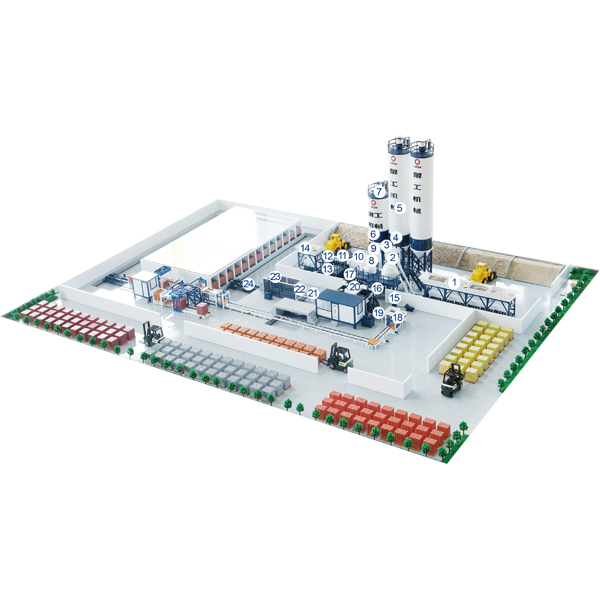
A complete Germany Zenith block machine production line (including automatic mixer, conveyor, machine, pallet stacker, and cube handler) requires approximately 25-30% less floor space than a traditional setup producing the same output. This is because the Germany Zenith block machine’s faster cycle time eliminates the need for multiple parallel machines or extensive curing racks. For example, to produce 8,000 blocks per shift, traditional plants often need 3 machines and 250 square meters. One Germany Zenith block machine from Quangong Machinery Co., Ltd. can achieve the same output in 180 square meters. Additionally, the Germany Zenith block machine’s integrated control desk and compact hydraulic power pack reduce auxiliary space. Our factory provides detailed layout drawings for any site free of charge.
Q3: Does a Germany Zenith block machine require special electrical infrastructure?
Yes, a Germany Zenith block machine generally requires a stable three-phase power supply with voltage fluctuation less than 5% and grounding resistance below 1 ohm. The total connected power is often higher than traditional machines due to multiple motors and servo drives, but the actual running power is lower because of VFDs and load sensing. For a typical Germany Zenith block machine model ZN900, the recommended transformer capacity is 150 kVA, while a traditional machine with similar output needs 180 kVA. Our factory includes voltage regulators and harmonic filters in our Germany Zenith block machine packages for areas with unstable grids. We strongly advise against using generator power with traditional machines because frequency drift damages vibration systems, but our Germany Zenith block machine’s VFDs compensate for generator speed variations automatically.
Q4: How many years does a Germany Zenith block machine last under 24/7 operation?
A properly maintained Germany Zenith block machine from Quangong Machinery Co., Ltd. has an operational lifespan of 20-25 years under three-shift continuous operation. The main steel structure is designed for infinite fatigue life at rated loads. Wear parts like mold liners, hydraulic hoses, and v-belts are replaceable. In contrast, traditional machines rarely exceed 8-10 years before structural cracks or bearing housing wear makes them unreliable. Our factory has Germany Zenith block machine references from 2005 still running at 92% of original efficiency. The secret lies in the generously sized bearings, induction-hardened guide columns, and continuous oil bath lubrication. We offer extended warranties up to 10 years on the main frame and vibration unit for all Germany Zenith block machine customers.
Q5: Can the Germany Zenith block machine produce interlocking pavers and hollow blocks on the same day?
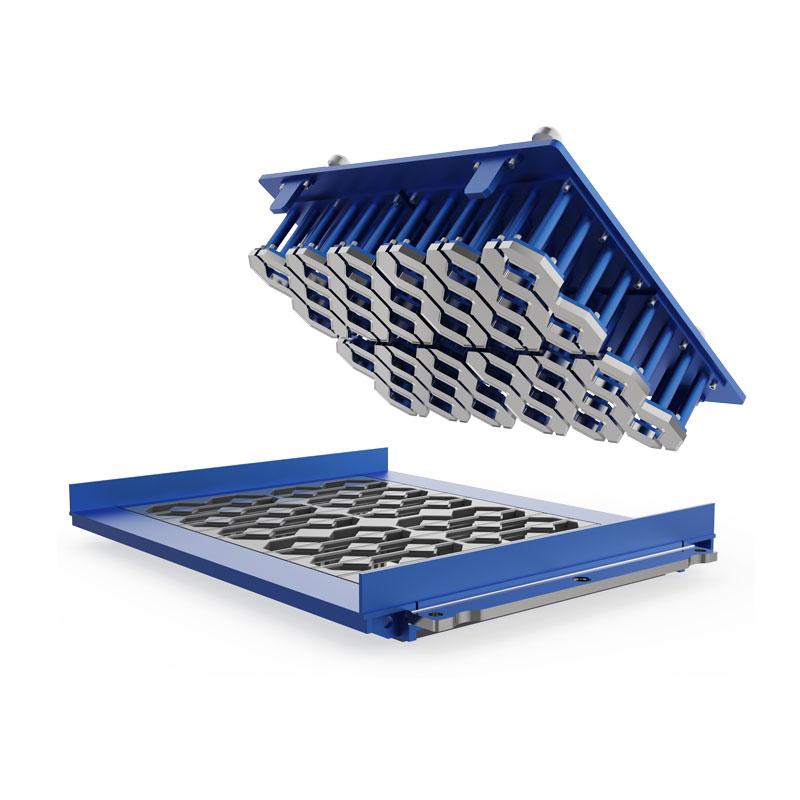
Absolutely. One of the greatest advantages of the Germany Zenith block machine is its quick mold change system and recipe memory. You can produce hollow blocks from 8:00 to 12:00, then switch to interlocking pavers by simply changing the mold (takes 10-12 minutes) and selecting a new recipe on the touch screen. The machine automatically adjusts vibration amplitude, pressing force, and cycle timing. Traditional machines require manual recalibration of stops and often produce defective first batches after a mold change. Our factory’s Germany Zenith block machine models include automatic mold clamping recognition, so the PLC knows exactly which mold is installed and loads the correct parameters. This flexibility allows one Germany Zenith block machine to replace three dedicated traditional machines, saving capital and floor space.
-