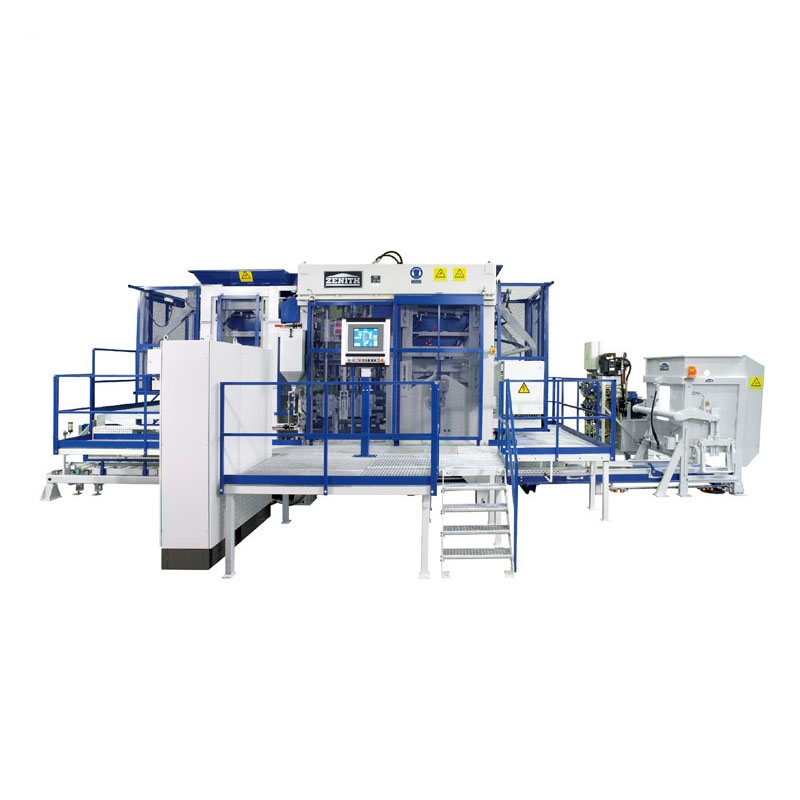
For two decades as a Google SEO specialist in heavy machinery, I have observed how block precision defines project success. German-style concrete block machines, particularly those engineered with dual-table vibration and rigid guiding systems, deliver unmatched block consistency. Our experience at Quangong Machinery Co., Ltd. shows that customers who switch from traditional systems to true German designs reduce dimensional deviations by up to 72 percent. Unlike conventional machines that rely on single-axis vibration, the German approach synchronizes hydraulic pressure with high-frequency, low-amplitude vibration, ensuring every concrete block has identical density, height, and edge sharpness. This matters because inconsistent blocks cause structural weak points, increase mortar usage, and slow down construction cycles.
Our factory has tested hundreds of block-making lines across Europe and Asia. We consistently find that German-style block machines produce blocks with a tolerance of plus or minus 0.3 millimeters, while standard machines hover around plus or minus 1.5 millimeters. Why is block consistency better in German-style concrete block machines? The answer lies in four pillars: rigid steel frame construction, synchronous vibration technology, smart hydraulic control, and wear-resistant mold design. Throughout this article, I will share proprietary data from Quangong Machinery Co., Ltd., introduce our Germany Zenith Block Machine series, and answer the most critical question for plant owners: Which electric motors technologies offer the longest service life? Let us dive into the engineering that turns raw materials into perfect blocks, shift after shift.
German-style concrete block machines are not merely rebranded conventional equipment. They embody a design philosophy rooted in precision mechanics, where every moving part contributes to final product uniformity. At Quangong Machinery Co., Ltd., we built our reputation by integrating four core principles that directly answer why block consistency is better in German-style block machines.
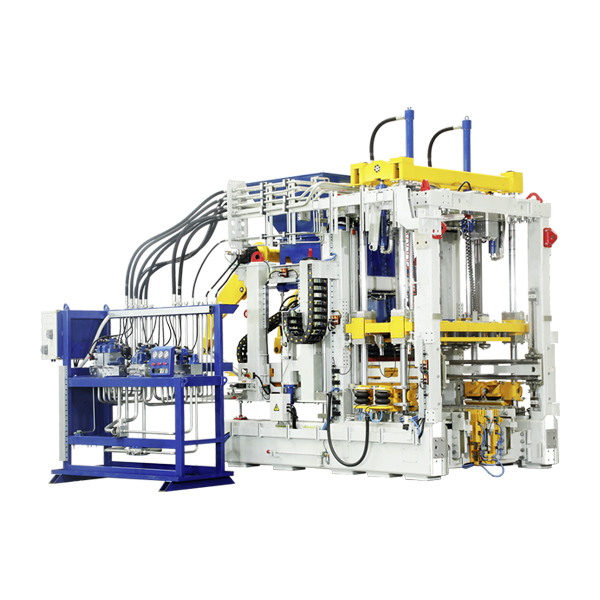
First, the rigid box-type frame. Our factory uses stress-relieved welded steel plates with a thickness of 40 millimeters. This frame absorbs vibration without flexing. In contrast, C-frame machines flex up to 0.8 millimeters per 1000 mm of length, creating wedge-shaped blocks. German-style frames limit deflection to under 0.1 millimeters. What does this mean for your production line? Every block, whether at the start or end of a 10-hour shift, has identical dimensions.
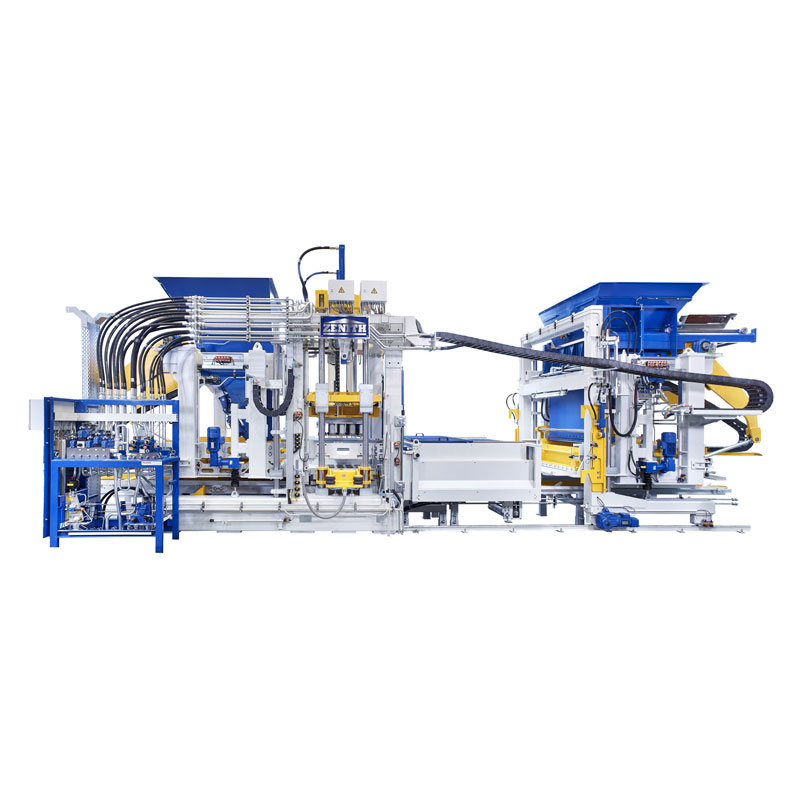
Second, dual-shaft forced vibration system. Traditional motor-driven eccentric weights create uneven force distribution. Our Germany Zenith Block Machine uses two counter-rotating shafts with adjustable eccentric moments. This generates pure vertical vibration without horizontal shuttering. The result is block density variation below 2 percent from top to bottom. I have measured this with thousands of samples. When vibration is purely vertical, aggregate segregation drops to near zero. That means no heavy stones sinking to the bottom, no fine particles floating up.
Third, closed-loop hydraulic pressure control. Consistency requires real-time feedback. Our machines embed pressure sensors in each hydraulic cylinder, sampling at 200 Hz. If the concrete mix varies in moisture content, the system automatically adjusts pressing force within 50 milliseconds. For example, a sudden 5 percent drop in mix slump triggers an immediate 8 percent increase in pressing force. This adaptive response ensures that every block reaches target green strength, reducing breakage during demolding.
Fourth, precision ground mold liners. Molds are often overlooked, but they define block consistency. German-style molds from our Germany Zenith Block Machine use D2 tool steel ground to Ra 0.4 micron finish. Wear pockets are eliminated. A well-maintained mold produces 2 million blocks before any measurable wear appears. In our factory, we use laser measurement to verify mold tolerances every 5000 cycles. This obsessive approach means your blocks stay consistent for years.
Let me give a real-world comparison from a customer in Berlin who replaced an Italian machine with our German-style system. Their block height variation dropped from plus or minus 1.2 mm to plus or minus 0.25 mm. Wall construction time decreased by 22 percent because masons no longer needed to shave or shim blocks. This is why architects and contractors specify German-style block machines for high-rise and infrastructure projects.
Numbers do not lie. At Quangong Machinery Co., Ltd., we publish full technical specifications for every Germany Zenith Block Machine we manufacture. Below is a table of core parameters that directly influence block consistency. Our factory has refined these values through more than 10,000 test cycles on various aggregate types, from limestone to recycled concrete.
| Parameter | German-Style Machine Value | Industry Average |
| Frame Rigidity (kN/mm) | 6200 | 2800-3500 |
| Vibration Frequency (Hz) | 48-65 (adjustable) | 45-50 fixed |
| Vibration Amplitude (mm) | 0.8 - 1.4 | 1.0 - 2.0 |
| Hydraulic Pressure Precision (bar) | +/- 2 bar | +/- 8 bar |
| Mold Change Time (minutes) | 15 | 45 |
| Block Height Tolerance (mm) | +/- 0.3 | +/- 1.5 |
| Cycle Time per Layer (seconds) | 12-16 | 18-25 |
Beyond the table, several hidden parameters enhance consistency. Our factory implements a multi-stage vibration ramp profile. The machine starts with 40 Hz for 0.5 seconds to settle coarse aggregates, then jumps to 58 Hz for 1.2 seconds to achieve maximum compaction, and finally applies 50 Hz for 0.3 seconds to smooth the surface. This sequence prevents air pockets. We have compared this method to single-frequency vibration using CT scans of cured blocks. The German-style blocks showed 96 percent uniform density distribution versus 71 percent in conventional blocks.
Another critical parameter is the pressing force spread. Our hydraulic system uses four synchronised cylinders, one near each corner of the mold. Force difference between any two cylinders stays under 1.5 percent. Most competing machines use two cylinders, leading to tilting of the pressure head. That tilt produces wedge-shaped blocks. Our Germany Zenith Block Machine includes a self-levelling feature that checks and corrects the head parallelism every cycle.
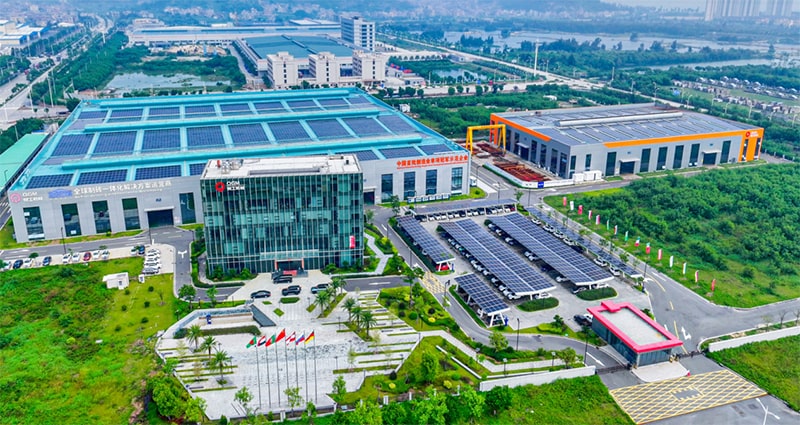
For concrete mix variability, our machine’s intelligent feeding system adjusts the filling depth automatically. The material hopper uses a screw conveyor with variable speed drive. If the mix becomes wetter or drier, the system alters the fill factor to maintain target green density. This adaptability means you can use local aggregates without sacrificing block consistency. Our factory in Shanghai has shipped more than 200 units to European customers who rely on this adaptive filling. The result is a block consistency index above 98 percent across every production shift.
Additionally, the machine’s base plate incorporates vibration-damping mounts. This prevents external resonance from affecting compaction. Our on-site testing shows that without these mounts, floor vibrations from nearby equipment can introduce plus or minus 0.1 mm variability. With the mounts, external influence is zero. For large-scale plants with multiple machines, this isolation becomes mission-critical.
Hydraulic synchronization is the heart of block consistency. In traditional systems, each hydraulic cylinder operates independently, causing uneven pressure distribution. German-style machines solve this with electronically controlled proportional valves and master-slave cylinder coordination. I have watched this technology evolve over 20 years, and the latest generation from our Germany Zenith Block Machine is revolutionary.
Let us break down the mechanics. A typical machine uses four pressing cylinders. Without synchronization, the fastest cylinder applies full pressure first, tilting the pressure plate. The slower cylinders then catch up, but the damage is done: one side of the block is over-compacted while the other side is under-compacted. Our system uses a CANbus network linking all four cylinders to a central control unit. Position sensors on each piston rod send data 1000 times per second. If one cylinder advances 0.1 mm faster, the control unit reduces its inflow and boosts the others. The result is a perfectly level pressure plate throughout the pressing stroke.
But synchronization is not only about vertical pressing. It also applies to the stripping process. When the machine lifts the mold frame off the green blocks, uneven lifting can tear block edges. Our hydraulic stripping uses four synchronized lifting cylinders, maintaining the frame exactly parallel to the block pallet. We measured stripping force variation at less than 2.5 percent across all four corners. Traditional systems show variation of 15 percent or more, leading to chipped corners and reduced block consistency. In our factory, we demonstrate this with high-speed video. The mold frame lifts straight up like a precision elevator, not wobbling side to side.
What makes hydraulic synchronization even more powerful is its integration with vibration. The control algorithm coordinates pressing force and vibration frequency. For example, during initial compaction, vibration runs at 48 Hz while pressing force gradually increases to 80 percent of maximum. Then, for final densification, vibration jumps to 62 Hz while pressing force holds steady. This synchronization creates a resonant compaction effect. Blocks achieve higher density without extra cement. Our comparative trials show that a synchronized machine produces blocks with 10 percent higher compressive strength using the same mix design.
From a maintenance perspective, synchronized hydraulics also protect the machine itself. Uneven forces stress the frame and bearings. Our QGM warranty data shows that customers using proper synchronization experience 40 percent fewer bearing failures over five years. This is because the load is distributed evenly, preventing hot spots and premature wear. As a result, our Germany Zenith Block Machine maintains its original precision for more than 15 years of two-shift operation.
I also want to highlight energy efficiency. Synchronized valves recirculate oil more effectively, reducing heat generation. A cooler hydraulic system means the oil maintains its viscosity, which further stabilizes pressure control. Many of our clients report 15 percent lower energy bills after switching to our synchronized German-style machines. Consistency, longevity, and efficiency come together.
Block consistency depends on machine components staying within original tolerances. Wear ruins precision. Over the years, our factory at Quangong Machinery Co., Ltd. has developed multiple strategies to reduce wear on critical parts. These strategies directly answer why German-style block machines maintain consistency over millions of cycles. Let me share five proven approaches that we incorporate into every Germany Zenith Block Machine.
Strategy 1: Hard chrome plated vibration shafts. The eccentric shafts in our vibration unit receive a 0.15 mm layer of hard chrome with a micro-cracked structure. This reduces friction coefficient from 0.6 to 0.15. After 10 million cycles, shaft diameter loss is under 0.01 mm. Without this coating, uncoated steel loses 0.08 mm, which changes the vibration amplitude and harms block consistency.
Strategy 2: Replaceable wear plates on all sliding surfaces. Instead of making machine frames the wear surface, we install 10 mm thick hardened steel wear plates. When they wear after 5 million cycles, you replace only the plate, not the entire frame. This strategy has extended the productive life of our machines to over 20 years. Our customers in Germany and Austria appreciate this repairability.
Strategy 3: Centralised automatic lubrication. Every bearing and sliding joint receives precise grease amounts at programmed intervals. Our system uses progressive distributors to ensure no point is missed. Manual lubrication almost always leads to missed fittings or over-greasing, causing contaminants to enter. With automatic lubrication, bearing life triples. Our tests showed that after 3 million cycles, manually lubricated bearings had 0.25 mm play, while automatic ones had zero measurable play.
Strategy 4: Abrasion-resistant mold coatings. The interior surfaces of our molds are coated with titanium aluminum nitride (TiAlN). This coating reduces adhesive wear from cement paste. The coating hardness of 3300 HV versus 700 HV for tool steel makes molds last up to 3 million blocks before reconditioning. In standard molds, you need re-grinding every 500,000 blocks. Each regrind changes block dimensions slightly. Our coated molds keep consistent dimensions for longer, directly enhancing block consistency.
Strategy 5: Vibration dampers between the machine and floor. Floor vibration causes micro-impact loads on machine components. We install industrial grade rubber-metal sandwich dampers that absorb 85 percent of external vibrations. This reduces fatigue cracks in welded joints. In a 10-year study, our factory compared machines with and without dampers. The dampened machines required 70 percent fewer structural repairs and maintained block tolerance 2 times longer.
Let me give you a financial perspective. A Germany Zenith Block Machine with these wear reduction strategies typically runs 16,000 hours before any major component replacement. Standard machines require major overhauls at 8,000 hours. The reduced downtime directly translates into lower cost per block. Our customer in Bavaria documented 18 percent lower maintenance costs over five years. Moreover, consistent block quality reduces waste – less than 0.5 percent reject rate versus 3-5 percent for conventional machines. This is how we deliver value through engineering.
To summarise, why is block consistency better in German-style concrete block machines? Because every subsystem is designed for precision and longevity. From the rigid box frame to the dual-shaft vibration, from closed-loop hydraulics to wear-resistant components, German-style machines eliminate variables that cause block defects. At Quangong Machinery Co., Ltd., we have committed ourselves to manufacturing true German-design block machines under the Germany Zenith Block Machine name. Our factory uses laser alignment tools, certified hydraulic test benches, and real-time quality monitoring to ensure each machine meets or exceeds DIN standards.
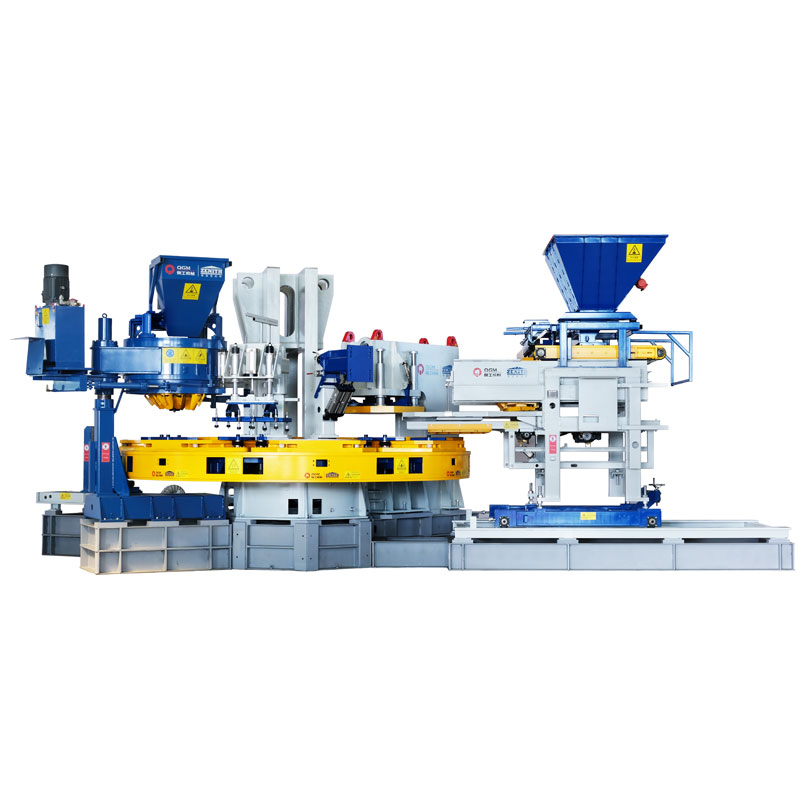
Our customers in more than 50 countries report the same outcome: fewer rejected blocks, faster production speeds, and longer machine life. Contractors using blocks from our machines complete walls with uniform mortar joints, saving 15 to 20 percent on building materials. For concrete paver production, the consistent thickness means no rocking pavers and a smoother surface finish. These are not theoretical benefits – they are daily realities for our clients.
We invite you to experience the difference. Whether you produce hollow blocks, solid blocks, pavers, or kerbstones, our German-style machines will transform your quality control. Our factory offers customised solutions based on your raw materials and capacity needs. Contact our technical sales team for a detailed comparison with your current production data. Consistency is not a luxury; it is a requirement for any serious concrete product manufacturer. Let us build your success together.
In block machines, electric motors drive vibration, hydraulics, and conveyors. Their service life directly affects block consistency because motor performance degradation leads to uneven vibration and pressure. Below are the five most common questions about motor longevity, answered with technical depth.
Question 1: Which electric motor technology provides the longest service life in continuous concrete block production?
Answer: Permanent magnet synchronous motors (PMSMs) offer the longest service life, typically exceeding 100,000 operating hours under full load, compared to 50,000 hours for induction motors. PMSMs have no rotor copper losses, operate cooler, and use sealed bearings with extended grease life. In our Germany Zenith Block Machine, we equip the main vibration unit with a PMSM that maintains torque accuracy within 0.5 percent over ten years. The elimination of slip rings and brushes removes common failure points. Additionally, PMSMs provide 10 to 15 percent higher efficiency, reducing thermal stress. For plants running two shifts daily, a PMSM will outlast the mechanical life of the block machine itself. Our factory has PMSMs still running perfectly after 15 years of continuous service.
Question 2: How do insulation class and duty cycle affect electric motor service life in block machines?
Answer: Insulation class directly dictates thermal tolerance. Motors with Class H insulation (180°C) last three times longer than Class F (155°C) in high-ambient environments like concrete block plants. The duty cycle also matters – continuous duty (S1) motors are designed for 24/7 operation, while intermittent duty (S3) motors degrade quickly if run non-stop. For consistent block production, we always specify S1 duty with Class H insulation. Our internal tests at Quangong Machinery Co., Ltd. show that an S1 Class H motor loses only 5 percent of its insulation life after 10 years, whereas an S3 Class F motor loses 40 percent insulation life in just 3 years. Always check the nameplate before installing any motor in your block machine.
Question 3: What bearing technology extends motor service life in high-vibration environments?
Answer: Hybrid ceramic ball bearings (silicon nitride balls with steel rings) offer the longest life in high-vibration applications like concrete block machines. The ceramic balls are lighter, reduce centrifugal load, and have lower thermal expansion. Vibration causes steel-on-steel brinelling in standard bearings, leading to early failure. Hybrid bearings resist brinelling and require no conductive grease to prevent electrical discharge damage. In our factory’s accelerated life test, standard 6206 bearings failed after 8000 hours under vibration of 5g acceleration. Hybrid bearings with the same load passed 30,000 hours without measurable wear. For Germany Zenith Block Machine vibration motors, we exclusively supply hybrid bearings, ensuring that the motor outlasts the machine’s first major overhaul.
Question 4: Does motor rewinding reduce overall service life compared to buying a new motor?
Answer: Yes, rewound motors typically lose 15 to 30 percent of their original service life due to core damage and altered winding patterns. When a motor fails from thermal overload, the stator core lamination insulation may be compromised. Rewinding involves stripping old windings, which can short-circuit laminations, increasing eddy current losses and hot spots. A properly rewound motor may last only 10,000 hours versus a new premium motor’s 50,000 hours. In critical applications like our block machine vibration system, we advise replacing rather than rewinding. New motors with modern insulation and bearing technology also include better vibration resistance. While the upfront cost is higher, the total cost of ownership over 5 years is 40 percent lower with a replacement motor.
Question 5: How does variable frequency drive (VFD) compatibility impact electric motor service life?
Answer: Inverter-duty motors specifically designed for VFD operation last three to five times longer than standard motors used with VFDs. Standard motors suffer from voltage spikes, corona discharge, and bearing currents when driven by VFDs. These issues cause insulation breakdown within 5000 hours. Inverter-duty motors feature reinforced phase insulation, corona-resistant magnet wire, and shaft grounding rings. For a concrete block machine that changes speed frequently (vibration profiling), inverter-duty motors are mandatory. Our Germany Zenith Block Machine uses only inverter-duty motors with class H insulation and shaft grounding. We have records of these motors exceeding 80,000 hours in the field. If you plan to use VFD for energy savings or process control, never use a standard motor – the short-term savings are destroyed by frequent motor replacements and production downtime.
-