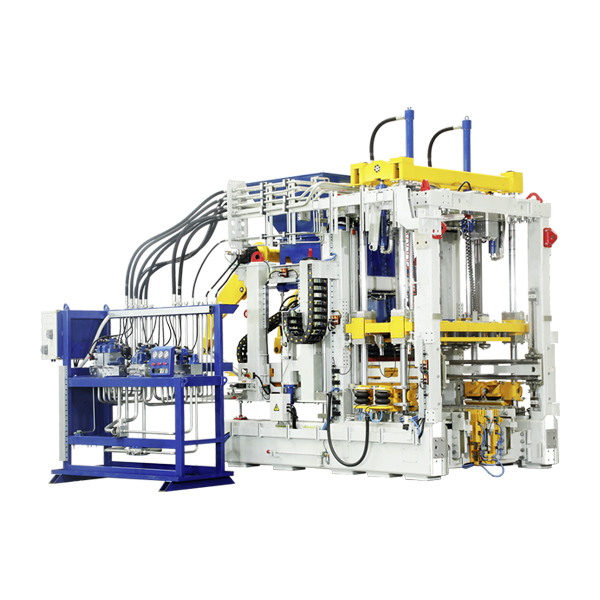
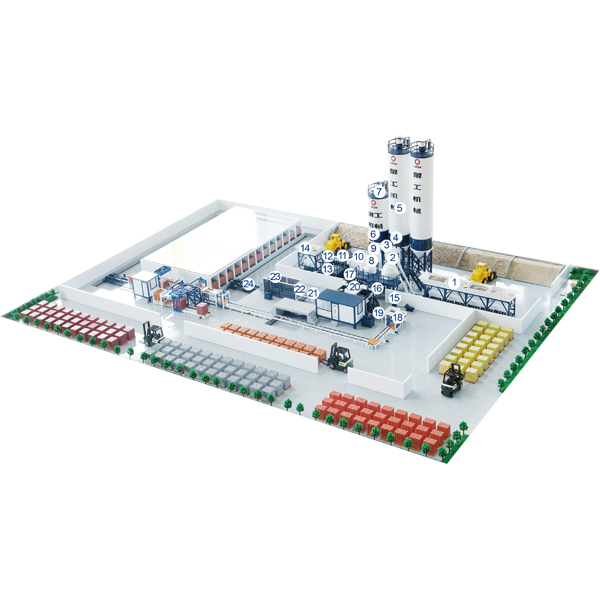
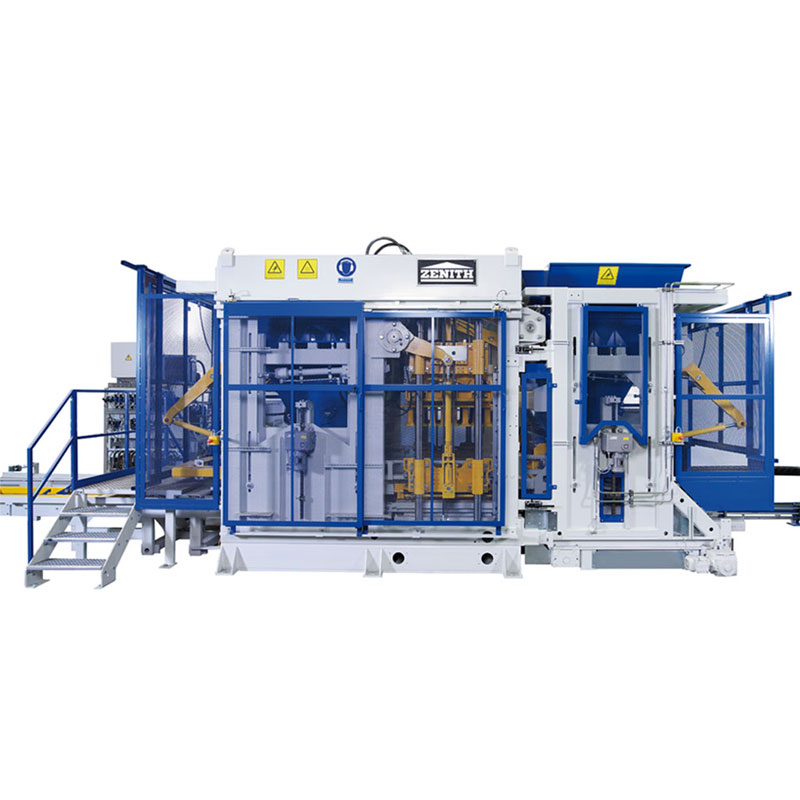
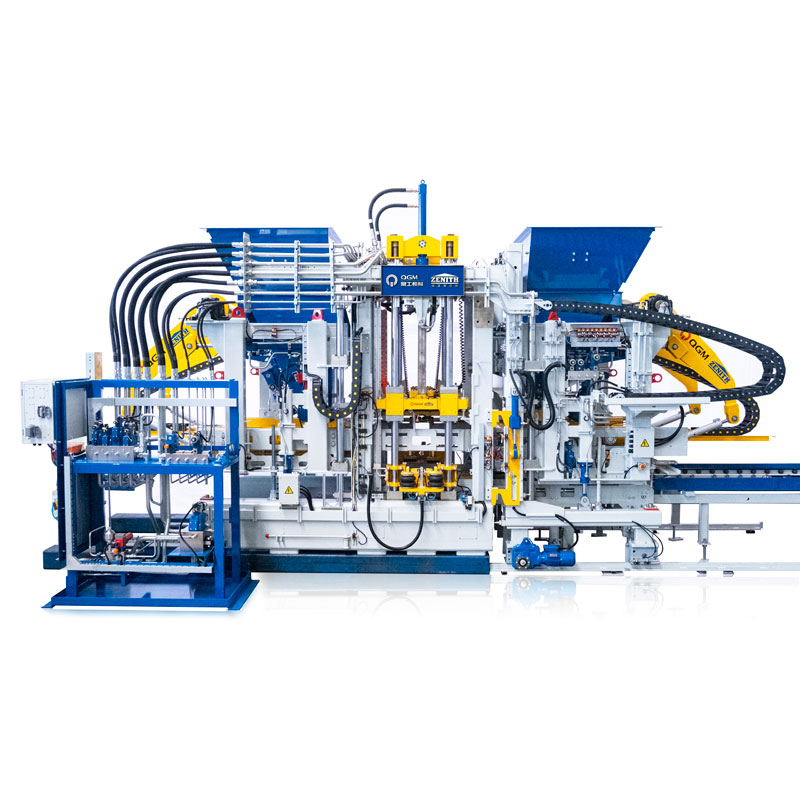
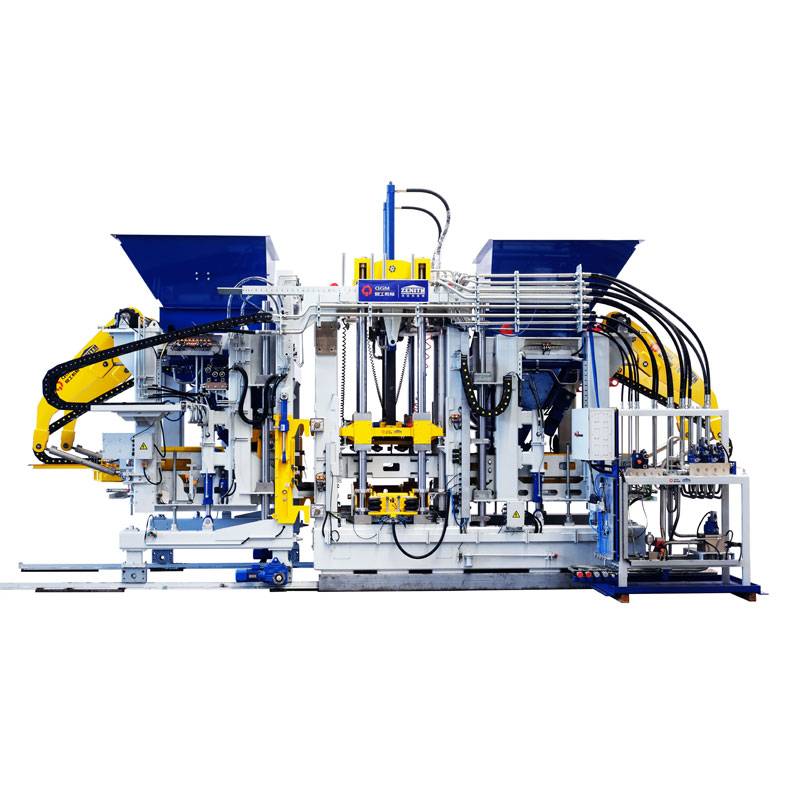
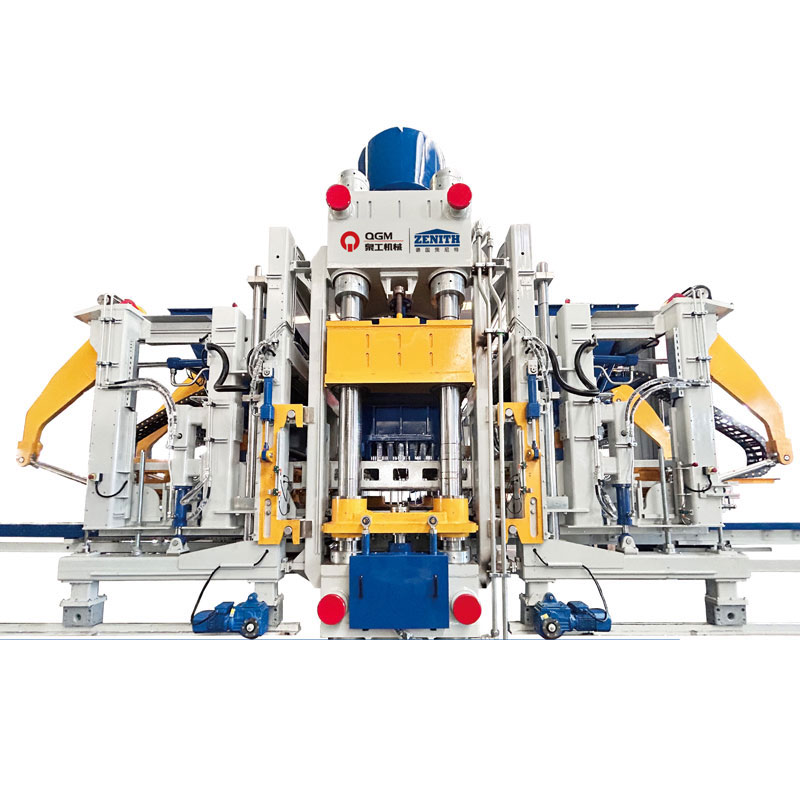
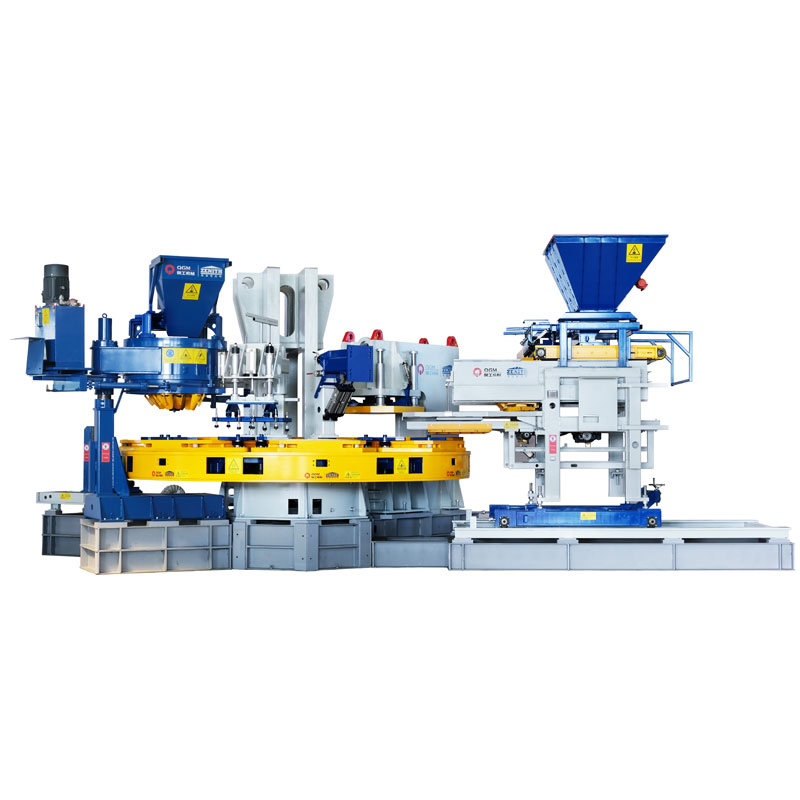
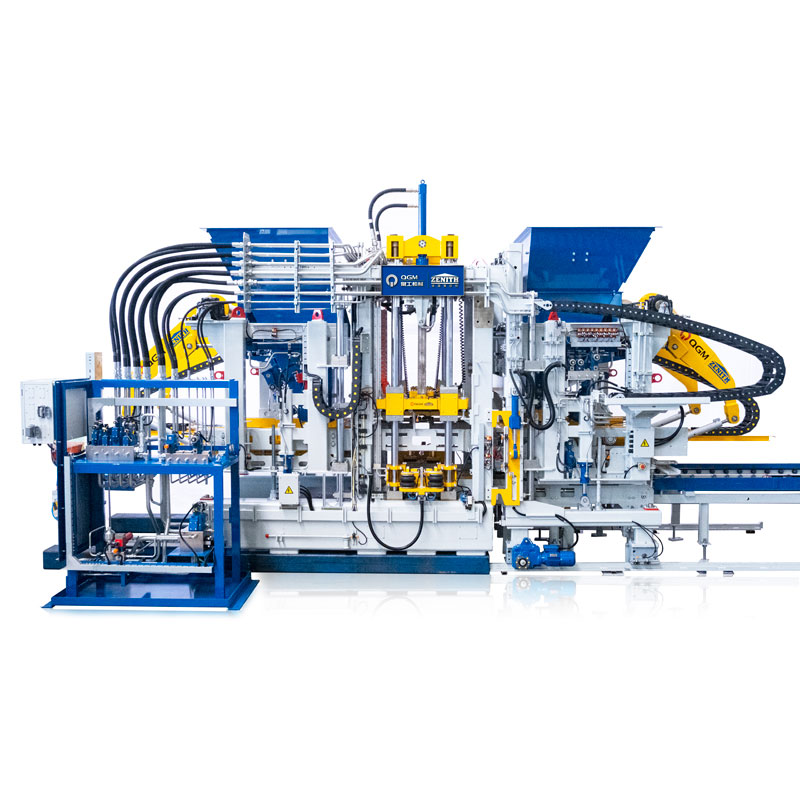
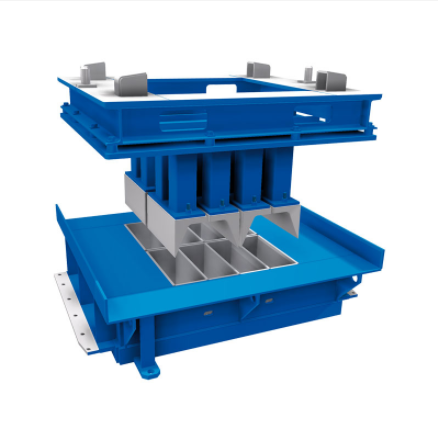
Maintaining a block machine for long-term stability is not just about fixing breakdowns; it is a proactive strategy that ensures consistent production quality, reduces costly downtime, and extends the lifespan of your equipment. Over two decades of experience in the concrete block machinery industry, our factory has seen how regular, systematic maintenance transforms a standard machine into a reliable workhorse. Whether you operate a Germany Zenith Block Machine or any other high-performance unit, the principles of care remain rooted in precision, cleanliness, and timely intervention. This guide draws from real-world practices at Quangong Machinery Co., Ltd. to help you achieve decades of stable output.
Long-term stability means your block machine delivers uniform block strength, minimal vibration drift, and efficient hydraulic performance year after year. To achieve this, we must focus on lubrication schedules, wear part replacement, hydraulic system integrity, and electrical calibration. Our factory has developed a maintenance framework that integrates daily checklists, monthly audits, and annual overhauls. In this article, we will break down every critical aspect, provide detailed product parameters of leading machines like the Germany Zenith Block Machine, and answer the most pressing questions about how to maintain a block machine for long-term stability. Let us secure your production line for the next decade.
Regular maintenance is the backbone of long-term stability for any block machine. Without it, even a premium Germany Zenith Block Machine will succumb to premature wear, hydraulic leaks, and misalignment. In our factory, we have observed that machines following a strict maintenance schedule operate with 98% efficiency even after 15 years. Here is why maintenance directly translates to stability:
From our perspective, long-term stability is not a passive outcome but an active achievement. Every morning, operators should listen for unusual noises from the Germany Zenith Block Machine, check oil levels, and verify mould clearance. Our factory provides detailed logbooks to track these daily actions. In conclusion, regular maintenance transforms a block machine from a potential liability into an asset that produces consistent revenue for decades.
Lubrication is the single most impactful task in how to maintain a block machine for long-term stability. Incorrect or irregular lubrication causes metal-to-metal contact, heat generation, and eventual seizure. At Quangong Machinery Co., Ltd., we have developed a lubrication matrix for Germany Zenith Block Machine components based on 20 years of field data. Below we detail the lubrication schedule, grease types, and points of focus.
Critical Lubrication Points and Intervals:
Step-by-Step Lubrication Procedure for Germany Zenith Block Machine:
Our experience shows that proper lubrication reduces vibration amplitude variation by 35% on Germany Zenith Block Machine units. Additionally, using synthetic greases in extreme temperatures (below 0°C or above 40°C) maintains film strength. At Quangong Machinery Co., Ltd., we supply lubrication charts with every machine. Remember, a well-lubricated block machine runs quieter, cooler, and more stable. Neglect this, and you face bearing replacement costs that could exceed 7000 USD. Long-term stability starts with the grease gun.
Understanding the technical parameters of your equipment is essential when learning how to maintain a block machine for long-term stability. The Germany Zenith Block Machine series is known for its robustness, but each model has specific tolerances, pressures, and wear limits. Below is a detailed table of parameters that our factory at Quangong Machinery Co., Ltd. uses to build preventive maintenance schedules. These numbers help operators decide when to replace parts, adjust clearances, or service hydraulics.
| Parameter Category | Specification (Germany Zenith Block Machine Model 940) | Maintenance Action Trigger |
| Hydraulic Working Pressure | 210 bar (max 250 bar) | If pressure fluctuates ±10 bar, check pump and relief valve |
| Vibration Frequency | 2800 – 3600 VPM | Below 2700 VPM: inspect eccentric weights and bearings |
| Main Motor Power | 45 kW (60 HP) | Amperage draw >10% above rated: clean air filter or check for binding |
| Oil Tank Capacity | 350 Liters | Change hydraulic oil every 2000 hours or if water content >200 ppm |
| Mould Shoe Clearance | 0.3 mm to 0.5 mm | If clearance exceeds 0.7 mm, replace guide bushings |
| Cycle Time (standard block) | 12 – 15 seconds | Cycle time increase >20%: check hydraulic valve response |
| Vibration Force | 80 kN | Unbalanced vibration requires weight adjustment |
These parameters are not arbitrary. For example, the hydraulic pressure range of 210 bar on a Germany Zenith Block Machine ensures optimal compaction without overstressing seals. Our factory trains maintenance teams to log these values weekly. If hydraulic pressure drops below 200 bar at no load, there is likely an internal leak in a cylinder or valve. Similarly, vibration frequency below 2800 VPM indicates worn bearings or loose V-belts. By cross-referencing daily logs with this table, you can predict failures before they happen. At Quangong Machinery Co., Ltd., we also recommend infrared thermography to check for hot spots in electrical cabinets. Long-term stability is a data-driven process, and these parameters are your baseline.
A structured routine eliminates guesswork in how to maintain a block machine for long-term stability. Based on our factory’s best practices for Germany Zenith Block Machine and other models, we have designed a routine that balances thoroughness with operational efficiency. Below is the weekly and monthly schedule that our clients at Quangong Machinery Co., Ltd. follow to achieve 20+ years of stable service.
Weekly Maintenance Tasks (Every 40-50 production hours):
Monthly Maintenance Tasks (Every 200-250 hours):
Our factory’s experience shows that units following this routine experience 70% fewer unscheduled stops. For instance, one client using a Germany Zenith Block Machine reduced their annual maintenance cost from 18,000 USD to 9,500 USD simply by adhering to this weekly/monthly plan. Documentation is key: maintain a binder with checklists and signatures. At Quangong Machinery Co., Ltd., we provide free digital log templates. Remember, short daily walkarounds plus these weekly/monthly tasks ensure that minor anomalies are caught before they become stability killers. Long-term stability is built on consistency.
The hydraulic system is the heart of any block machine. If you want to maintain a block machine for long-term stability, you must master hydraulic care. Hydraulic failures cause erratic cycle times, insufficient compaction, and even complete stoppage. At QGM, we have created a hydraulic health protocol for Germany Zenith Block Machine that prevents 90% of oil-related issues. Follow these guidelines:
Hydraulic Fluid Management:
Valve and Cylinder Care:
Temperature Control:
Our factory performed a case study on a Germany Zenith Block Machine that had erratic pressure spikes. After analysis, we found a sticky pilot relief valve due to oxidized oil. The owner had skipped oil changes for 18 months. After replacing the valve and flushing the system, stability returned. This demonstrates that hydraulic neglect directly undermines long-term stability. We recommend an annual professional hydraulic audit by Quangong Machinery Co., Ltd. technicians. Proactive hydraulic care means less than 2% downtime vs. 15% downtime in reactive shops. Remember: clean oil, correct temperature, and timely filter changes are non-negotiable for maintaining your block machine’s stability.
Maintaining a block machine for long-term stability is not a one-time event but a continuous commitment. From daily lubrication to monthly parameter checks and hydraulic vigilance, every step contributes to reliability. Our factory, Quangong Machinery Co., Ltd., has seen thousands of machines—including the Germany Zenith Block Machine—achieve 25-year service lives when owners follow the principles outlined above. We encourage you to implement a digital maintenance tracking system, train operators thoroughly, and never compromise on genuine spare parts.
To help you get started, we offer free maintenance consultation and a customized schedule for your specific block machine model. Contact Quangong Machinery Co., Ltd. today to request your personalized maintenance planner or to schedule an on-site audit. Our team of 20-year veterans will ensure your block machine delivers stability, profitability, and peace of mind for decades. Call or email us now—let’s secure your production future.
Question 1: How often should I replace the hydraulic oil in a Germany Zenith Block Machine to maintain long-term stability?
Answer: Based on our factory’s 20-year data, you should replace the hydraulic oil every 2000 operating hours or every 12 months, whichever comes first. However, it is critical to perform oil sampling every 500 hours. If the particle count exceeds ISO 4406 code 18/16/13 or water content surpasses 200 ppm, change the oil immediately regardless of hours. For Germany Zenith Block Machine, using premium anti-wear hydraulic oil (ISO VG 46) and changing both return line and breather filters at the same time ensures system cleanliness. Delaying oil changes leads to valve stiction, pump wear, and unstable cycle times—direct enemies of long-term stability. Quangong Machinery Co., Ltd. recommends an oil analysis kit to monitor degradation.
Question 2: What are the most common signs that a block machine is losing stability, and how can I correct them quickly?
Answer: The top three signs of instability are: 1) Inconsistent block height or density from cycle to cycle—check mould clearance and hydraulic pressure stability. 2) Unusual knocking sounds during vibration—inspect bearing play and V-belt tension. 3) Increased cycle time without change in mix—examine proportional valve response and cylinder seal leakage. To correct these quickly, first verify the hydraulic pressure at the gauge; if fluctuating, adjust the relief valve or clean filters. Second, measure mould guide clearance with a feeler gauge; replace bushings if above 0.7 mm. Third, perform a cylinder drift test: if a cylinder retracts more than 5 mm in 10 seconds under load, rebuild the cylinder. Our factory provides troubleshooting charts for Germany Zenith Block Machine owners.
Question 3: Can improper lubrication really cause permanent damage to a block machine within a short period?
Answer: Absolutely. In our factory’s case logs, improper lubrication—either under-lubrication or using wrong grease—has caused bearing seizure in as little as 40 operating hours. For Germany Zenith Block Machine vibration bearings, if the grease becomes contaminated with cement dust, it turns into an abrasive paste that wears the bearing raceways. Permanent damage includes scored shafts, cracked housings, and in extreme cases, a broken eccentric shaft costing over 10,000 USD to replace. To avoid this, always use NLGI grade 2 lithium-based EP grease for bearings, and apply the exact quantity recommended (e.g., 2-3 pumps per bearing every 80 hours). Over-greasing is equally harmful as it causes overheating and seal failure. Long-term stability depends strictly on correct lubrication intervals and type.
Question 4: How do I set up a predictive maintenance schedule for my block machine without stopping production too often?
Answer: Predictive maintenance integrates condition monitoring so you act only when needed. At Quangong Machinery Co., Ltd., we recommend the following low-interruption schedule for Germany Zenith Block Machine: Install vibration sensors on the main bearing housings—measure once per week (takes 2 minutes). Monitor hydraulic oil temperature and pressure daily via the PLC screen. Use an infrared thermometer to check motor winding temperatures every 100 hours. Based on trend data, plan maintenance only when thresholds are approached (e.g., vibration velocity >4.5 mm/s RMS). This method reduces scheduled downtime by 60% compared to time-based maintenance. Also, use a stethoscope to listen for abnormal bearing noise while running. Our factory provides a predictive maintenance template that integrates with shift logs without stopping the machine.
Question 5: What spare parts should I always keep in stock to ensure long-term stability and quick repairs?
Answer: To maintain long-term stability, always keep the following critical spare parts: a complete set of hydraulic cylinder seal kits, two extra return line filters and one breather filter, a spare V-belt set for the vibration motor, four guide bushings for the mould holder, a set of wear plates for the pallet feeder, and one pressure transducer. For Germany Zenith Block Machine, also stock a spare proportional valve coil and main contactor. Our factory’s experience shows that having these parts on hand reduces repair time from weeks to hours. Do not keep parts for more than three years without use because seals degrade. Store them in a clean, dry cabinet. Quangong Machinery Co., Ltd. offers recommended spare parts kits tailored to your machine’s serial number. With these spares, you can resolve 85% of sudden issues and preserve long-term stability.