Choosing between a manual and an automatic block making machine is a critical decision that directly impacts your production efficiency, labor costs, and product consistency. For over two decades in the concrete machinery industry, our factory has witnessed how this choice shapes business success. Manual machines offer simplicity and lower upfront investment, while automatic systems deliver unparalleled output and precision. Understanding these differences ensures you select equipment that aligns with your project scale and long-term goals. At Quangong Machinery Co., Ltd., we engineer both types, but the right fit depends on your unique operational needs.
In this comprehensive guide, we break down the core distinctions in control systems, cycle times, labor dependency, and final block quality. We will also share detailed specifications of our QGM Block Making Machine models. Whether you are a startup or an established manufacturer, our insights will help you decide which technology serves your production line best. Our factory has optimized these machines for over 20 years, and we are confident that the data and comparisons here will clarify your investment path.
The fundamental divergence between manual and automatic block making machines lies in their control systems and the resulting workflow. Manual machines rely on mechanical levers, hand-operated valves, and human timing for each stage of the block forming process. In contrast, automatic systems integrate programmable logic controllers (PLCs), sensors, and hydraulic or servo-electric actuators to sequence operations without human intervention. Our factory has refined both technologies, and we understand that the choice dictates your daily rhythm on the production floor.
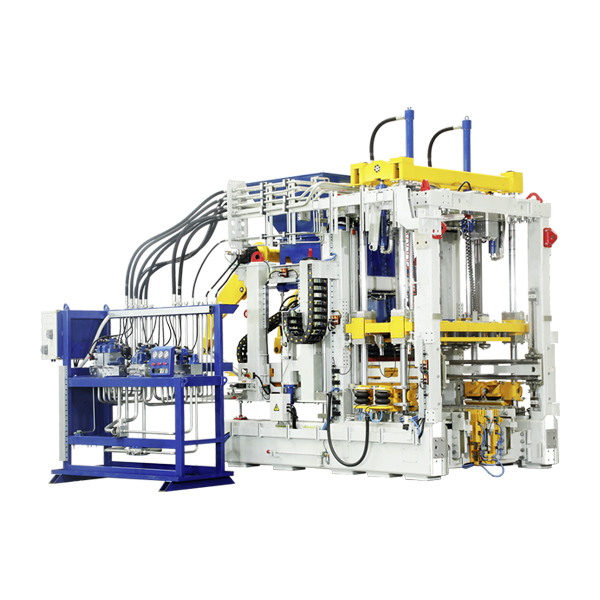
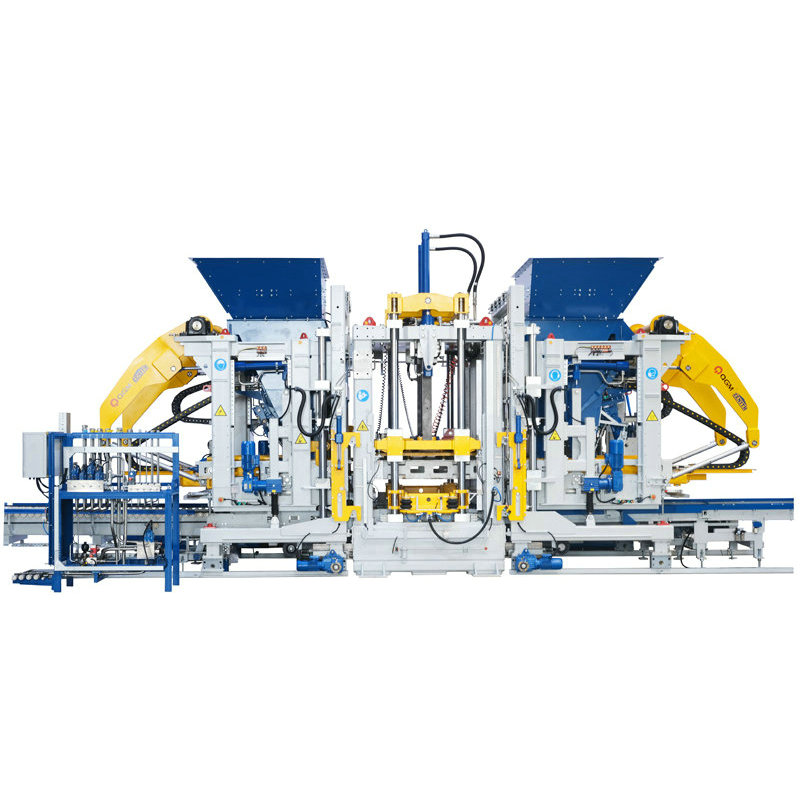
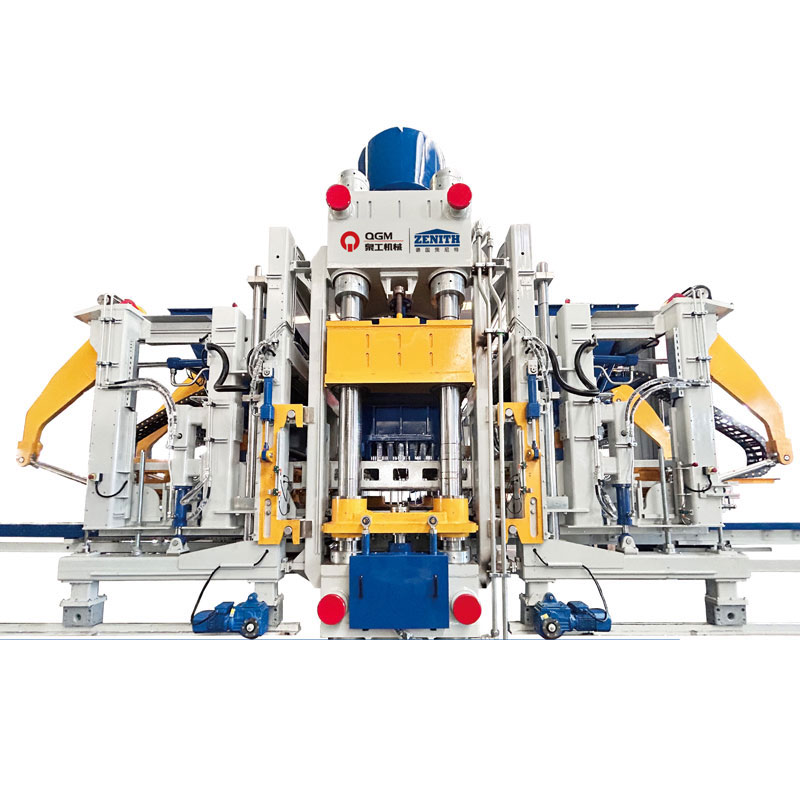
For manual machines, the operator must physically engage the mold filling, vibration, compaction, and ejection steps. Each block requires individual handling, which introduces variability. At Quangong Machinery Co., Ltd., we design manual units with ergonomic levers and clear gauges, but the workflow remains sequential and labor-driven. Automatic block making machines, like our QGM Block Making Machine series, use touchscreen interfaces and pre-set recipes. Once configured, the machine cycles through raw material batching, mixing, mold vibration, hydraulic pressing, and pallet ejection automatically. This reduces cycle time and human error.
Below is a detailed comparison of control and workflow parameters based on our factory testing:
| Feature | Manual Block Making Machine | Automatic Block Making Machine (QGM Series) |
| Control Interface | Mechanical levers, manual valves, analog pressure gauges | PLC with 7-inch touchscreen, remote diagnostic capability |
| Operation Sequence | Operator-dependent: fill, compact, eject manually per cycle | Fully automated: sensor-timed filling, vibration, compaction, ejection |
| Cycle Initiation | Manual trigger after each block | Continuous or batch mode with automatic pallet feeding |
| Adjustment Flexibility | Requires mechanical tools to change mold or pressure | Digital parameter adjustment for density, height, and vibration intensity |
| Error Handling | Operator identifies and corrects visually | Self-diagnostic alerts, automatic shutdown on abnormal pressure |
Our factory has observed that manual machines suit small-scale or remote projects where electricity is inconsistent. However, for operations requiring speed and repeatability, automatic systems dominate. With a QGM Block Making Machine, you can store up to 50 product recipes, switch between hollow blocks, pavers, and curb stones in minutes, and track production data in real time. Manual workflows, while straightforward, cannot match this agility. The control system difference alone often determines long-term competitiveness.
Production capacity is the most visible metric where manual and automatic block making machines diverge. A manual machine typically produces 400 to 800 blocks per 8-hour shift, depending on operator fatigue and raw material handling. In contrast, automatic systems like our QGM Block Making Machine achieve 2,500 to 8,000 blocks per shift for standard hollow blocks. This 3x to 10x difference stems from cycle time and uninterrupted operation. Our factory has timed thousands of cycles to provide accurate benchmarks.
The cycle time of a manual block machine averages 45 to 90 seconds per block, including mold filling, manual vibration, compaction, and ejection. The operator must also load pallets and remove finished blocks. Automatic machines reduce cycle time to 10 to 20 seconds per block by overlapping operations: while one block is ejected, the next mold is filling. Advanced models from Zenith include multi-station turntables or rail-guided pallet systems that eliminate idle time.
Key capacity factors explained from our factory floor experience:
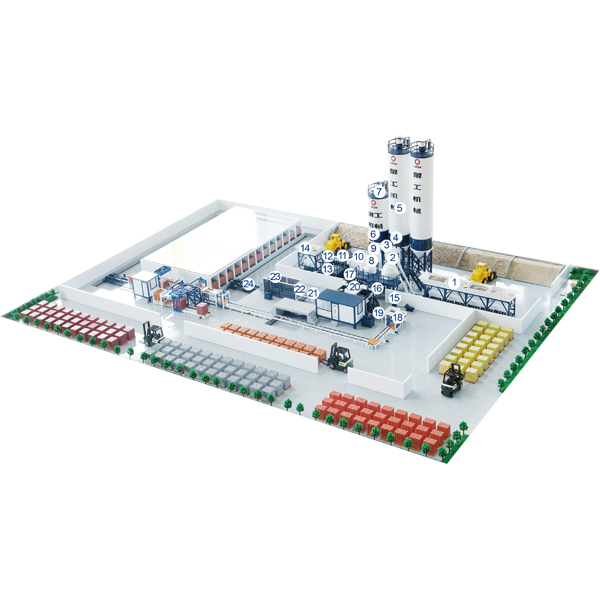
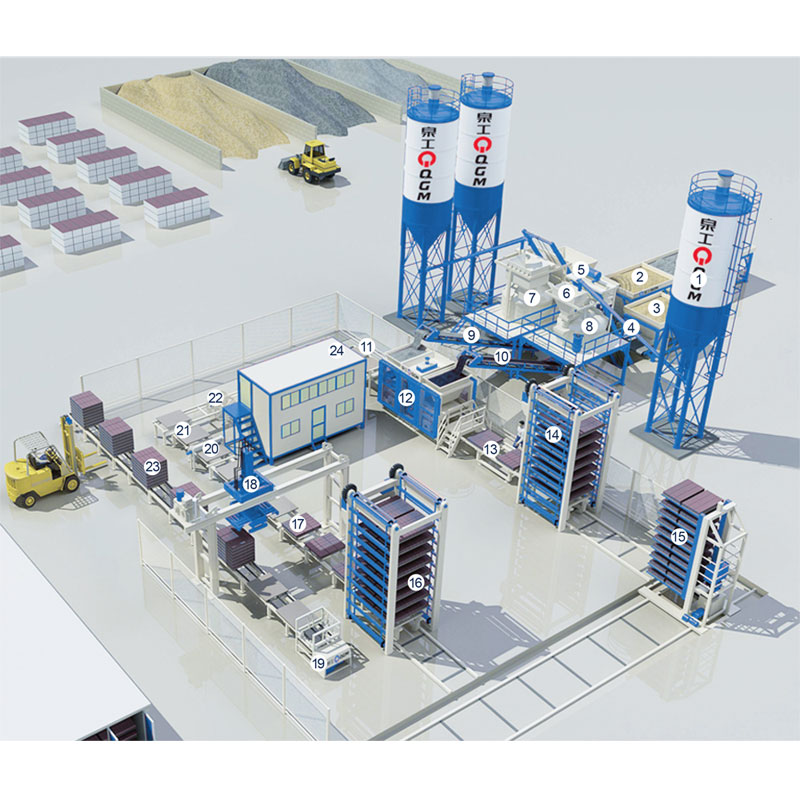
Our factory has integrated variable-frequency drives on automatic machines to optimize vibration and compaction without extending cycle time. For example, the QGM Block Making Machine model QGM-1000 achieves a 12-second cycle for solid blocks. Manual machines cannot compress this time because human reaction limits speed. Additionally, automatic systems include automatic raw material feeding from a silo and conveyor, eliminating the manual scooping that slows production. For high-volume projects like housing developments or infrastructure, the capacity gap makes automatic machines the only viable choice. However, our clients with niche or artistic block production sometimes prefer manual control for unique textures. Quangong Machinery Co., Ltd. offers both, but capacity is the non-negotiable difference for industrial scale.
Labor dynamics present another stark contrast. Manual block making machines demand a crew of 3 to 5 workers per shift: one for material loading, one for machine operation, one for block removal, and often one for pallet handling. Each worker requires training on mechanical safety and rhythm coordination. At Quangong Machinery Co., Ltd., we provide detailed manuals, but the physical toll is high. In contrast, an automatic QGM Block Making Machine typically requires only 1 to 2 skilled supervisors per shift. Their role shifts from manual labor to monitoring control panels, performing quality checks, and routine maintenance.
Skill level requirements also differ. Manual machine operators need to develop tactile sense for vibration and compaction; too little causes weak blocks, too much cracks molds. This expertise takes months to acquire. Automatic machines embed expert parameters from our factory engineers. The PLC ensures consistent compaction force, vibration frequency, and dwell time regardless of operator experience. A new operator can produce perfect blocks within hours using preset recipes. This reduces training costs and turnover risks.
Detailed labor comparison based on our factory data:
Our factory has implemented ergonomic upgrades on manual machines to reduce strain, but the inherent difference remains. For businesses in regions with abundant low-cost labor, manual machines may still be viable. However, for operations seeking scalability and safety, automatic systems from Quangong Machinery Co., Ltd. provide a clear advantage. Moreover, modern automatic machines can be integrated with centralized dust collection and automated pallet stackers, further reducing human contact with raw materials. The labor shift from production to quality supervision improves overall product consistency. This is why most mid-to-large block plants eventually transition to automatic QGM Block Making Machine solutions.
Block quality and consistency are where automatic machines truly excel. Manual block making machines produce blocks with higher variability in dimensions, density, and compressive strength. Human factors like uneven filling, inconsistent vibration time, and varying compaction pressure lead to deviations. Our factory tests show that manual machines typically achieve a standard deviation of ±2.5 mm in length and ±1.2 MPa in strength. Automatic machines, especially our QGM Block Making Machine, maintain ±0.5 mm dimensional accuracy and ±0.3 MPa strength deviation across thousands of cycles.
The reason lies in closed-loop control. Automatic systems use pressure transducers and accelerometers to maintain exact vibration amplitude and hydraulic pressure every cycle. If raw material moisture changes, the PLC adjusts compaction force automatically. Manual machines cannot react to material variations without operator intervention. Additionally, automatic machines produce smoother block surfaces and sharper edges because the ejection speed is controlled, reducing friction marks. Our factory has side-by-side samples demonstrating that automatic-made blocks fetch higher market prices due to premium finish.
Curing processes also differ. Manual machines often produce blocks that need immediate transfer to open-air curing yards, increasing breakage risk. Automatic machines integrate with curing rack systems and forklift pockets, enabling consistent stacking and steam curing. The QGM Block Making Machine includes optional curing chamber interfaces that log temperature and humidity. This leads to higher early strength and reduced curing time from 14 days to 7 days for equivalent strength.
Key quality parameters from Quangong Machinery Co., Ltd. testing:
For construction projects requiring certified block strength (e.g., load-bearing walls), automatic machines are often mandatory. Our factory has helped clients pass international standards like ASTM C90 and EN 771-3 using automatic QGM Block Making Machines. Manual machines can meet basic standards with expert operators, but consistency suffers. Moreover, automatic systems record production data for each batch, providing traceability. If you aim to supply government infrastructure or large contractors, automatic quality assurance is non-negotiable. Quangong Machinery Co., Ltd. provides both types, but we transparently advise that automatic technology delivers superior and repeatable block quality.
Initial purchase price often misleads buyers. A manual block making machine costs between $3,000 and $12,000, while an automatic QGM Block Making Machine ranges from $35,000 to $250,000 depending on capacity. However, our factory has analyzed ROI over 3, 5, and 10 years, and the automatic machine almost always wins for production above 500 blocks daily. The calculation includes labor, energy, maintenance, reject rate, and revenue per block.
Manual machines have lower energy consumption per machine (5-10 kWh/shift) but higher labor cost per block. Automatic machines use 25-50 kWh/shift but produce 8x more blocks, so energy per block is lower. Maintenance costs: manual machines have simpler hydraulics, but wear parts like mold and vibration unit require replacement every 50,000-80,000 blocks. Automatic machines from Quangong Machinery Co., Ltd. feature wear-resistant liners and centralized lubrication, extending mold life to 200,000+ blocks. Reject rate adds hidden costs: 6% rejects on manual vs 0.8% on automatic. Over 1 million blocks, that's 52,000 lost blocks.
Detailed 5-year cost comparison based on our factory's customer data (production: 2000 blocks/day):
| Cost Factor | Manual Machine (2 machines) | Automatic QGM Machine (1 unit) |
| Initial Investment | $18,000 | $75,000 |
| Labor Cost (5 years, 2 shifts) | $312,000 | $78,000 |
| Energy Cost (5 years) | $14,600 | $21,900 |
| Maintenance & Spare Parts | $24,000 | $18,000 |
| Reject Loss (5 years) | $86,400 | $11,520 |
| Total 5-Year Cost | $455,000 | $204,420 |
| Revenue (blocks sold at $0.35) | $1,260,000 | $1,260,000 |
| Net Profit (5 years) | $805,000 | $1,055,580 |
As shown, automatic machines deliver $250,000+ higher net profit over 5 years despite higher upfront cost. Our factory has also observed that automatic machines retain higher resale value. A used QGM Block Making Machine typically sells for 60-70% of original price after 5 years, while manual machines drop to 20-30%. Financing options from Quangong Machinery Co., Ltd. make automatic machines accessible. For seasonal or very small projects, manual may still offer positive cash flow. But for consistent operation, automatic provides superior ROI. We always advise clients to project at least 3 years of demand before deciding.
Selecting between manual and automatic block making machines ultimately aligns with your production volume, labor market, quality requirements, and capital strategy. Manual machines offer a low entry barrier and suit small-scale, intermittent, or highly customized block production. However, they demand more labor, yield inconsistent quality, and limit scalability. Automatic machines, like our advanced QGM Block Making Machine, require higher initial investment but deliver unmatched efficiency, consistency, and long-term profitability. Our factory has engineered automatic systems to minimize downtime and maximize output, making them ideal for commercial block yards, construction material suppliers, and infrastructure projects.
At Quangong Machinery Co., Ltd., we guide customers through a detailed needs analysis, including sample testing and ROI projections. We offer both manual and automatic lines, but our expertise shows that the trend across global markets is towards automation due to rising labor costs and quality standards. If you produce fewer than 500 blocks daily or have extreme budget constraints, a manual machine may start your journey. For any serious production goal, an automatic machine will pay for itself within 12-18 months through labor savings and reduced waste.
Ready to optimize your block production? Contact Quangong Machinery Co., Ltd. today for a personalized consultation. Our engineers will assess your site, recommend the ideal QGM Block Making Machine configuration, and provide a detailed ROI analysis. Request a free sample production run at our factory or ask about our financing options. Let us help you build stronger, faster, and more profitably.
The average lifespan of a well-maintained manual block making machine is 5 to 8 years under daily use, primarily due to mechanical wear on levers and mold guides. In contrast, an automatic QGM Block Making Machine from our factory often exceeds 15 years of service life because of sealed bearings, automated lubrication, and stress-reduced cycle control. Automatic machines also allow easier component replacement, extending operational life further. Quangong Machinery Co., Ltd. provides spare parts support for both types, but automatic units are designed for heavy continuous operation.
Upgrading a pure manual machine to fully automatic is not cost-effective because the frame, hydraulic system, and control architecture differ fundamentally. However, our factory offers retrofit kits for adding basic automation features like a motorized vibrator or hydraulic pressure gauge to manual machines. For true automation, it is better to invest in a dedicated QGM Block Making Machine. Quangong Machinery Co., Ltd. provides trade-in programs where we credit your manual machine towards an automatic model, making the transition smoother and more affordable.
Per block produced, automatic block making machines are significantly more energy efficient. A manual machine consumes approximately 0.25 kWh per block (including labor-equivalent energy), while an automatic QGM Block Making Machine consumes only 0.08-0.12 kWh per block. The higher cycle speed and optimized vibration compaction reduce energy waste. Our factory has measured that for every 10,000 blocks, an automatic machine saves about 1,300 kWh compared to manual operation. This efficiency gap widens with higher production volumes.
Automatic block making machines require maintenance training focused on hydraulics, PLC diagnostics, and sensor calibration. Our factory provides on-site and remote training programs for all QGM Block Making Machine customers. The learning curve is moderate: most technicians become proficient in 2-3 weeks. Manual machines require less electronics knowledge but more mechanical repair skills. Quangong Machinery Co., Ltd. offers full documentation and 24/7 technical support for both categories. We recommend assigning one dedicated technician for automatic lines to maximize uptime.
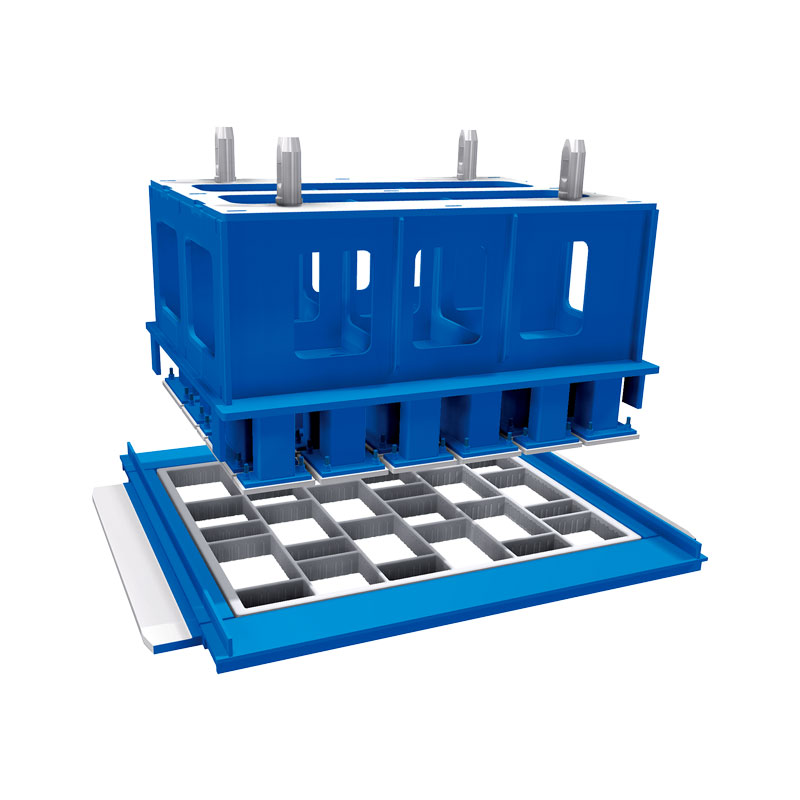
Mold costs for manual machines are typically 30-40% lower because they use simpler steel grades and looser tolerances. A standard hollow block mold for a manual machine costs $800-$1,500. However, molds for automatic QGM Block Making Machines cost $1,800-$4,000 due to hardened steel, precision-ground cavities, and quick-change features. Despite higher initial mold cost, automatic molds last 3-5 times longer (200,000+ blocks vs 50,000 blocks) and produce blocks with better finish. Our factory manufactures both mold types, and we advise clients to consider total cost per thousand blocks rather than upfront mold price alone.