Quangong Machinery Co., Ltd.
News

How to Choose the Right Concrete Block Moulds for Different Block Types?

2026-03-23 0 Leave me a message

Selecting the precise concrete block mould is the cornerstone of producing high-quality masonry units that meet structural standards, architectural aesthetics, and project efficiency. In my two decades navigating the concrete machinery landscape, I have witnessed how the correct mould directly impacts production uptime, dimensional accuracy, and final product strength. Whether you manufacture standard hollow blocks, interlocking pavers, or specialized eco-friendly segments, the mould’s design, steel grade, and cavity configuration determine not only output but also the lifecycle of your entire production line. This guide distills hard-earned insights to help you align mould specifications with block types, ensuring your investment yields consistent results and competitive advantage.


At Quangong Machinery Co., Ltd., we engineer solutions that bridge traditional craftsmanship with modern automation. Our approach integrates metallurgical expertise with practical field data, resulting in moulds that complement our flagship QGM Block Making Machine series. Understanding that one mould does not fit all, we emphasize customization based on block geometry, production volume, and material composition. This article serves as your roadmap—from evaluating raw material interactions to deciphering wear-resistant coatings—so you can confidently navigate the nuances of mould selection. Let us explore the critical factors that separate a temporary tool from a long-term asset in concrete block manufacturing.


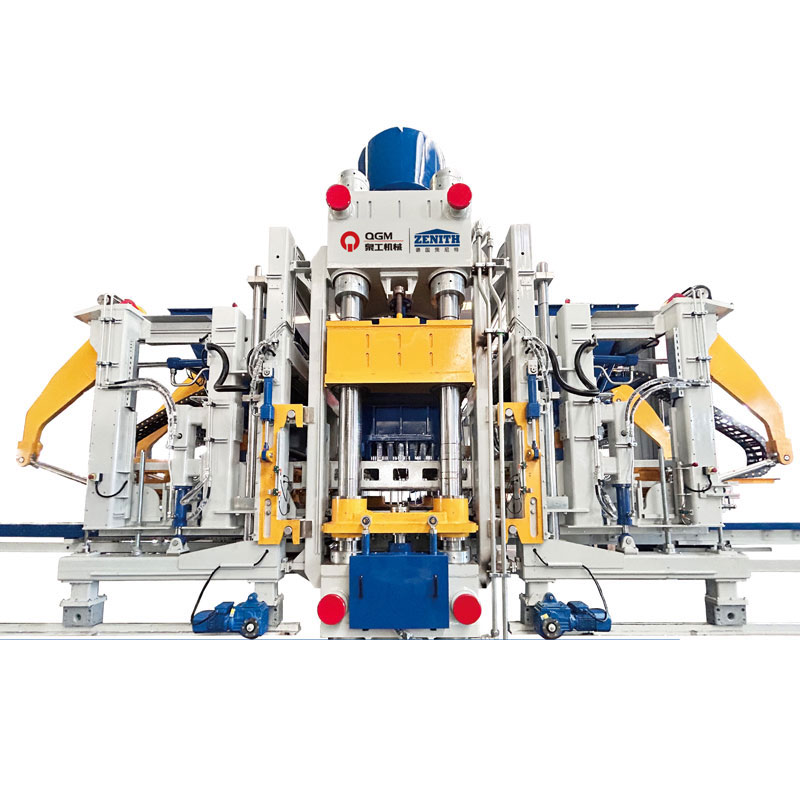
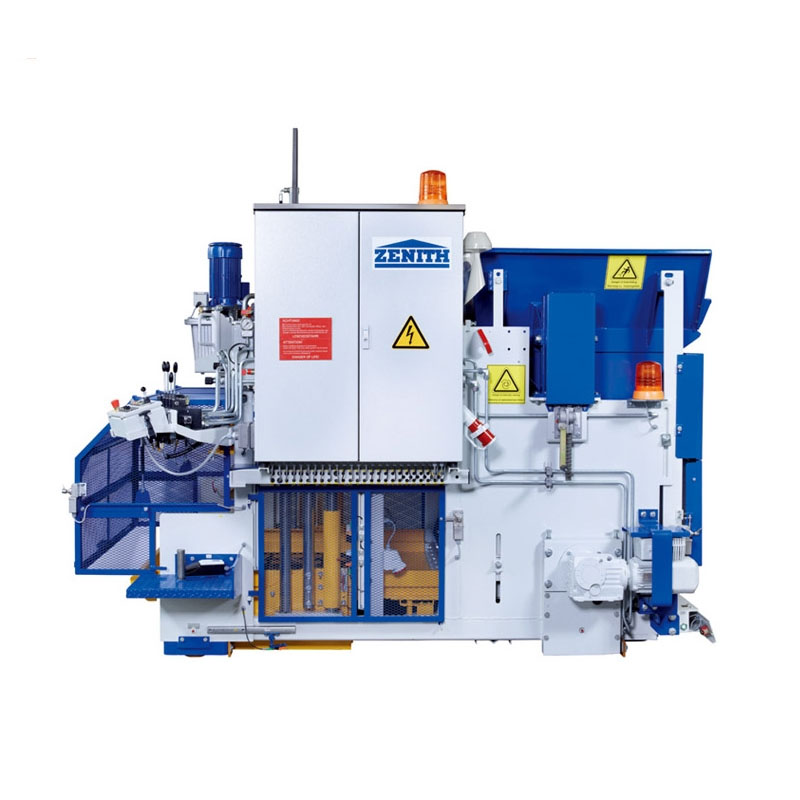
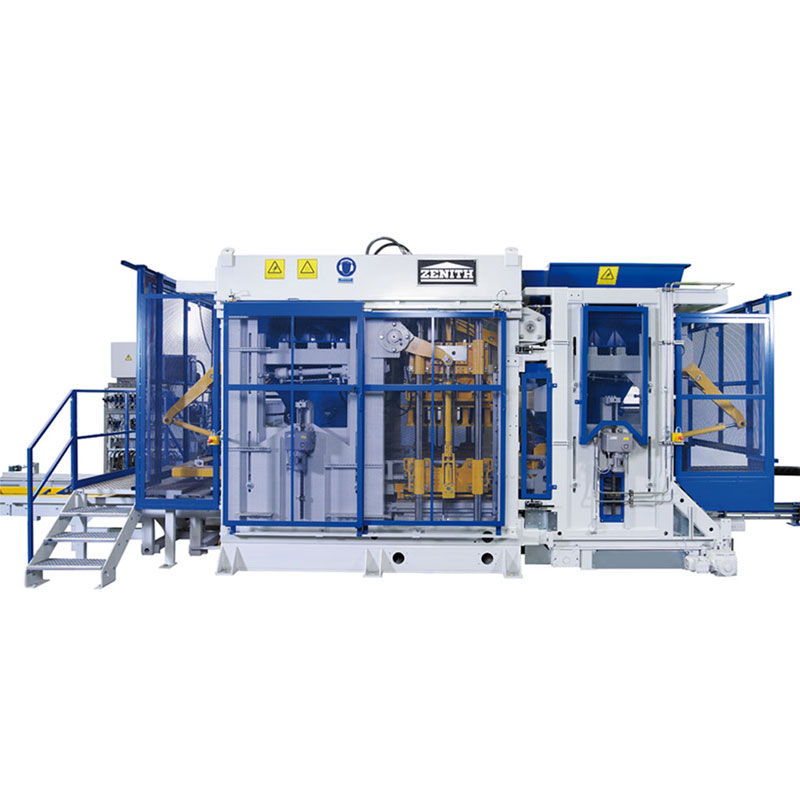
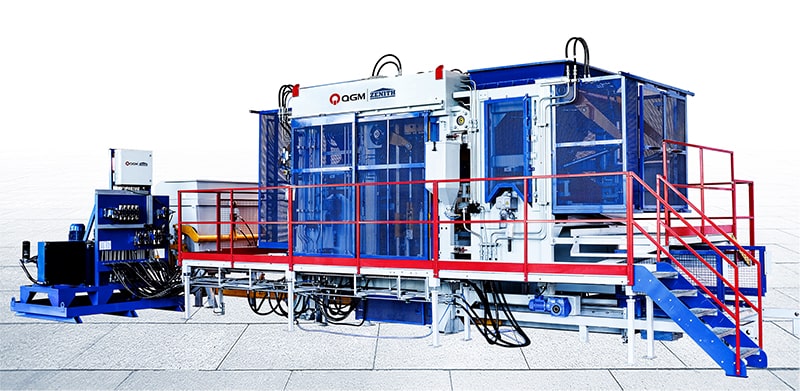
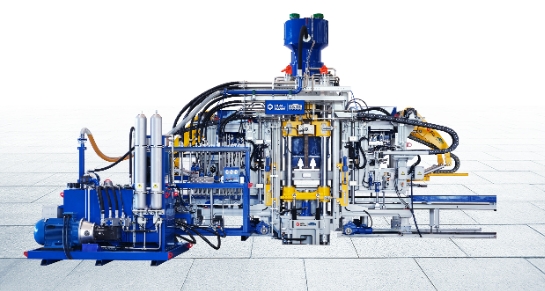
HP-1200T Hermetic Press Machine


Table of Contents


What Are the Key Parameters When Selecting Concrete Block Moulds?

Decoding the technical specifications of concrete block moulds is the first step toward flawless production. In my experience, overlooking parameters like cavity surface finish, dimensional tolerances, and wall thickness consistency leads to premature wear, increased downtime, and rejects. At Quangong Machinery Co., Ltd., our engineering team prioritizes these core parameters to ensure every mould integrates seamlessly with our QGM Block Making Machine platforms. Below is a detailed breakdown of the non-negotiable parameters that define mould performance.

Core parameters to evaluate:

  • Cavity Dimensions and Tolerances: Standard blocks (390x190x190mm) require cavity precision within ±0.5mm to ensure consistent stacking and mortar application. Specialized blocks like tongue-and-groove or U-shaped lintels demand even tighter tolerances (≤0.3mm) to guarantee interlocking functionality.
  • Steel Grade and Hardness: High-carbon tool steel (e.g., 42CrMo4) with a hardness rating of 52-58 HRC provides superior abrasion resistance for high-volume production. For abrasive aggregates (e.g., recycled concrete or crushed stone), nitrided or chromium-plated surfaces extend lifespan by 40% compared to untreated steel.
  • Surface Finish (Ra Value): A polished cavity surface (Ra ≤0.8μm) minimizes concrete adhesion, reducing cleaning cycles and ensuring smooth demoulding. This is critical for architectural blocks where surface defects are unacceptable.
  • Wall Thickness Uniformity: Uneven thickness creates weak points in blocks, leading to cracking during curing or transport. Advanced moulds incorporate flow simulation data to optimize steel distribution around cavities.
  • Wear Protection: Removable wear plates or hardened inserts in high-friction zones (such as core pins and stripper shoes) enable cost-effective refurbishment rather than full mould replacement.
  • Vibration Compatibility: Moulds must synchronize with the vibration frequency of the machine. Our QGM Block Making Machine utilizes dual-shaft vibration systems; moulds designed with reinforced mounting flanges and dampened frames prevent resonance fatigue.

To illustrate the variance in parameters across common block types, the following table consolidates typical requirements based on field data from Zenith installations worldwide.

Block Type Typical Dimensions (mm) Steel Hardness (HRC) Surface Finish (Ra μm) Wear Protection Layer
Standard Hollow Block 390x190x190 52-54 HRC ≤1.2 Hardened inserts on core pins
Solid Concrete Block 400x200x200 54-56 HRC ≤1.0 Full carburized surface
Interlocking Paver 200x100x60 56-58 HRC ≤0.8 Chromium plating
Eco-Grid Grass Block 600x400x100 50-52 HRC ≤1.4 Nitrided cavity surfaces
U-Channel Lintel Custom 54-58 HRC ≤0.6 DLC coating (diamond-like carbon)

Beyond these measurable parameters, compatibility with the machine’s clamping force and hydraulic system is vital. Our factory uses 3D scanning to validate mould-to-machine interface, eliminating alignment errors. When you invest in a mould that matches these specifications, you reduce cement paste leakage, improve green block strength, and achieve consistent palletization cycles. Remember, the right parameter set transforms a mould from a consumable into a productivity multiplier.


How Do Block Types Influence Mould Design and Cavity Configuration?

Block geometry dictates everything from core puller mechanisms to stripping angles. Over the years, our team at Quangong Machinery Co., Ltd. has developed mould families tailored to distinct block categories. Understanding these design nuances allows you to request moulds that inherently prevent common defects like core breakage or uneven density. Let us dissect how different block types reshape mould architecture.

  • Standard Hollow Blocks: These require multi-cavity moulds with tapered cores to facilitate demoulding without damaging webs. A 3-5 degree draft angle on cores and side walls ensures smooth ejection. Our QGM Block Making Machine moulds for hollow blocks incorporate adjustable core pins to compensate for aggregate shrinkage variations.
  • Solid Blocks and Masonry Units: Uniform compaction is the priority. Moulds for solids feature deeper bushings and heavy-duty stripper heads to distribute pressure evenly. We often recommend hardened guide pillars to maintain alignment under high pressing forces (up to 30 tons per cavity).
  • Interlocking Pavers & Segmental Retaining Wall Units: Precision in profile is paramount. These moulds use CNC-machined cavity inserts with micro-beveled edges to replicate intricate patterns. For double-layer pavers, our factory integrates split mould technology that separates face mix from base mix during the molding process.
  • Eco-Blocks (Permeable & Grass Blocks): Open area percentages must be controlled. Moulds for permeable blocks utilize removable core assemblies to create voids while maintaining structural ribs. We design these with quick-change core systems, allowing one mould to produce multiple void ratios without retooling.
  • Specialty Blocks (Lintels, Copings, Sills): These often require single-cavity moulds with complex undercut features. Hydraulic core pullers or side-acting cylinders are integrated to retract cores before ejection. Our experience shows that using hardened steel inserts on sliding surfaces reduces wear by 60% in such applications.

Additionally, the production method—whether on a stationary pallet machine or a mobile multilayer machine—influences mould structural design. For instance, moulds used on high-speed QGM Block Making Machine lines are reinforced with cross-bracing to withstand rapid cycling (under 15 seconds per cycle). Conversely, moulds for semi-automatic setups may prioritize flexibility with modular cassettes. Below is a summary of design adaptations per block family:

  • Multi-cavity high-efficiency moulds: Designed for mass production of standard blocks; feature hardened wear plates on stripper shoes.
  • Single-cavity precision moulds: For custom architectural elements; incorporate laser-cut contours and micro-adjustable side liners.
  • Turn-table moulds for pavers: Utilized on carousel systems; built with lighter alloy steel to reduce inertia while maintaining stiffness.

Selecting the correct configuration based on block type not only improves output but also reduces hydraulic strain on the machine. Our factory routinely conducts finite element analysis (FEA) on mould designs to predict stress points, ensuring that every cavity produces geometrically identical units shift after shift.


Why Does Steel Grade and Heat Treatment Matter for Mould Longevity?

The metallurgical foundation of your concrete block mould directly correlates with total cost of ownership. In high-wear environments—where abrasive aggregates like quartzite or recycled concrete are used—inferior steel can lead to dimensional drift within months. Drawing from our decades of manufacturing experience, Quangong Machinery Co., Ltd. emphasizes that proper steel selection and heat treatment protocols are the silent drivers of mould durability.

Key steel grades and their applications:

  • Tool Steel (e.g., Cr12MoV): Excellent wear resistance for small to medium production runs. It maintains edge retention on cavity profiles but may be prone to chipping if hardness exceeds 60 HRC.
  • Alloy Steel (e.g., 42CrMo4): Superior toughness and impact resistance. Ideal for solid block moulds subjected to high pressing forces. When vacuum heat-treated, it achieves a uniform hardness depth of 2-3mm, combining surface hardness with core ductility.
  • Stainless Tool Steel (e.g., 4Cr13): Used for moulds producing colored or architectural blocks where rust spots cannot be tolerated. It offers moderate wear resistance but exceptional corrosion protection in humid curing environments.
  • Nitrided Steel: Through a gas nitriding process, surface hardness reaches 65-70 HRC with a compound layer that resists adhesive wear. This is our recommended choice for high-silica aggregates and large-volume production on QGM Block Making Machine platforms.

Heat treatment processes that extend mould life:

  • Through-hardening: The entire mould component is heated and quenched, achieving uniform hardness. Suitable for smaller moulds or components with simple geometry.
  • Induction Hardening: Focuses hardness on wear zones such as cavity corners and core pin tips while leaving the base material tougher. This minimizes the risk of cracking during assembly or transport.
  • Cryogenic Treatment: Post-heat treatment deep-freezing (-196°C) transforms retained austenite into martensite, boosting wear resistance by up to 30%. Our factory applies this for premium moulds destined for 24/7 operations.

Selecting the steel-heat treatment combination is not merely a technical decision but a strategic one. For a small-scale operation producing 500 blocks daily, a standard tool steel mould with through-hardening might offer the best ROI. Conversely, for a contractor running two shifts with QGM Block Making Machine equipment, investing in nitrided alloy steel with cryogenic treatment can yield 2.5 times longer mould life before refurbishment. This translates directly to lower per-block mould cost and predictable maintenance schedules.

Our after-sales data consistently shows that clients who prioritize metallurgical quality spend 40% less on spare parts and enjoy 98% uptime during peak seasons. Remember, the mould is the interface where concrete meets machinery—its material integrity dictates the consistency of every block that leaves your yard.


How to Match Mould Precision with Production Scale and Automation Level?

Production scale and automation complexity should directly influence the precision class of your mould. A mismatch—such as using high-precision moulds on rudimentary machines or low-tolerance moulds on automated lines—creates bottlenecks and wastes capital. Throughout my career, I have advised hundreds of producers at Quangong Machinery Co., Ltd. to align mould precision grades with three factors: annual volume, machine type, and quality assurance protocols.

Precision classes explained:

  • Standard Precision (Class C): Dimensional tolerances of ±0.8mm to ±1.0mm. Suitable for manual or semi-automatic production with output below 10,000 blocks per day. These moulds are cost-effective for basic construction fill and non-structural applications.
  • High Precision (Class B): Tolerances of ±0.3mm to ±0.5mm. Required for automated stacking systems, robotic palletizing, and projects requiring consistent mortar joint widths. Our QGM Block Making Machine lines are optimized for Class B moulds, achieving cycle stability with minimal adjustment.
  • Ultra-Precision (Class A): Tolerances below ±0.2mm. Reserved for interlocking pavers, retaining wall systems, and visible architectural blocks where aesthetic uniformity is non-negotiable. Class A moulds undergo 100% CMM inspection before dispatch from our factory.

Matching scale to mould features:

  • Low-scale (under 50,000 blocks/year): Opt for standard precision moulds with replaceable wear parts. Focus on modular designs that allow future cavity changes without buying a new mould base.
  • Medium-scale (50,000 to 500,000 blocks/year): High precision moulds with induction-hardened wear plates. Automation compatibility becomes critical; ensure moulds feature quick-lock clamping systems to reduce changeover time.
  • High-scale (over 500,000 blocks/year): Ultra-precision moulds built with nitrided surfaces and integrated sensor ports for predictive maintenance. In such setups, moulds must interface seamlessly with centralized lubrication systems and real-time process monitoring—a core capability of our QGM Block Making Machine ecosystem.

Furthermore, if your operation plans to expand into colored or multi-layer blocks, mould design must incorporate separate material feed channels and wear-resistant liners to prevent cross-contamination. Our factory has developed a proprietary liner system that allows color changeovers in under 20 minutes, a crucial feature for producers diversifying into hardscape products. Always match mould precision not only to today’s scale but to the automation trajectory you envision over the next five years.


What Are the Essential Maintenance Practices to Extend Mould Service Life?

Even the most robust concrete block mould requires a disciplined maintenance regimen to deliver its full lifecycle value. Neglecting cleaning schedules, lubrication points, and wear measurement transforms a high-performance asset into a source of quality variation. At Quangong Machinery Co., Ltd., we incorporate serviceability into every mould we design, but the discipline of execution rests with the production team. Here are non-negotiable practices drawn from two decades of field support.

Daily maintenance checklist:

  • Post-shift cleaning: Use non-metallic scrapers and pressurized water to remove concrete residue from cavities, core pins, and stripper shoes. Never use steel tools that could scratch hardened surfaces.
  • Lubrication of moving parts: Apply mould release agent to cavity walls every cycle for first 50 blocks after a maintenance break. Lubricate guide posts and bushings with high-temperature grease to prevent seizure.
  • Visual inspection: Check for signs of wear on core pin tips, edge rounding on cavity corners, and any cracks in welded areas. Early detection of micro-cracks prevents catastrophic failure.

Weekly and monthly procedures:

  • Hardness spot-check: Use portable hardness testers on critical wear zones to verify that surfaces remain within acceptable range (e.g., 54-58 HRC). If hardness drops by 3-5 points, schedule refurbishment.
  • Dimensional verification: Measure a random sample of produced blocks for width, height, and web thickness consistency. Drifting dimensions indicate mould wear or alignment shift.
  • Torque re-tightening: Vibratory forces can loosen mounting bolts and core pin fasteners. Re-torque to manufacturer specifications using a calibrated torque wrench.

Advanced longevity tactics:

  • Rotational usage: For plants with multiple moulds, rotate moulds between machines to distribute wear patterns evenly.
  • Refurbishment planning: Instead of waiting for visible failure, schedule refurbishment after 60-70% of expected wear life. Our factory provides regrinding services, hardfacing, and core pin replacement to restore moulds to near-original specifications at a fraction of replacement cost.
  • Storage protocol: When moulds are not in active use, clean thoroughly, apply anti-rust oil, and store in a dry environment with desiccant bags. Avoid stacking moulds directly on top of each other to prevent distortion.

By institutionalizing these practices, producers consistently achieve mould lifecycles exceeding 8 million cycles on our QGM Block Making Machine setups. Maintenance is not an expense; it is the stewardship that ensures your mould investment continues to yield flawless blocks, shift after shift.


Conclusion: Building Consistency Through Informed Mould Selection

Choosing the right concrete block mould transcends a simple purchase—it is a strategic partnership between your production goals and engineering precision. Throughout this guide, we have dissected how parameters, block types, metallurgy, scale alignment, and maintenance interplay to define success. At Quangong Machinery Co., Ltd., we have dedicated our expertise to crafting moulds that serve as the backbone of reliable block production, whether you operate a single machine or a fully automated factory. Our QGM Block Making Machine portfolio is designed to maximize the potential of every mould, delivering repeatable accuracy and operational efficiency.

Now is the time to apply these insights. Evaluate your current mould performance against the benchmarks shared here, and consider how upgrades in steel grade or precision class can reduce your total cost per block. Our team at Quangong Machinery Co., Ltd. stands ready to assist with personalized consultations, factory tours, and custom mould engineering tailored to your unique block portfolio. Reach out to discuss your production targets—together, we will build a mould strategy that solidifies your competitive edge.


FAQ: How to Choose the Right Concrete Block Moulds for Different Block Types?

Question 1: What is the most important factor when choosing a mould for hollow vs solid concrete blocks?
Answer: The most critical factor is the cavity configuration and core design. For hollow blocks, the mould must include precisely tapered core pins to create cavities while ensuring easy demoulding without web breakage. For solid blocks, the emphasis shifts to uniform wall thickness and heavy-duty stripper heads to achieve even compaction across the entire mass. Additionally, hollow block moulds often incorporate adjustable core pins to adapt to aggregate variations, whereas solid block moulds focus on structural rigidity to withstand higher pressing forces. Our factory at Quangong Machinery Co., Ltd. customizes these features to match the specific block type and raw material characteristics.

Question 2: How does aggregate abrasiveness affect the choice of mould steel and coating?
Answer: Highly abrasive aggregates like crushed granite or recycled concrete demand moulds made from nitrided alloy steel (e.g., 42CrMo4 with gas nitriding) or those with chromium carbide overlays. These materials achieve surface hardness above 65 HRC, significantly reducing wear rates. For less abrasive materials like limestone or manufactured sand, tool steel with induction-hardened wear plates often provides the best cost-to-performance ratio. At Quangong Machinery Co., Ltd., we analyze the aggregate’s Mohs hardness and silica content to recommend the optimal steel grade and protective coating, ensuring mould longevity aligns with production volume.

Question 3: Can I use the same mould for different block sizes by changing inserts?
Answer: Yes, many modern moulds are designed with modular insert systems that allow size changes without replacing the entire mould base. This is especially cost-effective for producers who manufacture multiple block types on the same QGM Block Making Machine. However, the mould base must be engineered with interchangeable cavity cassettes and standardized core pin patterns. Our factory produces multi-purpose moulds where side liners, core bars, and stripper shoes can be swapped in under 90 minutes, enabling quick changeovers while maintaining dimensional accuracy.

Question 4: What is the expected lifespan of a concrete block mould under continuous operation?
Answer: Lifespan varies based on steel grade, aggregate abrasiveness, and maintenance. A well-maintained mould using premium alloy steel with nitriding can achieve 8 to 12 million cycles (equivalent to 3-5 years of two-shift operation). Standard tool steel moulds typically last 2 to 4 million cycles before requiring refurbishment. With proactive maintenance—including regular cleaning, lubrication, and hardness monitoring—our clients using QGM Block Making Machine platforms routinely exceed these averages. Quangong Machinery Co., Ltd. provides detailed wear prediction models based on your specific production parameters.

Question 5: How do I ensure mould compatibility with my existing block machine?
Answer: Compatibility involves matching three elements: mounting dimensions, clamping force requirements, and vibration synchronization. You must verify the mould’s outer dimensions, bolt pattern, and alignment pins match your machine’s pallet and head system. Additionally, the mould’s weight and stiffness must be compatible with the machine’s hydraulic and vibration system to avoid resonance issues. Our team at Quangong Machinery Co., Ltd. performs a compatibility audit using 3D models and on-site measurements, guaranteeing that any mould we supply integrates seamlessly with both our own equipment and other major block machine brands.

Related News
Leave me a message
X
We use cookies to offer you a better browsing experience, analyze site traffic and personalize content. By using this site, you agree to our use of cookies. Privacy Policy
Reject Accept