When it comes to the production of high-performance concrete blocks, one factor consistently stands above all others in determining the final product quality: the design of the mold. At Quangong Machinery Co., Ltd., our engineers and production specialists have spent decades studying, testing, and refining the relationship between Mould/Mold for Concrete Block precision and the structural integrity of the finished block. The evidence is clear: a well-engineered mold is not simply a container that shapes raw concrete. It is the foundation upon which every dimension, surface finish, compressive strength rating, and production efficiency metric is built. From the geometry of the cavity walls to the tolerance levels of the ejection mechanism, every detail of mold design has a measurable impact on what comes out at the end of the production line.
This article explores the technical and practical dimensions of how mold design shapes concrete block quality. Whether you are a block plant operator evaluating equipment upgrades, a procurement manager comparing supplier offerings, or a construction professional who wants to understand why some blocks outperform others on the job site, you will find actionable, expert-level insight throughout these pages. Our team at Quangong Machinery Co., Ltd. draws on real-world production data, materials science, and hands-on manufacturing experience to provide a comprehensive analysis that goes well beyond surface-level explanations. We believe that understanding the engineering behind Mould/Mold for Concrete Block production is the first step toward achieving consistently superior results at scale.
The choice of material used to fabricate a Mould/Mold for Concrete Block is arguably the single most consequential decision in the entire mold design process. It governs everything from dimensional stability under thermal and mechanical stress to surface hardness, wear resistance, machinability, and ultimately, the consistency of the blocks produced over thousands of production cycles. At Quangong Machinery Co., Ltd., our engineering team evaluates mold material options against a comprehensive set of performance criteria before specifying any component for our production systems.
Steel remains the dominant material choice in industrial concrete block mold manufacturing, and for well-founded reasons. However, not all steel grades perform equally. The most commonly used grades in our production of Mould/Mold for Concrete Block include high-carbon tool steel, alloy steel with chromium and molybdenum additions, and in specialized applications, hardened stainless steel. Each material profile delivers a distinct combination of hardness, toughness, corrosion resistance, and thermal conductivity that directly translates into production outcomes.
Consider the following key properties and how they connect to block quality:
Beyond steel, composite and polymer-lined mold technologies are gaining attention for specific applications where surface release properties and weight reduction are priorities. However, for mainstream heavy-duty concrete block production, engineered steel alloys remain the material of choice. The investment in premium mold material pays dividends in block consistency, reduced downtime, and lower per-unit production costs over the operational life of the mold system.
It is also worth noting that material selection cannot be evaluated in isolation. The heat treatment process applied after machining is equally critical. Improper heat treatment can introduce residual stresses that cause warping during production, undermining the precision achieved during the machining phase. Our quality assurance process includes dimensional verification after heat treatment to confirm that molds meet specification before entering service.
| Material Type | Hardness Range | Corrosion Resistance | Typical Application | Lifespan (Cycles) |
| High-Carbon Tool Steel | HRC 58-62 | Moderate (coating required) | Standard block production | 800,000 - 1,200,000 |
| Cr-Mo Alloy Steel | HRC 55-60 | Good | High-volume automated lines | 1,000,000 - 1,500,000 |
| Hardened Stainless Steel | HRC 48-55 | Excellent | Decorative and exposed-face blocks | 600,000 - 900,000 |
| Bimetal Composite | HRC 60-65 (face) | Very Good | High-abrasion aggregate mixes | 1,500,000+ |
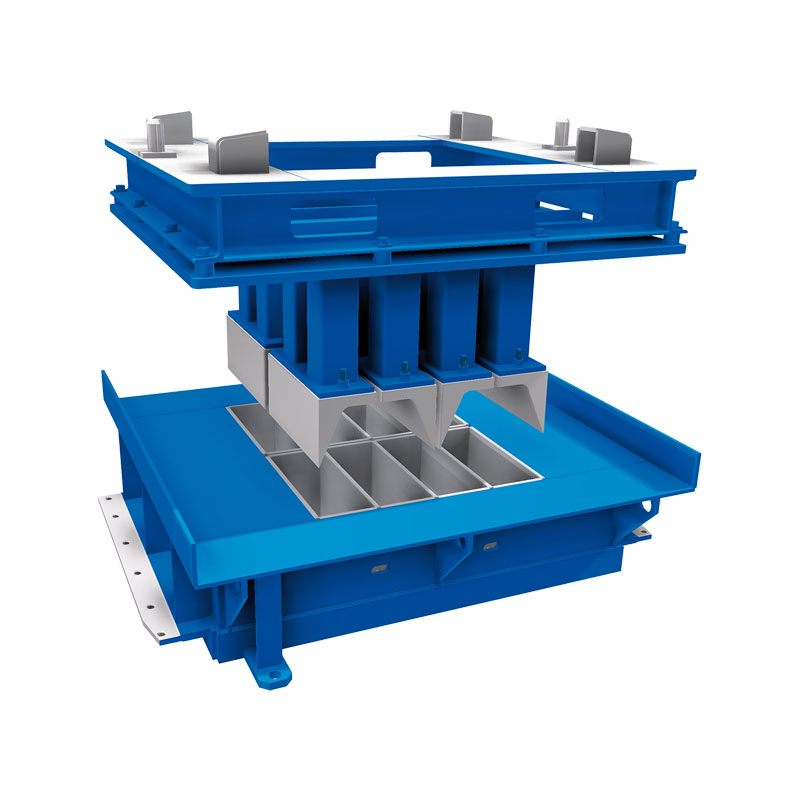
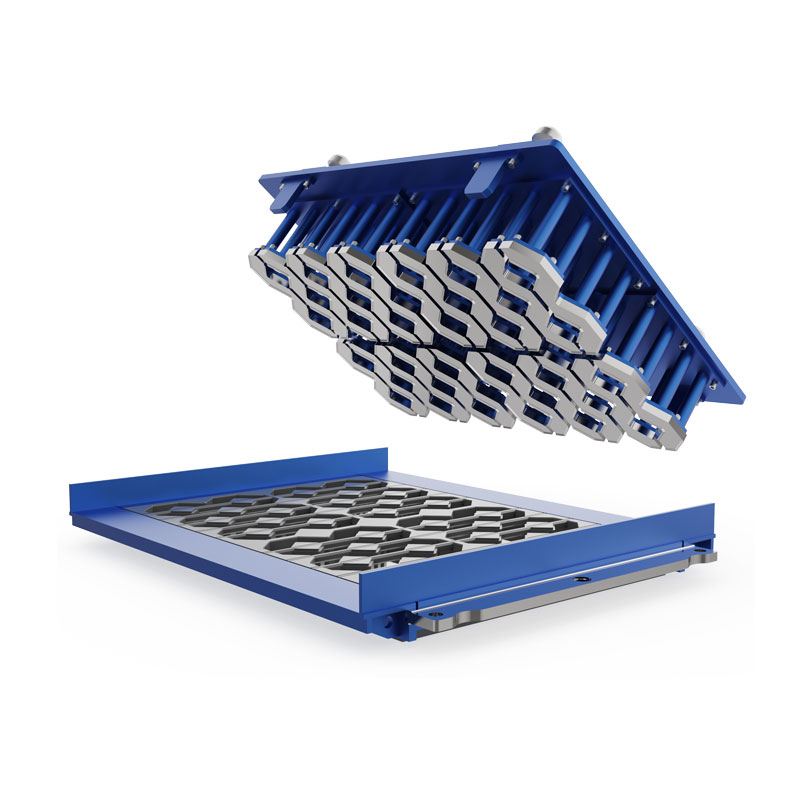
If mold material determines the durability and long-term stability of a Mould/Mold for Concrete Block, then cavity geometry determines the precision and consistency of every block that mold produces. The geometry of the mold cavity is, in essence, the physical definition of what a block is. Every angle, every wall thickness, every radius, and every draft angle has been engineered to produce a specific outcome. When any of these parameters deviate from design specification, the blocks produced deviate from their performance standards.
At Quangong Machinery Co., Ltd., our mold cavities are machined using CNC equipment calibrated to tolerances of plus or minus 0.05 millimeters or better, depending on the block specification. This level of precision is not an arbitrary standard. It is the threshold required to ensure that blocks produced from our molds will meet international dimensional standards such as ASTM C90, EN 771-3, and equivalent regional specifications.
The core geometric parameters that govern dimensional accuracy include:
The interaction between cavity geometry and concrete mix behavior during compaction adds another layer of complexity. A cavity geometry that performs perfectly with a standard aggregate mix may produce defects when used with a different aggregate gradation or cement content. Our engineering team at Quangong Machinery Co., Ltd. conducts mold trials with production-representative mixes before releasing any new Mould/Mold for Concrete Block design to full production.
Advanced geometric features such as textured face profiles, split-face simulation patterns, and interlocking geometry add additional design challenges. These features require extremely fine surface detail on the mold face, which must be reproduced consistently across every production cycle. Achieving this consistency requires not only precision machining but also an understanding of how concrete releases from complex surface geometries, which varies with cement chemistry, aggregate size, and mold release agent application practices.
| Geometric Parameter | Standard Tolerance | Impact if Out of Tolerance | Measurement Method |
| Block Length / Width | +/- 0.05 mm | Dimensional rejection, wall misalignment | CMM / Laser measurement |
| Block Height | +/- 0.05 mm | Course height variation in construction | CMM / Height gauge |
| Wall Thickness (hollow) | +/- 0.10 mm | Structural inconsistency, load failure risk | Ultrasonic / CMM |
| Draft Angle | +/- 0.1 degrees | Ejection defects, surface tearing | Angle measurement / CMM |
| Face Flatness | 0.10 mm max deviation | Mortar joint irregularity | Surface plate / CMM |
| Corner Radius | +/- 0.05 mm | Mold fatigue cracking, block corner voids | Radius gauge / CMM |
The surface finish of a Mould/Mold for Concrete Block is a parameter that is frequently underestimated by those who are new to concrete block manufacturing, yet it has profound effects on both the mechanical performance and the aesthetic quality of the finished product. At Quangong Machinery Co., Ltd., our surface finishing specifications are among the most demanding in the industry, because our experience has shown repeatedly that the difference between a good mold and an exceptional mold often comes down to what happens at the microscopic level of the mold surface.
Surface roughness, expressed as Ra (arithmetic average roughness) in micrometers, directly governs the behavior of concrete at the mold interface. There are two competing requirements that must be carefully balanced in surface finish design:
For standard gray concrete blocks destined for structural applications, our production molds are finished to an Ra of 0.8 to 1.6 micrometers on cavity faces. This range provides reliable release characteristics with standard mold release agents while producing block faces that have sufficient surface texture to bond well with mortar. For decorative block applications where appearance is a primary performance criterion, our factory can achieve Ra values below 0.4 micrometers on face panels, producing near-polished concrete surfaces that are increasingly valued in architectural masonry applications.
The relationship between surface finish and concrete consolidation is another dimension worth understanding in detail. During vibration compaction, the concrete mix must flow and consolidate against the mold wall. A surface that is too rough creates localized flow resistance, preventing fine mortar from reaching the outermost layer of the block face. This results in a phenomenon called bug holes: small surface voids that are visible on the block face after demolding. Bug holes are not merely cosmetic defects. In exposed masonry applications, they create moisture entry points that accelerate carbonation and reinforcement corrosion. In finish-critical decorative block applications, they represent outright production rejects.
Surface finish also interacts with the choice and application method of mold release agents. Our engineering team at Zenith has documented that the same release agent applied to mold surfaces with different finish levels produces dramatically different results in terms of film uniformity, coverage consistency, and release force. A rougher mold surface requires a more viscous release agent applied at higher dosage rates to achieve equivalent release performance compared to a finely finished mold surface. This has direct cost implications in high-volume production environments where release agent consumption is a significant operating expense.
Beyond cavity surfaces, the surface finish of sealing faces, parting lines, and ejection mechanism components also has significant quality implications. Poorly finished parting lines allow concrete paste to bleed between mold components during compaction, creating fins and flash on block edges that require removal and introduce dimensional variation. Tight surface finish control on all mold interface surfaces is therefore a comprehensive quality requirement, not one limited to the production faces alone.
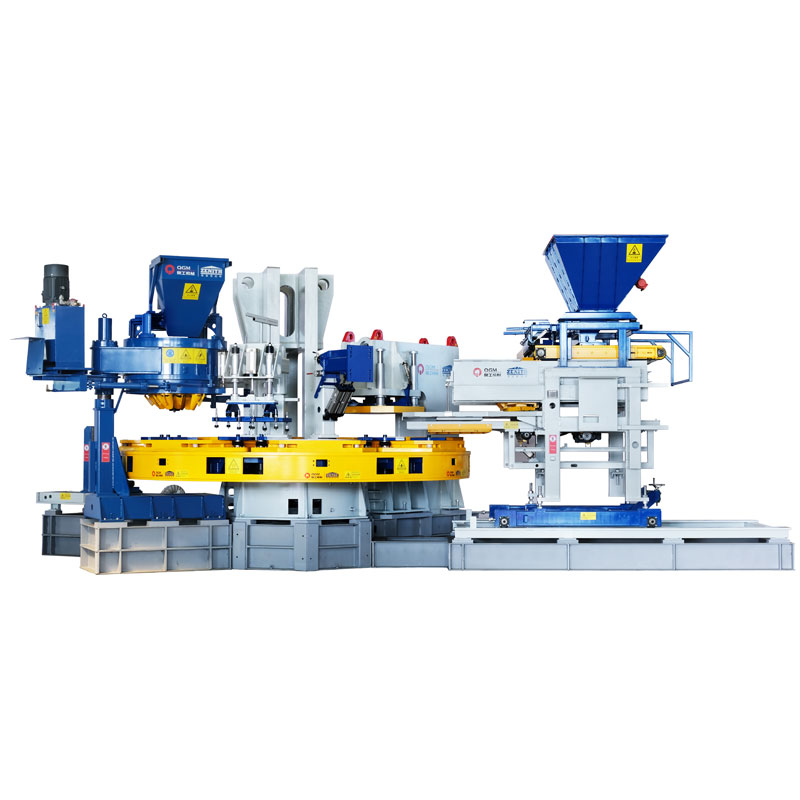
In any concrete block production system, the mold cavity defines the target geometry of the block, but it is the ejection system and vibration compaction mechanics that determine whether that target geometry is actually achieved in every block produced. These two subsystems interact with the mold design in ways that are technically complex and practically decisive. Understanding these interactions is essential for anyone involved in specifying or operating Mould/Mold for Concrete Block equipment.
The ejection system is responsible for pushing or stripping the freshly compacted block out of the mold cavity after compaction. Because concrete blocks are stripped from the mold while still in a green, unset state, the ejection force must be sufficient to overcome adhesion and friction between the block and mold walls, without applying stress concentrations that crack or deform the block. This is a narrow engineering window that must be hit consistently across every cycle in an automated production line running at rates of 15 to 30 cycles per minute or more.
Key design factors in ejection system engineering include:
The relationship between ejection system design and production consistency also has an important time-efficiency dimension. In high-volume production environments, every fraction of a second saved in the ejection stroke contributes directly to output capacity. However, aggressive ejection timing that exceeds the mechanical capability of the green concrete will produce defect rates that negate any capacity gains. Optimizing this tradeoff requires systematic data collection on block defect rates as a function of ejection timing, which our factory supports through production monitoring systems integrated with our block production lines.
| System Parameter | Design Specification | Quality Impact | Recommended Check Interval |
| Ejection plate flatness | 0.10 mm max | Uniform stress distribution on green block | Every 100,000 cycles |
| Guide pin clearance | 0.02 - 0.04 mm | Ejection alignment, edge chipping prevention | Every 50,000 cycles |
| Vibration frequency | 50 - 60 Hz (standard) | Concrete consolidation uniformity | Weekly calibration |
| Vibration amplitude | 0.5 - 1.5 mm (adjustable) | Compaction density, surface quality | Per mix change |
| Ejection stroke speed | Programmable 3-phase | Green block crack prevention | Per product changeover |
For procurement engineers, production managers, and quality assurance professionals who need to evaluate and specify Mould/Mold for Concrete Block equipment, having a clear and comprehensive framework of technical parameters is essential. At Quangong Machinery Co., Ltd., we document and validate each of these parameters during the design, manufacturing, and acceptance testing phases of every mold system we produce. The following overview represents our standard technical specification framework for high-performance concrete block molds.
It is important to understand that these parameters do not exist in isolation. They form an interdependent system where the value of each parameter is partly determined by the values of the others. A mold designed with optimal cavity geometry but specified with inadequate material hardness will deliver acceptable quality initially but will degrade rapidly. A mold with premium material and perfect cavity geometry but a poorly designed ejection system will produce blocks with surface defects that the geometry and material cannot prevent. Holistic parameter integration is the hallmark of a well-engineered mold system.
| Parameter Category | Parameter Name | Standard Value / Range | Performance Impact |
| Material | Base Steel Grade | Cr-Mo alloy / Tool steel | Wear resistance, dimensional stability |
| Material | Surface Hardness (cavity) | HRC 58 - 62 | Dimensional durability, surface finish retention |
| Material | Core Toughness | CVN 30 - 50 J at -20C | Impact resistance, fatigue life |
| Dimensional | Cavity Dimensional Tolerance | +/- 0.05 mm | Block dimensional compliance |
| Dimensional | Face Flatness | 0.10 mm max deviation | Block face quality, mortar bedding |
| Dimensional | Draft Angle | 0.5 - 2.5 degrees | Clean ejection, surface quality |
| Surface | Cavity Surface Roughness (Ra) | 0.8 - 1.6 um (standard) | Release quality, block surface finish |
| Surface | Surface Treatment | Nitriding / Chrome plating / PVD | Corrosion resistance, wear life |
| Structural | Mold Frame Rigidity | Max deflection 0.15 mm under compaction load | Dimensional consistency under production conditions |
| Vibration | Operating Frequency | 50 - 60 Hz | Concrete consolidation efficiency |
| Vibration | Vibration Amplitude | 0.5 - 1.5 mm (adjustable) | Compaction density |
| Ejection | Ejection Force Capacity | Per block area calculation | Green block integrity during stripping |
| Ejection | Guide Pin Clearance | 0.02 - 0.04 mm | Ejection alignment |
| Lifespan | Design Service Life | 1,000,000 - 1,500,000 cycles | Total cost of ownership |
| Lifespan | Dimensional Retention Warranty | 500,000 cycles minimum | Quality consistency over production run |
Beyond the parameters listed above, additional specification elements that our factory includes in high-performance mold documentation include heat treatment records, dimensional inspection reports with actual measured values versus nominal, material certification traceability, vibration test reports for assembled mold systems, and photographic documentation of critical surface finish areas. This documentation package is provided to every client as part of the standard delivery package for Mould/Mold for Concrete Block systems from Quangong Machinery Co., Ltd.
For clients operating automated production lines with multiple mold sets running simultaneously, we also provide matched-set dimensional certification that confirms dimensional consistency between molds within a set. This is critical for automated block handling and palletizing systems that require consistent block geometry to function without jamming or misfeeding. The additional cost of matched-set certification is invariably recovered in reduced downtime and improved automated handling performance within the first months of production.
Even the most precisely designed and impeccably manufactured Mould/Mold for Concrete Block will only deliver consistent block quality throughout its intended service life if it is maintained according to a disciplined preventive maintenance program. At Quangong Machinery Co., Ltd., we consider mold maintenance guidance to be an inseparable component of the mold system we deliver. A mold that is perfectly specified but inadequately maintained in service will produce declining block quality long before it has delivered the production volume it was designed to achieve.
The primary wear mechanisms that affect concrete block molds in production service are:
A well-structured mold maintenance program for our Mould/Mold for Concrete Block systems should incorporate several tiers of activity. At the daily operational level, mold surfaces should be inspected for buildup, mechanical damage, and release agent coverage adequacy. At the weekly level, cleaning procedures using approved concrete dissolver compounds should be performed, and guide pin and bushing clearances should be verified. At intervals of 50,000 to 100,000 production cycles, dimensional inspection of cavity geometry should be conducted and compared to original acceptance measurements to track wear progression. At major service intervals of 300,000 to 500,000 cycles, comprehensive disassembly, dimensional inspection, and where required, surface re-treatment or selective component replacement should be performed.
Our engineering support team at Quangong Machinery Co., Ltd. offers clients ongoing technical support for maintenance program development and execution. We also stock critical wear components including ejection plates, guide pins, bushings, and cavity face panels for all mold models in our current production range, ensuring that clients can access replacement parts without extended lead times that would disrupt production schedules.
| Maintenance Activity | Frequency | Key Checks | Quality Risk if Skipped |
| Visual surface inspection | Daily | Buildup, damage, release agent coverage | Surface defects, adhesion problems |
| Cleaning (chemical dissolver) | Weekly | Full cavity clean, parting line areas | Dimensional drift, paste flash |
| Guide pin / bushing check | Weekly | Clearance, wear, lubrication | Ejection misalignment, edge chipping |
| Dimensional inspection | Every 50,000 - 100,000 cycles | All critical cavity dimensions vs original | Block out of spec, customer rejection |
| Vibration system check | Monthly | Frequency, amplitude, bearing condition | Under-compaction, density variation |
| Major service / overhaul | 300,000 - 500,000 cycles | Full disassembly, surface re-treatment | Premature mold failure, extended downtime |
The quality of every concrete block produced in a modern block plant is a direct expression of the engineering excellence embedded in the mold system that produced it. As this article has demonstrated, mold design is not a single parameter but a complex, interdependent system of material selection, cavity geometry, surface finish engineering, ejection system design, vibration mechanics, and long-term maintenance management. Each of these dimensions contributes to the ultimate measure of a mold system's value: the consistency, dimensional accuracy, structural performance, and visual quality of the blocks it produces across its entire operational service life.
At Quangong Machinery Co., Ltd., our commitment to engineering excellence in Mould/Mold for Concrete Block production is reflected in every technical specification we publish, every tolerance we commit to in our manufacturing, and every maintenance guideline we provide to our clients. Our factory has built its reputation on delivering mold systems that perform to specification not just in the acceptance test, but through hundreds of thousands of production cycles in demanding real-world operating environments. We understand that our clients' businesses depend on the reliability and consistency of the equipment we supply, and we take that responsibility seriously in every engineering decision we make.
Whether you are establishing a new block production facility, upgrading an existing production line, or troubleshooting quality issues in current production, the mold system is where the solution begins. We invite you to engage with our engineering team to discuss your specific production requirements and discover how a precisely engineered Mould/Mold for Concrete Block system from Quangong Machinery Co., Ltd. can transform your production quality and operational efficiency.
Q1: How does mold cavity geometry directly affect the compressive strength of concrete blocks?
A: Mold cavity geometry determines the distribution of concrete material within the block, including the thickness and uniformity of web walls in hollow block designs. When cavity geometry is precisely maintained, concrete is distributed evenly, producing consistent wall thickness throughout the block. Uniform wall thickness means that compressive loads applied to the block face are transmitted evenly through the cross-section to the base, maximizing the effective compressive capacity of the concrete material. Conversely, when cavity geometry deviates from specification due to mold wear or manufacturing inaccuracy, wall thickness variation is introduced. Thinner walls in localized areas become stress concentration zones under compressive load, causing premature cracking and reducing the measured compressive strength below what the concrete material alone is capable of achieving. In practical terms, a dimensional deviation of just 1 to 1.5 mm in web wall thickness has been documented to reduce compressive strength test results by 8 to 12 percent in standard hollow concrete masonry unit testing. This is why tight dimensional tolerances in Mould/Mold for Concrete Block cavity geometry are not merely a quality formality but a direct engineering requirement for structural performance.
Q2: What are the most common causes of surface defects in concrete blocks that originate from mold design issues?
A: Surface defects in concrete blocks that trace back to mold design fall into several distinct categories, each with identifiable root causes. Bug holes, which are small surface voids visible on block faces, are typically caused by insufficient draft angles combined with surface roughness levels that impede fine mortar flow to the outermost layer during compaction. Edge chipping during ejection is almost always caused by either insufficient draft angle on cavity walls or misalignment in the ejection guide system that applies lateral forces to the green block during stripping. Surface tearing, where the concrete face is visibly damaged in the direction of ejection travel, indicates inadequate mold release agent coverage combined with excessive surface adhesion between the concrete paste and the mold face, often aggravated by a surface finish that is too smooth, creating capillary adhesion effects. Flash and fins along block edges indicate worn or poorly fitted parting lines between mold components, allowing concrete paste to bleed into the gap during compaction. Finally, pattern transfer defects, where the texture of cement buildup or corroded mold surfaces is printed onto block faces, result from inadequate cleaning and maintenance programs allowing paste accumulation to harden on cavity surfaces. Each of these defect types has a specific corrective action in mold design, surface finishing, or maintenance practice.
Q3: How should vibration frequency and amplitude be selected for a specific Mould/Mold for Concrete Block application?
A: Vibration frequency and amplitude selection for concrete block mold applications requires balancing several competing factors related to the concrete mix characteristics, the block geometry, and the structural dynamics of the mold system. Frequency selection is primarily governed by the aggregate particle size distribution in the concrete mix. Coarser aggregate mixes with maximum particle sizes of 10 to 20 mm respond best to lower frequencies in the range of 40 to 55 Hz, which produce sufficient displacement amplitude to mobilize and reorder the coarser particles for efficient packing. Finer mixes with maximum aggregate sizes below 5 mm compact more effectively at higher frequencies in the 55 to 70 Hz range, where the higher frequency produces more rapid surface disturbance that releases entrapped air and promotes fine particle packing. Amplitude selection interacts with frequency: higher amplitude at a given frequency delivers more compaction energy per cycle but also increases the mechanical stress on the mold structure and the vibration-induced segregation risk in mixes with high water-cement ratios. The optimal combination for any specific production scenario should be validated through compaction trials measuring green block density and hardened compressive strength as a function of vibration parameter variation. Additionally, the mold structure must be designed so that its natural resonant frequencies do not coincide with the selected operating frequency, as resonance produces uncontrolled vibration amplitudes that damage the mold and produce unpredictable compaction behavior.
Q4: What surface treatment options are available for concrete block molds, and how do they compare in terms of performance and cost?
A: Several surface treatment technologies are used in the manufacturing of high-performance Mould/Mold for Concrete Block systems, each offering a distinct balance of performance characteristics and cost. Gas nitriding is the most widely applied treatment in industrial concrete block mold production. It diffuses nitrogen into the steel surface at temperatures of 480 to 570 degrees Celsius, creating a hardened diffusion zone 0.1 to 0.5 mm deep with surface hardness values of HV 800 to 1100. Nitriding improves wear resistance and corrosion resistance without distorting the mold geometry, making it well-suited for precision mold applications. Its limitation is that it provides only moderate corrosion resistance in highly alkaline environments and requires re-treatment after repair welding. Hard chrome plating deposits a thin layer of chromium 20 to 100 micrometers thick onto the mold surface, providing excellent hardness, good corrosion resistance, and superior surface finish quality. It is particularly valued for decorative block molds where surface finish is a primary requirement. However, environmental regulations in many regions are increasingly restricting the use of hexavalent chromium plating processes, pushing manufacturers toward alternative treatments. Physical vapor deposition coatings, particularly titanium nitride and chromium nitride variants, offer exceptional hardness values of HV 1500 to 2500, very low friction coefficients that improve concrete release, and excellent corrosion resistance in a coating thickness of only 2 to 5 micrometers. PVD coatings represent the premium end of the surface treatment spectrum, with proportionally higher costs, but offer the best combination of wear life extension and release performance for demanding production environments.
Q5: How does the number of cavities in a concrete block mold affect production efficiency and block quality consistency?
A: Multi-cavity mold design is a fundamental production engineering parameter that governs the output rate per machine cycle, but it also has significant implications for block quality consistency that are frequently underappreciated. Increasing the number of cavities per mold increases output per cycle proportionally, which is why high-volume production lines typically use molds with 3, 4, 6, or even 8 cavities per pallet layer. However, each additional cavity added to a mold design introduces additional requirements for concrete filling uniformity, vibration energy distribution, and ejection force distribution that must be engineered carefully to maintain consistent quality across all cavities in every cycle. The primary quality challenge in multi-cavity molds is achieving uniform concrete fill depth across all cavities simultaneously. Variation in fill depth as small as 2 to 3 mm between cavities within the same mold produces measurable block height variation that affects wall coursing in construction. This requires sophisticated concrete feeding and distribution systems working in close coordination with the mold design. Vibration energy distribution across a wide multi-cavity mold is another engineering challenge. The outermost cavities in a wide mold are typically furthest from the vibration input points and may receive reduced vibration amplitude compared to the central cavities, leading to density gradients across the mold that produce strength variation between blocks from different cavity positions. Our engineering team at Quangong Machinery Co., Ltd. addresses this through finite element vibration analysis and strategic vibration input point placement to achieve uniform amplitude distribution across all cavity positions.
At Quangong Machinery Co., Ltd., our engineering team is ready to work with you to design and deliver a Mould/Mold for Concrete Block solution precisely matched to your production requirements, mix specifications, and quality targets. With decades of hands-on experience in mold engineering and concrete block production technology, our factory provides not just equipment but a complete technical partnership that supports your success from specification through commissioning and beyond.
Contact our technical sales team today to discuss your requirements and receive a detailed technical proposal. Let us show you what precision mold engineering can do for your production quality and bottom line.
Get a Free Technical Consultation